ABSOLUTE RIGIDITY: PREMIUM WHOLESALE ALUMINUM FOIL CONTAINERS
ABSOLUTE RIGIDITY: PREMIUM WHOLESALE ALUMINUM FOIL CONTAINERS FOR CULINARY OPERATIONS
In the modern culinary landscape, the line between the kitchen and the dining room has blurred. For cloud kitchens, catering giants, and high-volume restaurants, the packaging
TABLE OF CONTENTS
The Backbone of High-Volume Foodservice: Business Integrity Moving Beyond Commodity: Packaging as an Operational Asset The Financial Impact of Container Rigidity on Scalability
Engineering Resilience: The Science of Heavy-Duty Foil Decoding Metallurgy: Why Micron Gauge Dictates Performance Structural Load Testing: A Buyer’s Protocol for Validation
Optimizing Kitchen Workflows Through Material Integrity Accelerating Production Lines with High-Stability Containers Minimizing Occupational Hazards and Product Waste
Securing Brand Equity: The Role of Packaging Reliability The Unboxing Psychology: Converting Sturdiness into Value Total Cost of Ownership (TCO): The Profitability of Quality
Orchestrating the Supply Chain: The Loc Tu Manufacturer Advantage Ensuring Consistency through Master Manufacturing Customization Capabilities for Market Differentiation
1. THE BACKBONE OF HIGH-VOLUME FOODSERVICE: BUSINESS INTEGRITY
Moving Beyond Commodity: Packaging as an Operational Asset
The Commodity Mindset: Views packaging as "trash waiting to happen." Decisions are driven solely by the Purchase Order (PO) price. Result: High rate of damage, kitchen slowdowns, and customer dissatisfaction.The Asset Mindset: Views packaging as a tool for revenue retention. Decisions are driven by performance metrics (load-bearing capacity, seal integrity). Result: Operational fluency and customer loyalty.
The Financial Impact of Container Rigidity on Scalability
The Scenario: To fund a 5-store expansion, they switched to a generic, thin-wall supplier (12 microns) for their wholesale orders to save 8%.The Fall: As volume increased, the "crush rate" during bulk transport rose to 4%. More critically, the thin walls buckled under the weight of their signature lasagna, causing sauces to leak and burn in the oven. Kitchen staff had to "double-pan" heavy items, instantly doubling their material costs and increasing washing labor.The Correction: Reverting to asturdy, heavyweight specification (e.g., comparable to Loc Tu standards), the double-panning stopped. Waste dropped to near zero.

Structural integrity is not a luxury; it is the foundation of scalable logistics.
2. ENGINEERING RESILIENCE: THE SCIENCE OF HEAVY-DUTY FOIL
Decoding Metallurgy: Why Micron Gauge Dictates Performance
The Gauge (µm): This is the measure of thickness. Retail-grade foil often hovers around 9-11 microns. For professional HORECA (Hotel/Restaurant/Catering) applications, this is insufficient. A "High-Rigidity" standard demands16 microns to 25 microns depending on volume.Effect: Resistance to puncture and vertical compression load.
The Alloy & Temper: Not all aluminum is created equal. Commercial-grade alloy (typically 3003 or 8011 series) is treated to balance flexibility (for curling rims) with stiffness (for holding weight).Effect: Prevents the "soggy bottom" phenomenon where the container sags when lifted hot.
Structural Load Testing: A Buyer’s Protocol for Validation
Step 1: The Thermal Stress Test: Bake a sample filled with water at 250°C for 45 minutes. A poor-quality container will warp or develop pinholes due to uneven alloy distribution. A superior container remains dimensionally stable.Step 2: The One-Hand Test: Fill the container to capacity with sand (simulating heavy food). Lift it by one short edge using only one hand.Fail: The container folds in the middle.Pass: The container maintains its structure, protecting the contents.
Step 3: The Stack Test: Fill five containers with hot product, lid them, and stack them. Measure the deformation of the bottom container after 20 minutes.
3. OPTIMIZING KITCHEN WORKFLOWS THROUGH MATERIAL INTEGRITY
Accelerating Production Lines with High-Stability Containers
Aggressive Mixing: Staff can toss salads or mix heavy casseroles directly in the aluminum tray without fearing it will tear.High-Speed Lidding: In an assembly line, staff press lids onto rims rapidly. If the rim collapses (a common failure of cheap foil), the seal fails, requiring rework. A reinforced "Full Curl" rim resists this pressure, allowing for a snap-tight seal every time.Robotic Compatibility: For industrial kitchens using automated filling lines, rigidity is non-negotiable. Sensors cannot handle deformed trays.
Minimizing Occupational Hazards and Product Waste
The Hazard: A chef pulls a tray of hot oil or sauce from a 400°F oven. If the aluminum is weak, the tray buckles, spilling boiling liquid. This leads to severe burns, Worker’s Comp claims, and lost man-hours.The Solution: Heavy-duty containers with rigid walls act as safe transfer vessels. They behave predictably under thermal load.
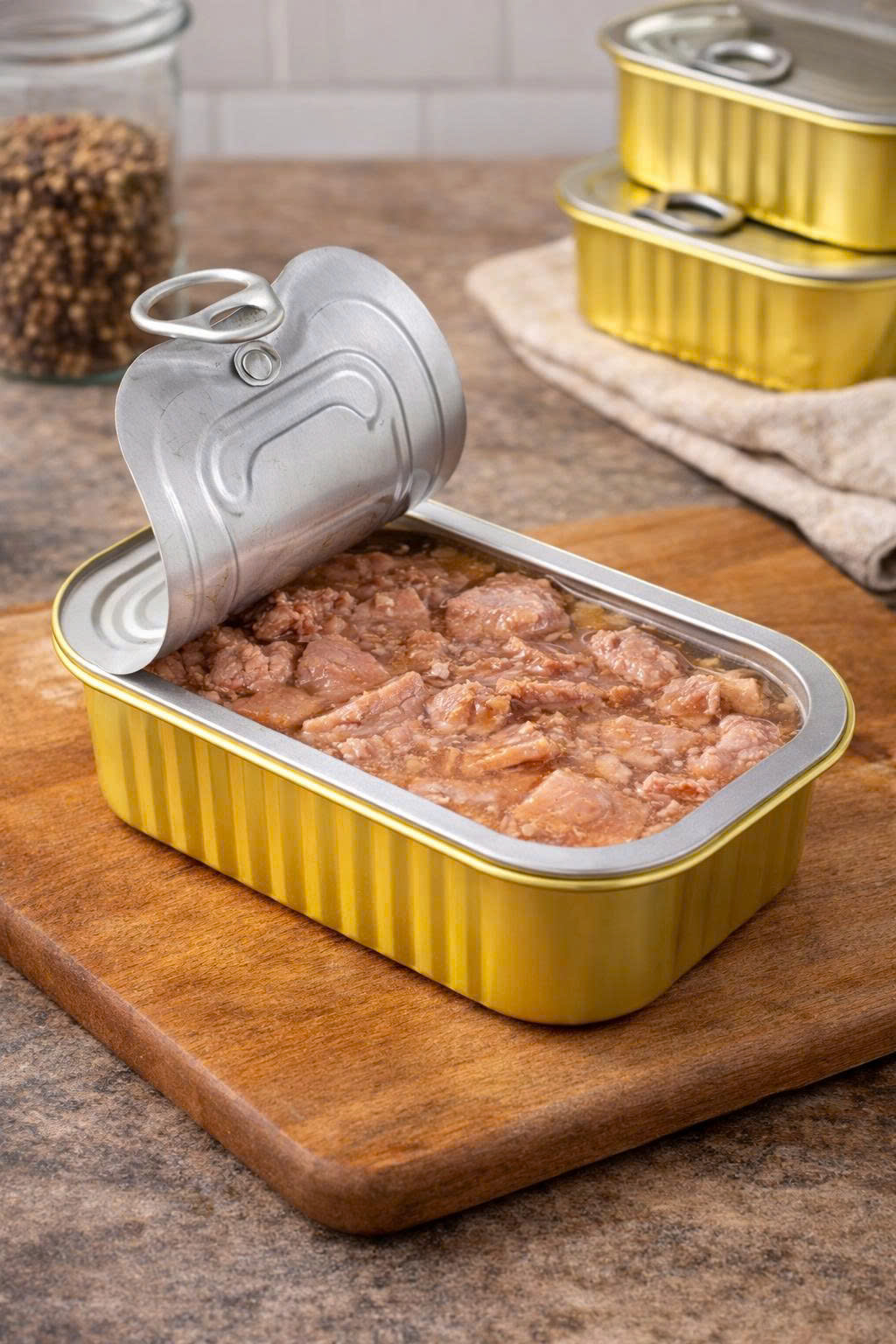
Safety and efficiency converge when your equipment can handle the heat.
4. SECURING BRAND EQUITY: THE ROLE OF PACKAGING RELIABILITY
The Unboxing Psychology: Converting Sturdiness into Value
Total Cost of Ownership (TCO): The Profitability of Quality
Low-Cost / Low-Quality Route: Unit Price: $0.20 Damage Loss: +$0.01 Double-Cupping usage: +$0.05 Customer Refund Rate (Leaks): +$0.10 (averaged) TRUE COST: $0.36
High-Quality / High-Rigidity Route (Loc Tu): Unit Price: $0.24 Damage Loss: $0.00 Double-Cupping: $0.00 Customer Refund Rate: $0.01 TRUE COST: $0.25
5. ORCHESTRATING THE SUPPLY CHAIN: THE LOC TU MANUFACTURER ADVANTAGE
Ensuring Consistency through Master Manufacturing
Material Traceability: A dedicated manufacturer controls the rolling process from the aluminum ingot to the final press. They can guarantee that the alloy mix is identical in January as it is in August.Die Maintenance: Sharp, well-maintained molds create clean, strong rims. Traders often buy from factories with worn-out molds, leading to weak, crinkled edges.Loc Tu prioritizes machinery maintenance to ensure structural perfection.Stock Buffering: A B2B partner understands seasonality. They maintain master inventory levels for their contracted clients, ensuring that you never face a stockout during the Lunar New Year or holiday peaks.
Customization Capabilities for Market Differentiation
Embossing: Stronger walls allow for logo embossing directly onto the container, turning a generic item into a branded touchpoint.Custom Shapes: Need a multi-compartment tray for a "Bento" concept? Only a high-rigidity manufacturer can mold complex internal dividers that don't collapse when food is added.Color Coatings: Premium rigid containers can be lacquered in gold, black, or copper for aesthetic dominance.
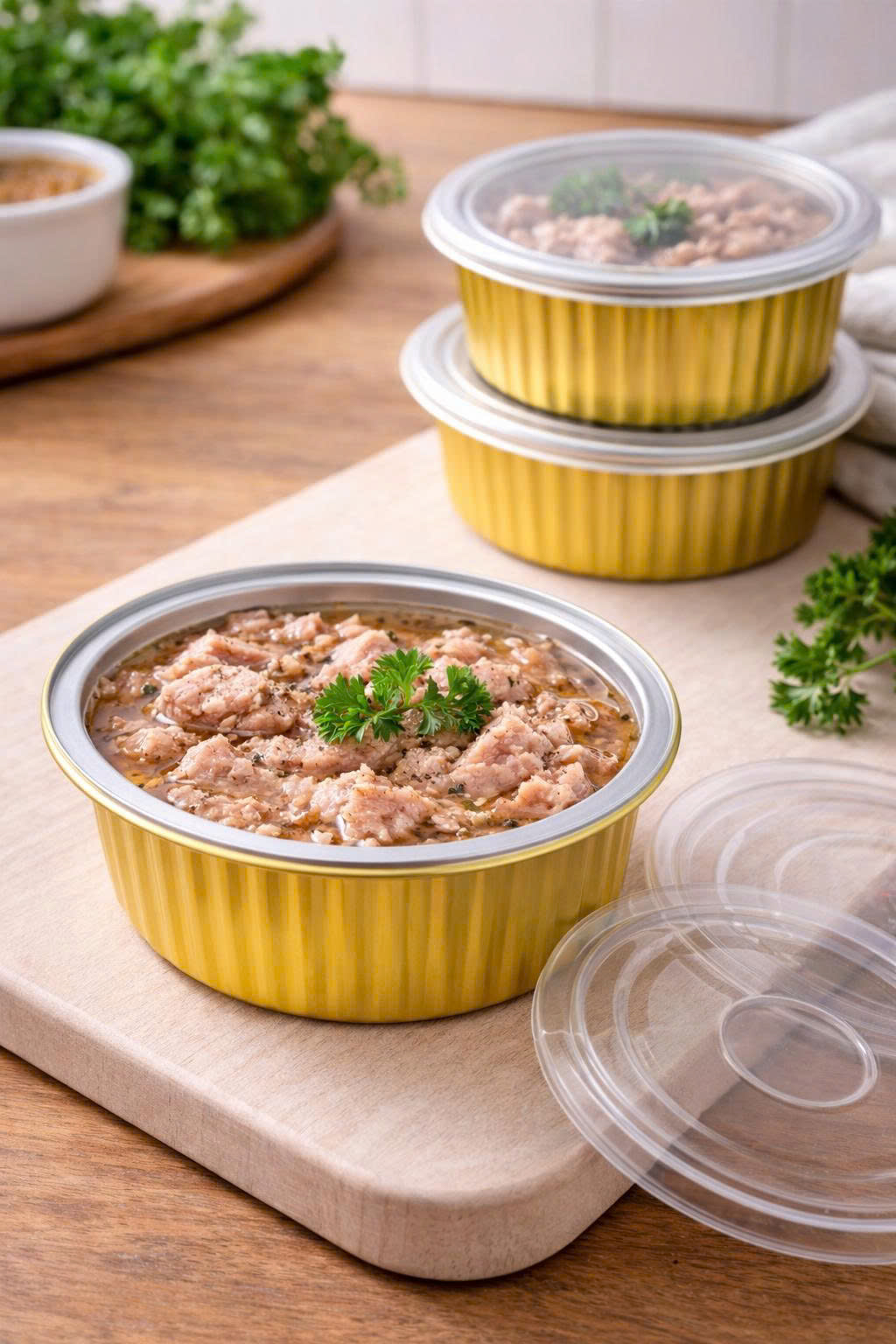
A robust supply chain ensures your kitchen never stops due to material shortages.
CONCLUSION: THE PROFIT CATALYST
Loc Tu: Pioneering Excellence in Premium Aluminum Packaging Solutions
Why You Must Choose Loc Tu?
✅ Assured Quality & Safety: Crafted from premium, food-grade aluminum, free from harmful impurities, meeting international safety benchmarks.
🔥 Optimal Thermal Properties: Ensures even cooking and excellent heat retention, preserving food temperature and taste effectively.
💪 Durable & Convenient Design: Engineered to resist leaks and dents, providing reliable performance for baking, storage, and transport.
🔄 Versatile Solutions: Our extensive range caters to various applications – from baking and steaming to storing fresh food and takeaway meals.
🌱 Eco-Conscious Packaging: Made from 100% recyclable aluminum, supporting sustainability and reducing plastic waste.
🎯 Brand Enhancement: Optional custom printing available to personalize products and boost your brand visibility.
🚚 Reliable Supply & Delivery: Capable of handling large orders with dependable, on-schedule nationwide shipping.

Loc Tu – Trusted Manufacturer of Durable Aluminum Foil Containers and High-Quality, Food-Safe Aluminum Foil Rolls for Your Kitchen
Your Trusted Partner in Food Packaging 📞
📌 LOC TU MANUFACTURING & TRADING CO., LTD
📌 Our Vietnamese Website: Khaynhomthucpham.com
📌 HOTLINE/ZALO: 0969.787.309
📌 Facebook: Aluminum Foil Loc Tu
📌 Youtube: Aluminum Foil Loc Tu
📌 Tik Tok: Aluminum Foil Loc Tu
📌 Instagram: Aluminum Foil Loc Tu
📌 Shopee: Aluminum Foil Loc Tu
📌 Twitter/X: Aluminum Foil Loc Tu
📌 LinkedIn: Aluminum Foil Loc Tu
📌 Pinterest: Aluminum Foil Loc Tu
📌 Tumblr: Aluminum Foil Loc Tu
📌 Threads: Aluminum Foil Loc Tu
📌 Telegram: Aluminum Foil Loc Tu
📌 Whatsapp: 0969.787.309
📌 Branch 1 (Hanoi): No. 1 Pham Tu, Beasky Building, Dai Kim Ward, Hoang Mai District, Hanoi
📌 Branch 2 (Binh Duong): No. 68, DX 051 Street, Group 17, Quarter 4, Phu My Ward, Thu Dau Mot City, Binh Duong Province
📞 Contact us today for expert consultation and the best pricing on premium aluminum trays and foil packaging solutions! 🚀
LOC TU PRODUCTION AND TRADING COMPANY LIMITED
Branch 1 (Binh Duong): No. 68, DX 051 Street, Group 17, Quarter 4, Phu My Ward, Thu Dau Mot City.
Branch 2 (Hanoi): No. 1 Pham Tu, Beasky Building, Dai Kim Ward, Hoang Mai District.
Hotline/Zalo: +84.969787309
Website: Khaynhomthucpham.com
Email: [email protected]

