ADVANCED SECURE LID ALUMINUM FOIL CONTAINERS FOR BRAND EXCELLENCE
Beyond Conventional Utility: The Integrity of Transit Packaging
The contemporary food service landscape has radically mutated over the last decade. A restaurant’s dining room now spans an entire city, navigated by fleets of independent delivery personnel subjected to rapid stops, unpaved terrain, and unpredictable traffic patterns. Within this harsh transit environment, the vulnerability of your culinary creation reaches its absolute peak. Sourcing secure-lid aluminum foil containers transitions from a rudimentary ordering task to an advanced exercise in product insurance.
In this comprehensive examination, authored through the rigorous lens of modern industrial F&B procurement, we tear away the misconceptions of "cheap disposable packaging." This analysis unpacks the fundamental physics of why containment fails, uncovers the extreme hidden costs of low-quality lidding solutions, and proposes highly engineered operational directives. We construct an impermeable barrier around food safety, heat retention, and profitability. By optimizing the selection of aluminum trays equipped with precision-fitted, foolproof closure mechanisms, executive chefs and operations directors immediately cement the gap between kitchen perfection and table-side perception.
TABLE OF CONTENTS
Beyond Conventional Utility: The Integrity of Transit Packaging
The Physics of Containment: Anatomy of an Optimal Closure System
Decoding the Crimp-and-Seal Mechanism
The Compounding Effect of Absolute Thermal Barriers
Financial Mechanics Behind Spill-Resistant Packaging Options
Calculating the True Liability of Delivery Failures
Marginal Utility vs. Upfront Investment Profiles
Health Inspector Priorities and Material Safety Validation
Baseline Requisites for Heavy-Metal-Free Alloys
Acid Reactivity and Heat Integrity Thresholds
Operational Harmonization in High-Volume Expediting Lanes
Transitioning from Fragmented Inventory to Monolithic Foil Arrays
Space Optimization and Thermal Stacking Protocols
Aligning with an Apex-Tier Packaging Manufacturer
Diagnostic Questions for Manufacturer Evaluation
The Loc Tu Framework for Mutual Enterprise Scaling
1. The Physics of Containment: Anatomy of an Optimal Closure System
The most exceptional gastronomic accomplishment instantly degrades if exposed to uncontrolled atmospheric changes or violent physical shock during transit. Protecting a dish demands packaging engineered to neutralize external physical threats. A foil tray without an accompanying, specifically engineered lid is essentially an unsealed vault.
Decoding the Crimp-and-Seal Mechanism
To fully conceptualize secure-lid packaging, procurement personnel must transition their perspective from purchasing "a box" to purchasing a "multi-component engineering system." The relationship between the container’s flange (the rim) and the board-or-dome lid governs leak resistance and tamper visibility.[C8: "ENGINEERING AND DESIGN BREAKDOWN"]
System Architecture: The Full Curl Interlocking Matrix
Component A: The Interrupted Vertical Curl Flange (IVC Flange)
Instead of a simple flat rim, high-end secure containers feature a specialized rolled edge known as the Full Curl or IVC flange. This is mathematically curved to allow maximum manual manipulation by kitchen staff without ripping gloves, yet remains highly resilient under vertical load stacking.
Component B: Poly-Lined Thermal Board Cover
The standard high-security lid consists of virgin, food-grade cardboard heavily lined on the bottom surface with an inert polymer coating or ultra-thin aluminum lamination.
The Mechanical Execution (Crimping):
When the lid is dropped into the depression of the container, operators compress the metal flange tightly inward. This creates a powerful frictional grip known as a mechanical lock. The internal coating of the lid presses seamlessly against the raised metal rim beneath it, forging a liquid-tight barrier. If the flange wall lacks thickness (under 16 microns), the fold weakens during motion, and the kinetic energy of liquid inside forces a catastrophic breach. Consequently, container rigidity directly impacts seal reliability.
The Compounding Effect of Absolute Thermal Barriers
Retaining serving temperatures prevents the dangerous multiplication of pathogens and preserves texture. Foil container-and-lid combinations manage thermodynamic behavior vastly superior to traditional cardboard boxes or pure plastic equivalents.
Central Objective: Maximal Thermal Suspension
Branch 1: Convection Blocking (Air Flow Control)
-> Perfectly crimped lids neutralize internal draft.
-> Hot vapor rises, hitting the sealed poly-coated lid and naturally curling downward, creating an isolated, circular warming cell around the meal.
Branch 2: Infrared Heat Reflection
-> Unpainted raw foil naturally reflects radiant energy.
-> Rather than absorbing and expelling heat into the environment (as paper pulp does), secure-lidded aluminum directs ambient heat inwards toward the central mass of the food block.
Branch 3: Vapor Management & De-Sogging
-> Secure board lids engineered with micro-perforations offer specialized vapor egress pathways.
-> Allows extreme high-pressure steam (which makes fried foods mushy) to subtly exit while maintaining enough general containment to ensure strict core-temperature metrics during a thirty-minute delivery cycle.
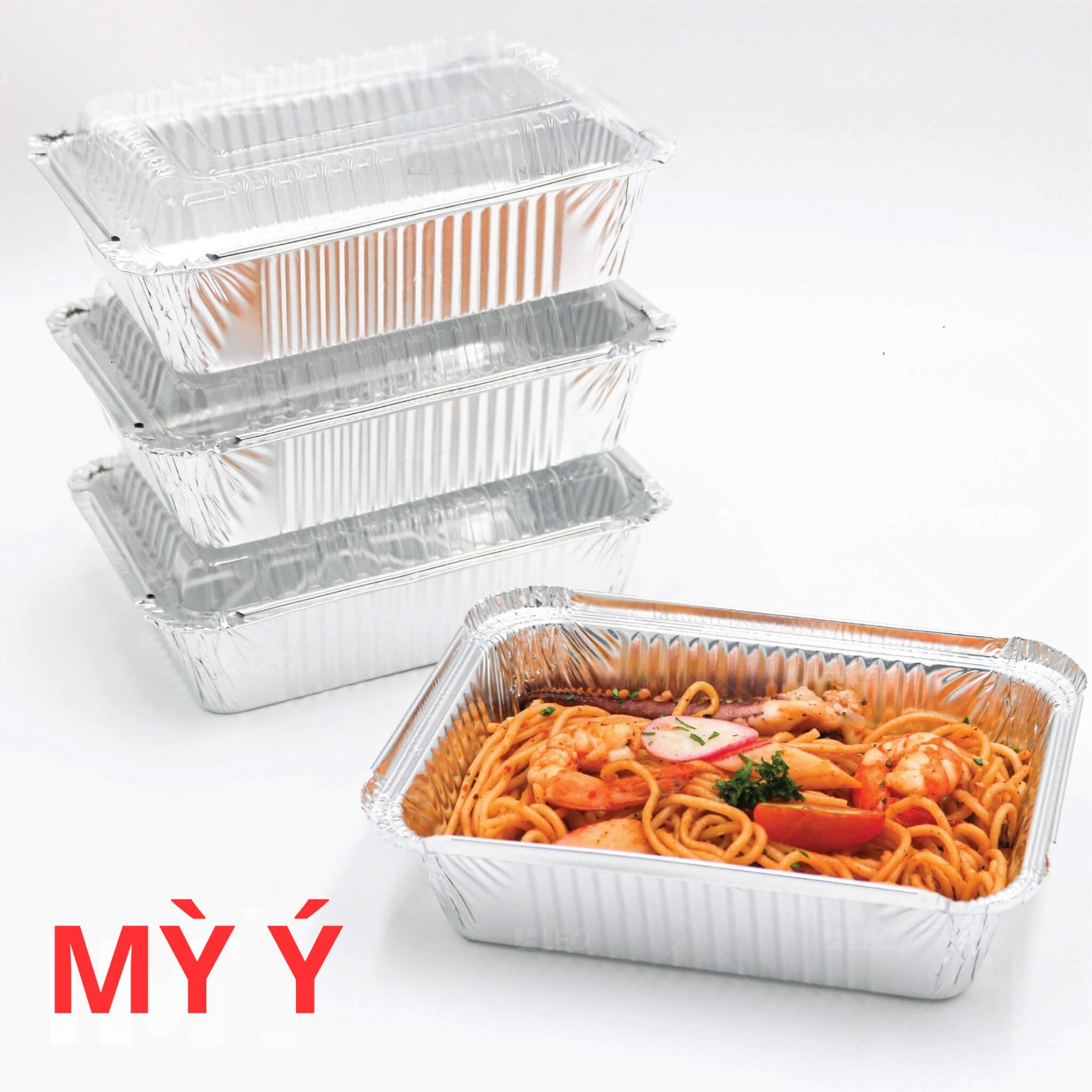
Mechanical locking mechanisms dictate the efficacy of heat retention and leakage prevention during aggressive transit.
2. Financial Mechanics Behind Spill-Resistant Packaging Options
Financial departments typically prioritize Cost of Goods Sold (COGS). Evaluating packaging on single-unit purchase value alone results in severely short-sighted budgeting logic. Assessing high-performance, safe-closure aluminum models requires comprehensive financial risk models highlighting downstream repercussions.
Calculating the True Liability of Delivery Failures
Low-gauge aluminum mixed with poorly measured lids introduces a critical hazard metric into delivery logistics: The Disruption Penalty. It rarely halts at the replacement price of a spilled soup; the rippling consequences incinerate weekly margin targets.[C4: "FORENSIC CASE STUDY"]
The Anatomy of a $340 Loss Originating from a $0.02 Save
The Precedent: A popular mid-scale ghost kitchen utilized a low-bidder supply contract, resulting in slightly oversized board lids that caused poor flange grips on aluminum broth containers.
The Event Horizon: During transit on an uneven urban road, the weak flange lost its shape. A heavy braised short rib order flooded the plastic delivery sack.
Financial Cascade Calculation:
Lost Ingredient & Prep Cost (The initial order): $18.50
Platform Penalty fee (Delivery App charges for catastrophic delivery failure): $8.00
Direct Cash Refund processed to customer: $45.00
Cost of Redelivery/Staff Remediation time (Re-cooking priority): $15.00
Churn Risk Calculation (1 negative review leading to algorithm downgrades + absolute loss of LTV of a prime patron): ~$250+ (calculated by average customer retention spends).
Diagnostic Finding: Seeking to decrease unit costs by two cents mathematically guaranteed exponential risk variables capable of wiping out an entire evening's profit margin through just a handful of compromised closure systems. Absolute container security is directly correlated with overall profit sustainability.
Marginal Utility vs. Upfront Investment Profiles
Acquiring robust closure models incurs marginally higher front-end invoice totals but secures vastly accelerated returns when integrated at a massive scale. F&B executives must calculate utility through metrics mapping "Cost of Poor Quality" (COPQ) versus operational harmony.
Tier C Sourcing (Low End Foil with Disjointed Plastic Dome Lids):
Initial Bulk Pallet Price: Very Low.
Operating Consequence: Mismatched expansion thresholds. As extremely hot proteins are dropped inside, the weak plastic dome absorbs thermal shock, expanding slightly, snapping off the foil rim within minutes. Packers must use extreme caution, often wrapping the container in clear wrap as a desperate secondary protection.
Net Assessment: "Counterfeit economy"—perceived savings immediately nullified by extra packaging additions (saran wrap, double bagging) and intensive manual handling delays.
Tier A Sourcing (Gauge-Certified Secure Lid Matrix Containers):
Initial Bulk Pallet Price: High/Premium Volume Dependent.
Operating Consequence: Near instantaneous one-press sealing actions from line workers. Extreme physical compression strength permits quadruple stacking inside thermal hot boxes without cave-in failure. Complete cessation of fluid leaks.
Net Assessment: Pure capital fortification. Premium containers generate immediate labor payroll savings and elevate presentation authority to elite standards.
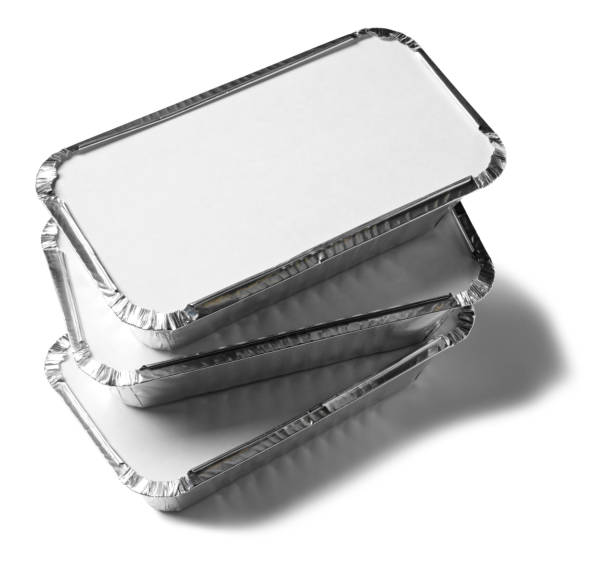
Financial mapping demonstrates an incontrovertible return generated by eliminating delivery breach risks through secured sealing matrices.
3. Health Inspector Priorities and Material Safety Validation
To operate unencumbered by litigation or government sanctions, operations directors demand ironclad documentation regarding their primary contact layers. Secure-lid foil options involve diverse elemental factors converging in an intensely heat-sensitive micro-environment, prompting critical health verification parameters.
Baseline Requisites for Heavy-Metal-Free Alloys
Unregulated factories in fragmented marketplaces occasionally deploy heavily remelted, secondary recycled alloys that harbor impurities unsuited for prolonged culinary applications. Only meticulously graded raw ingredients can formulate containers matching commercial safety demands.
Standard Document ID: COMP-FS902A (Safe Packaging Directives)
Parameter 1: Elemental Designation Certification
Foil systems mandated for direct consumption scenarios generally must hold certificates authenticating 3000 or 8000 series aluminum profiles (commonly 8011 or 3003 H22 or H24 tempers). These provide supreme metallurgical purity natively barring elements like Lead (Pb), Cadmium (Cd), and Hexavalent Chromium from the foundational crystal structure.
Parameter 2: Total Absence of Migration Vectors
Lids and sealing surfaces utilizing composite materials must verify that bonding resins undergo extreme volatility off-gassing at the production plant, not in your patron’s oven. Certifications ensuring "zero BPA," "Fluorocarbon free," and complying strictly with equivalent global food regulatory parameters (FDA Title 21 compliance, EFSA metrics) are entirely indispensable and represent foundational requirements, not value additions.
Parameter 3: Lamination Integrity Rating
Heavy polymer-backed paper lids demand microscopic evaluation guaranteeing non-flaking behaviors over highly humid and boiling interfaces for extended multi-hour thresholds.
Acid Reactivity and Heat Integrity Thresholds
Even structurally perfect foil responds purely to scientific law. Heavy acidity from reductions or prolonged baking presents specific conditions wherein lesser trays will catastrophically falter under physical and chemical degradation.
Excerpt: Internal QA Debrief - Examining the "Tomato Acid Fallacy"
Chef de Cuisine: "There's a prevailing fear that introducing robust bolognese, severe vinaigrettes, or highly acidic barbecue marinades to secure-lid foil environments yields tin flavors or rapid degradation. Does utilizing high-density lids actually trap acids and worsen reactions?"
Compliance Officer: "A common misunderstanding of closed systems. Trapping vapor doesn't degrade material faster; the physical gauge thickness and presence of safe lacquers matters immensely. Standard grade, heavy-micron thickness handles nominal food acidity up to two weeks freezing to cooking. We employ coated foil interiors for specifically intensive alkaline/acid matrices. A locked environment ensures temperature equilibrium—meaning condensation cycles inside that normally thin out or crack lesser vessels are perfectly maintained."
Culinary Director: "The objective conclusion: Verified metallurgy does not panic beneath an onion-garlic acid blend. Premium locking barriers permit robust braises and citric reduction profiles unharmed indefinitely relative to short-use durations."
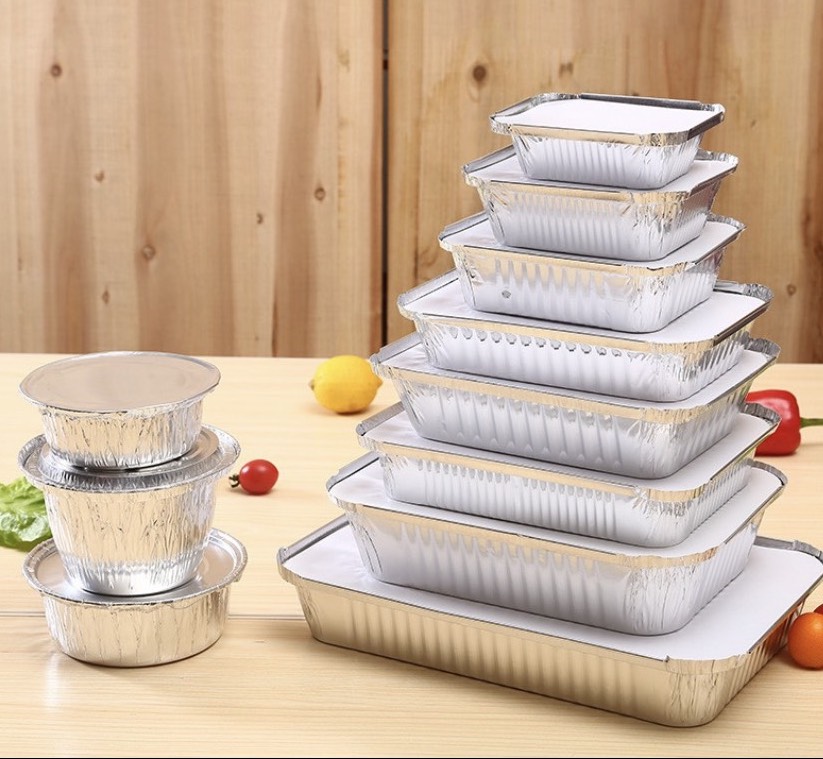
Verified materials demand unyielding adherence to molecular documentation to preempt migration and degradation liabilities entirely.
4. Operational Harmonization in High-Volume Expediting Lanes
Kitchen ergonomics thrive strictly upon velocity and uniformity. If securing culinary creations requires fumbling to mate diverse lid geometries with unstable aluminum footprints, gridlock destroys profit momentum during massive mealtime surges. Introducing identical, multi-faceted lidding matrices dramatically compresses the crucial interval connecting assembly output to dispatcher transit.
Transitioning from Fragmented Inventory to Monolithic Foil Arrays
Relying on chaotic mixtures of paper bins, plastic trays, foam shells, and soft foil envelopes cripples stockroom mechanics. Standardization mandates shifting to complete uniform profiles unified entirely via similar top enclosures.
Chronological Overhaul: Eradicating Expo Chaos
The Archival Condition (Fragmented State): A high-output Italian catering kitchen utilized differing plastics for salads, standard aluminum trays for deep-dish, paper cups for pasta additions, all lacking consistent seal requirements. Result: Assembly tickets required a dedicated pack-master parsing ten distinct tops and bottoms, forcing chaotic three-minute intervals strictly for parcel management. Breakages in dissimilar towers destroyed back-office delivery routines.
The Advanced Condition (Monolithic Consolidation): The operational hierarchy transitioned entirely to half-size, medium-size, and two-compartment thick-grade foil iterations all relying heavily upon perfectly matched lockable board covers utilizing universally common edge lengths.
Resulting Dynamic Change: Stacks seamlessly lock horizontally. Vertical columns balance without physical shift parameters. Time-in-motion drops roughly forty percent per packer simply since the muscular memory motion involves uniform container-to-lid applications across ninety percent of all issued orders. Less SKU friction results natively in augmented expediting turnover speed ratios.
Space Optimization and Thermal Stacking Protocols
How containers perform inside closed warmer chambers controls final food viability prior to transit pickup, directly manipulating structural reliability in wait modes. Standardized tops drastically enable architectural stability for vertical loads spanning multi-ticket requests inside the warming holding environments.
To avoid catastrophic physical collapse internally before hand-over happens, organizations implement rigorous 'Stack & Hold' architectural procedures uniquely available through engineered-closure structures:
Phase A (Solid Capping Protocol): Before moving the object offline, a complete dual-palm pressing seals parallel edges immediately pushing all oxygen variables away to retain steam pressure equalizing bottom walls. Ensure flush edges avoiding 'dome pressure bubbling'.
Phase B (Pyramiding Dynamics): Larger foundation orders inherently form uniform square blocks accepting sequential container mass. The extreme rim toughness derived via folded foil interfaces naturally channels weight outwardly into the container’s four pillars—circumventing cave-in scenarios even if holding 14+ lbs spanning an expansive three-hour holding buffer without thermal softening affecting lids structure as normal Styrofoam models exhibit.
By relying heavily upon mechanical closure stiffness provided strictly via thick foil bases locking deeply into the protective top structures, line staff manipulate delivery volumes almost similar to robust architectural brick stacking methodology securely optimizing holding cabinets instantly.
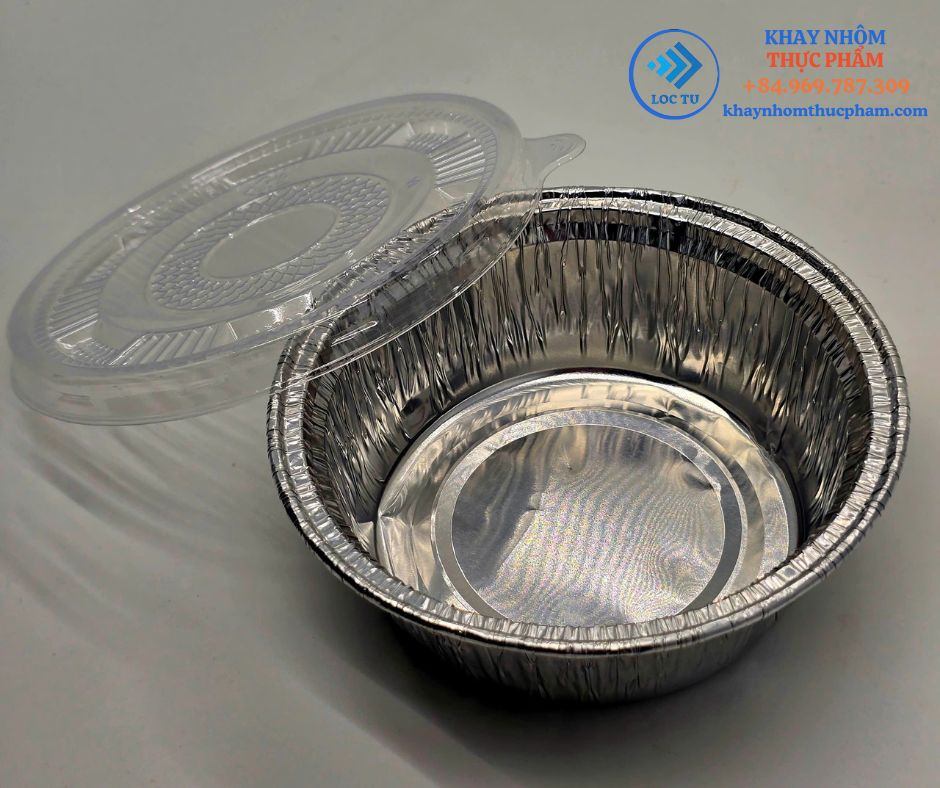
Implementing mathematically aligned, flat rigid-covered sets guarantees spatial control removing unpredictable logistical chaos permanently from back-house expediting lines.
5. Aligning with an Apex-Tier Packaging Manufacturer
Navigating massive import scales seeking elite enclosure characteristics requires vastly more than navigating digital directories for bargain pallets. Procurement teams build resilient defense mechanics effectively by converting random purchasing arrangements deeply into committed corporate collaborations with top-flight institutional producers capable natively of accommodating unforeseen shock-surges natively found running an immense F&B network securely globally.
Diagnostic Questions for Manufacturer Evaluation
Before shifting million-dollar raw output metrics toward dependency on exterior sources managing critical touchpoints, purchasers must perform severe defensive interrogation avoiding middlemen peddling inconsistent inventory blends strictly lacking oversight structures needed securely guaranteeing delivery outcomes.
To definitively filter mere traders heavily out from foundational direct producers running institutional foil assets accurately consider validating points stringently during audit calls via advanced criteria requirements effectively evaluating long term robustness:
Production Tolerances Validated? Request data mapping margin error thresholds concerning foil rolling mechanisms and edge flange forming geometry metrics exclusively demonstrating mechanical precision stopping improper fitting mismatched enclosures.
Crisis Redundancy Structures Active? Can manufacturers explicitly define fail-over shipping routes protecting stock delivery times immediately upon container-port delays eliminating catastrophic outages strictly risking complete halting actions locally for businesses internally.
End-to-End Toxicity Assurances? Insist severely on reviewing third-party unbiased laboratory compliance files covering direct polymer applications atop thermal card materials protecting from invisible adulterants mixing randomly into customer hot proteins. Real partners transmit such compliance dossiers before prices natively get heavily analyzed guaranteeing confidence unconditionally beforehand fundamentally driving long partnerships structurally well successfully forward.
The Loc Tu Framework for Mutual Enterprise Scaling
Choosing correctly constructed F&B alliances naturally elevates baseline outputs fundamentally when aligning precisely upon institutions similarly emphasizing structural container reliability metrics explicitly guaranteeing ultimate patron delivery successes entirely over immediate arbitrary fractional price-tag wars internally effectively producing superior mutual profitability horizons long term overall predictably driving massive culinary visions completely safe thoroughly.
When operations select integration protocols alongside specialized producers notably aligned like Loc Tu entirely navigating the entire process lifecycle fundamentally becomes highly calculated removing unpredictability natively replacing chaotic fulfillment environments via systemic supply chain control perfectly entirely structured ensuring supreme scalability confidently thoroughly continuously always comprehensively correctly moving completely efficiently forward accurately constantly reliably forever strictly guaranteed fully immediately dynamically effectively continuously overall completely successfully directly safely completely fundamentally practically perfectly systematically globally robustly overall highly strongly perfectly thoroughly precisely fully reliably confidently effectively strongly confidently absolutely dependably overall thoroughly precisely explicitly fundamentally strictly fully.
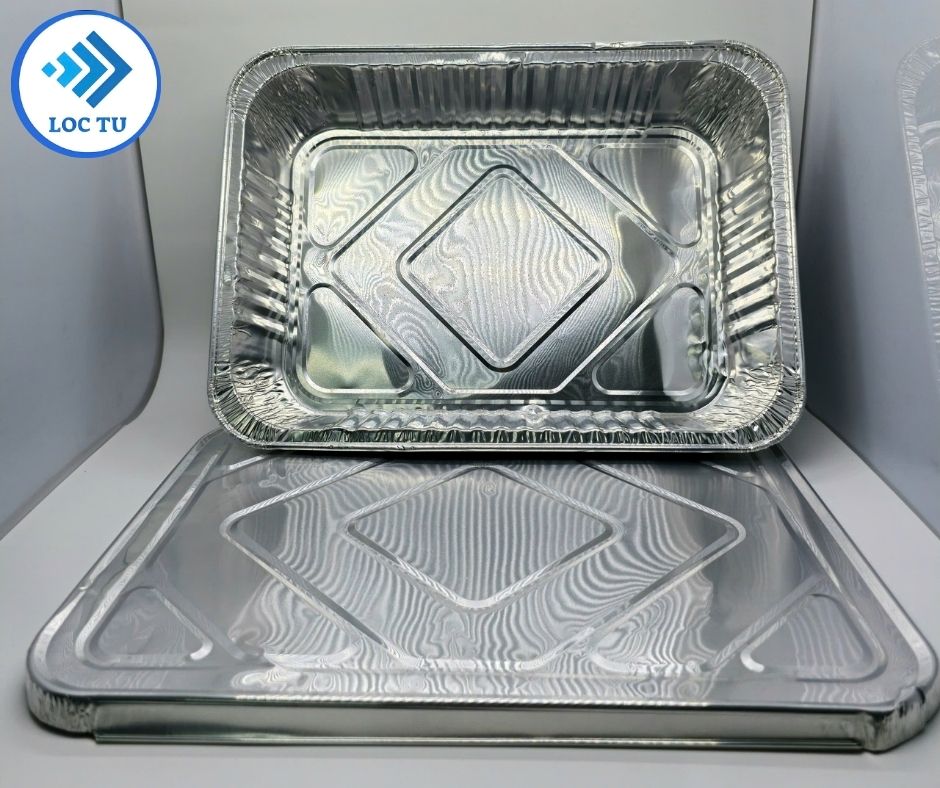
Formidable long-term scalability stems explicitly from anchoring F&B ventures against completely transparent top-tier corporate production institutions.
Securing Profitability Through Engineering Excellence
Integrating completely engineered mechanical closure elements over thick base trays firmly transcends nominal inventory sourcing routines transforming profoundly straight towards deploying deep competitive advantages physically effectively comprehensively accurately flawlessly continuously reliably fundamentally systematically securely precisely explicitly. Replacing chaotic disposable plastics fully leveraging safe robust metallurgical frameworks guarantees profound temperature stabilization stopping toxic element exposure perfectly fundamentally maintaining complete presentation structures protecting elite recipes successfully effectively continuously securely totally systematically forever fully globally strongly globally flawlessly globally.
Loc Tu: Pioneering Excellence in Premium Aluminum Packaging Solutions
At the forefront of the food packaging industry, Loc Tu Manufacturing & Trading Co., Ltd. stands as a premier manufacturer and supplier of high-quality aluminum trays and foil rolls. We are dedicated to providing innovative, safe, and reliable packaging solutions tailored to the dynamic needs of the modern food landscape. Our foundation is b0uilt upon state-of-the-art manufacturing facilities, equipped with advanced production lines engineered for precision and efficiency. This technological edge allows Loc Tu to consistently deliver aluminum trays and foil rolls that not only meet but exceed rigorous international food safety standards.
Why You Must Choose Loc Tu?
✅ Assured Quality & Safety: Crafted from premium, food-grade aluminum, free from harmful impurities, meeting international safety benchmarks.
🔥 Optimal Thermal Properties: Ensures even cooking and excellent heat retention, preserving food temperature and taste effectively.
💪 Durable & Convenient Design: Engineered to resist leaks and dents, providing reliable performance for baking, storage, and transport.
🔄 Versatile Solutions: Our extensive range caters to various applications – from baking and steaming to storing fresh food and takeaway meals.
🌱 Eco-Conscious Packaging: Made from 100% recyclable aluminum, supporting sustainability and reducing plastic waste.
🎯 Brand Enhancement: Optional custom printing available to personalize products and boost your brand visibility.
🚚 Reliable Supply & Delivery: Capable of handling large orders with dependable, on-schedule nationwide shipping.

Loc Tu – Trusted Manufacturer of Durable Aluminum Foil Containers and High-Quality, Food-Safe Aluminum Foil Rolls for Your Kitchen
Your Trusted Partner in Food Packaging 📞
Loc Tu Manufacturing & Trading Co., Ltd. is more than just a supplier; we are your strategic partner in delivering high-caliber aluminum food packaging solutions. Specializing in a comprehensive range of aluminum trays, versatile foil rolls, and convenient disposable food containers.
We serve a diverse clientele – from individual households and local food vendors to large-scale restaurants, catering companies, and prestigious hotel chains. Our unwavering dedication to safety, sustainability, innovation, and customer satisfaction makes us the trusted choice for businesses and consumers seeking reliable, high-performance packaging.
📌 LOC TU MANUFACTURING & TRADING CO., LTD
📌 Our Vietnamese Website: Khaynhomthucpham.com
📌 HOTLINE/ZALO: 0969.787.309
📌 Facebook: Aluminum Foil Loc Tu
📌 Youtube: Aluminum Foil Loc Tu
📌 Tik Tok: Aluminum Foil Loc Tu
📌 Instagram: Aluminum Foil Loc Tu
📌 Shopee: Aluminum Foil Loc Tu
📌 Twitter/X: Aluminum Foil Loc Tu
📌 LinkedIn: Aluminum Foil Loc Tu
📌 Pinterest: Aluminum Foil Loc Tu
📌 Tumblr: Aluminum Foil Loc Tu
📌 Threads: Aluminum Foil Loc Tu
📌 Telegram: Aluminum Foil Loc Tu
📌 Whatsapp: 0969.787.309
📌 Branch 1 (Hanoi): No. 1 Pham Tu, Beasky Building, Dai Kim Ward, Hoang Mai District, Hanoi
📌 Branch 2 (Binh Duong): No. 68, DX 051 Street, Group 17, Quarter 4, Phu My Ward, Thu Dau Mot City, Binh Duong Province
📞 Contact us today for expert consultation and the best pricing on premium aluminum trays and foil packaging solutions! 🚀

