ALUMINUM FOIL CONTAINERS: A FRAMEWORK FOR PEAK PERFORMANCE KITCHEN
ALUMINUM FOIL CONTAINERS: A FRAMEWORK FOR PEAK PERFORMANCE IN THE MODERN KITCHEN
(Introduction Title) Beyond Disposability: Viewing the Container as a Performance Tool
TABLE OF CONTENTS
The Foundational Matrix: Material Properties and Container Architecture Culinary Integration: From Strategic Preparation to Flawless Execution Expanding the Horizon: Unconventional and High-Impact Applications The Operational Protocol: Safety, Efficiency, and Sustainability Asset Management: Optimizing Procurement and Storage Strategies
1. The Foundational Matrix: Material Properties and Container Architecture
The Inherent Science of Aluminum in a Culinary Context
Thermal Conductivity: Aluminum's defining characteristic is its exceptional ability to conduct heat. It heats up rapidly and, more importantly, distributes that heat evenly across its entire surface. This property minimizes "hot spots," leading to more consistent baking, roasting, and reheating results compared to materials like glass or ceramic. This makes it an ideal asset for everything from lasagnas to brownies.Barrier Integrity: As a material, aluminum is impermeable to light, moisture, gases, and microorganisms when properly sealed. This creates a powerful protective barrier, preserving the flavor, aroma, and texture of food during storage in both refrigerators and freezers. It effectively locks in freshness and prevents freezer burn, safeguarding the quality of your culinary creations.Malleability & Form Factor: Aluminum is highly ductile, allowing it to be formed into a vast array of shapes and sizes with structural features like strengthening ribs and rigid rims without compromising its integrity. This "formability" is why we have access to everything from shallow tart pans to deep-steam table pans, each engineered for a specific purpose.
Deconstructing Container Architecture for Optimal Selection
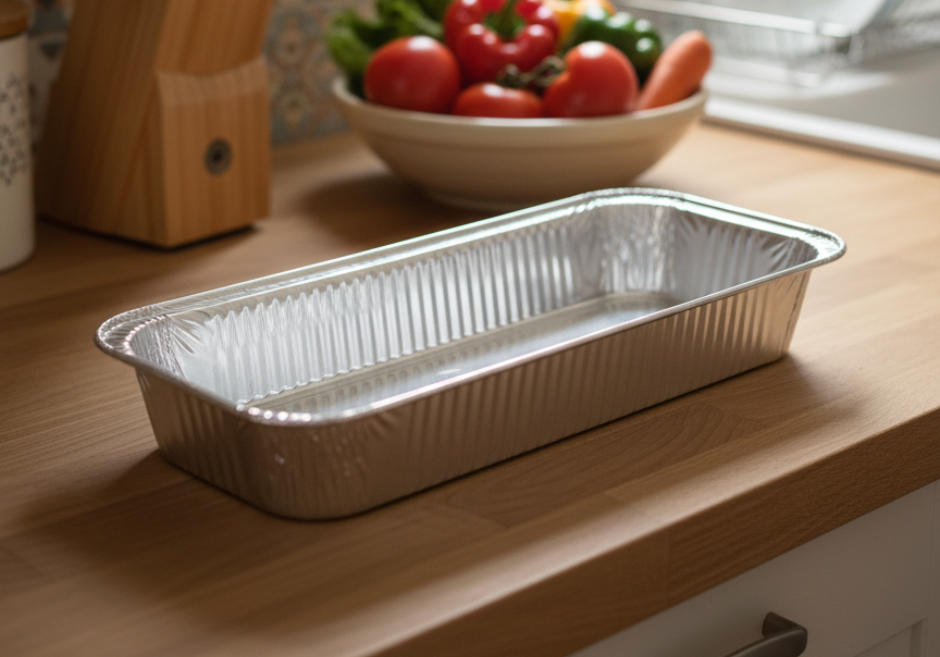
Architecture: Typically features a lower gauge (thinner) aluminum wall and an interrupted or partially curled rim.Performance: Sufficient for light-duty tasks like storing leftovers or baking a small cake. However, when filled with dense, heavy foods like a multi-layered casserole or subjected to the rigors of transport, it is prone to buckling, flexing, and potential structural failure.Optimal Use Case: Low-mass foods, short-term storage, single-use applications where structural stress is minimal.
Architecture: Constructed from a higher gauge (thicker) aluminum. Critically, it features a "full curl" rim, where the edge is completely rolled over, creating a rigid, rounded, and crush-resistant perimeter.Performance: This design offers superior rigidity and structural stability. It can handle heavy contents, high oven temperatures, and the stresses of being moved, stacked, and transported without deforming. The robust rim also provides a much better sealing surface for lids.Optimal Use Case: Large-batch cooking, transporting meals, freezing, and any application requiring maximum durability and reliability.
2. Culinary Integration: From Strategic Preparation to Flawless Execution
The "Single-Vessel" Workflow for Meal Prepping and Batch Cooking
Stage 1: Assembly & Marination. For dishes like meatloaf, shepherd's pie, or marinated chicken, the raw ingredients are assembled directly within the foil container. This eliminates the need for mixing bowls. The container itself becomes the vessel for marination, allowing flavors to penetrate evenly.Stage 2: Cooking or Freezing. From the assembly stage, the container can move in one of two directions. It can go directly into the oven for immediate cooking, or it can be securely lidded and placed in the freezer for future use. This dual-path capability is the cornerstone of efficient batch cooking.Stage 3: Storage. Post-cooking, any leftovers can be stored in the very same container they were cooked in. Simply allow the dish to cool, apply the lid, and refrigerate.Stage 4: Reheating. The container transitions seamlessly from the refrigerator back to the oven for reheating, ensuring the food is warmed evenly and without the need to transfer it to yet another dish. This closed-loop process is the pinnacle of kitchen efficiency.
Advanced Culinary Techniques Enabled by Foil Containers
Components: (1) A deep, heavy-duty foil pan + (2) A second, inverted foil pan of the same size or a tight-fitting foil lid.Application: When roasting meats like chicken or turkey, creating a sealed "roasting chamber" with the second pan traps steam. This results in an incredibly moist and tender final product. For the last 20-30 minutes of cooking, the top pan is removed to allow the skin to crisp and brown perfectly. This technique delivers professional-level results.
Components: (1) A small foil loaf or round pan for the primary dish (e.g., cheesecake, flan, crème brûlée) + (2) A larger foil pan.Application: Place the smaller pan inside the larger one. Pour hot water into the larger pan until it comes halfway up the side of the smaller one. This "water bath" or bain-marie method provides gentle, even, and humid heat, which is essential for delicate custards and cheesecakes, preventing them from cracking or becoming rubbery. The use of two foil pans makes this professional technique easy to execute and clean up.
3. Expanding the Horizon: Unconventional and High-Impact Applications
A Systems-Based Approach to Workshop and Craft Room Organization
The Role of Aluminum Foil Containers in Outdoor and Emergency Preparedness
Strength - Lightweight & Packable: They add negligible weight to a backpack or emergency bin. Multiple containers can be nested together, occupying a minimal footprint. This mass-to-volume ratio is critical in any mobile or storage-constrained scenario.Weakness - Susceptible to Crushing: An empty container is easily crushed if not packed carefully. It is best to store them filled with other soft items (e.g., fire-starting materials, first-aid supplies) to help them maintain their shape.Opportunity - Extreme Versatility: The list of potential uses is extensive. They can serve as a plate or bowl, a container for foraging berries, a vessel for sterilizing water over a fire, a small washbasin, a reflector for a signal mirror, or even a base for a small, self-contained fire.Threat - Puncture Risk: While durable, a sharp rock or tool can easily puncture the container, rendering it unable to hold liquids. Care must be taken in its handling and placement in a rugged environment.

4. The Operational Protocol: Safety, Efficiency, and Sustainability
Debunking Myths: The Microwave and Acidic Food Interaction Matrix
A Responsible Lifecycle: The Protocol for Recycling and Reuse
Branch 1: Pre-Use Assessment Is this a one-time use scenario (e.g., dropping off a meal for a friend)? → Plan for single use. Can this be reused in my own kitchen? → Select a heavy-duty container.
Branch 2: The Reuse Protocol Gently hand wash with soap and water. Avoid abrasive scrubbers that can damage the surface. Inspect for any punctures or deep scratches. Discard if compromised. Thoroughly dry to prevent water spots. Reserve reused containers for personal use only to maintain hygienic standards.
Branch 3: The End-of-Life Recycling Protocol Crucial Step: CLEANING. The container must be free of all food residue. Grease and food particles are contaminants in the aluminum recycling process.Compaction: Crush or ball the clean aluminum container up. This helps automated sorting machinery at recycling facilities identify it as aluminum (as opposed to paper or plastic) and prevents it from being mis-sorted.Check with your local municipality for specific guidelines on household aluminum recycling.
5. Asset Management: Optimizing Procurement and Storage Strategies
Analyzing Procurement Channels: Bulk vs. Ad-Hoc Retail
Process: Buying small packs of 2-3 containers as needed from a local grocery store.Cost: The highest cost-per-unit. You are paying a premium for the convenience of small-quantity purchasing.Quality: Generally limited to standard-duty or consumer-grade options. The variety of shapes and sizes is often restricted.Analysis: This model is suitable for the infrequent user but is financially inefficient for anyone who uses containers regularly for meal prep, baking, or sharing meals.
Process: Purchasing cases of 25, 50, or more containers at a time.Cost: Dramatically lower cost-per-unit, often saving 50-70% compared to retail prices. This investment directly reduces the long-term cost of kitchen operations.Quality: Access to a much wider range of professional, heavy-duty products, including specialized sizes and multi-compartment designs not found in retail.Analysis: This is the most intelligent and cost-effective model for anyone who uses foil containers with any regularity. The primary prerequisite is having adequate space for storage.
Implementing an Effective At-Home Storage System
Designate a Zone: Allocate a specific, dedicated shelf in a pantry or a cabinet for all disposable pans and lids. This prevents them from being scattered and damaged.Maintain Original Packaging: Keep the containers in their original box or plastic sleeve for as long as possible. This provides the best protection against crushing and dust.Vertical & Nested Storage: Store the containers vertically on their side, like files in a cabinet, if shelf height allows. If storing flat, nest similar sizes together. Never place heavy items on top of the stack.Lid Co-location: Store the corresponding lids either directly with their pans or immediately beside them. A common point of failure is being able to find a pan but not its matching lid. A simple tension rod or file divider can be used to keep lids organized vertically.First-In, First-Out (FIFO): When you purchase a new sleeve of containers, place it at the back of the shelf and move the older ones to the front. This ensures you are always using your oldest stock first.
(Conclusion Title) The Aluminum Foil Container: An Instrument of Strategic Advantage
Loc Tu: Pioneering Excellence in Premium Aluminum Packaging Solutions
Why You Must Choose Loc Tu?
✅ Assured Quality & Safety: Crafted from premium, food-grade aluminum, free from harmful impurities, meeting international safety benchmarks.
🔥 Optimal Thermal Properties: Ensures even cooking and excellent heat retention, preserving food temperature and taste effectively.
💪 Durable & Convenient Design: Engineered to resist leaks and dents, providing reliable performance for baking, storage, and transport.
🔄 Versatile Solutions: Our extensive range caters to various applications – from baking and steaming to storing fresh food and takeaway meals.
🌱 Eco-Conscious Packaging: Made from 100% recyclable aluminum, supporting sustainability and reducing plastic waste.
🎯 Brand Enhancement: Optional custom printing available to personalize products and boost your brand visibility.
🚚 Reliable Supply & Delivery: Capable of handling large orders with dependable, on-schedule nationwide shipping.
Loc Tu – Trusted Manufacturer of Durable Aluminum Foil Containers and High-Quality, Food-Safe Aluminum Foil Rolls for Your Kitchen
Your Trusted Partner in Food Packaging 📞
📌 LOC TU MANUFACTURING & TRADING CO., LTD
📌 Our Vietnamese Website: Khaynhomthucpham.com
📌 HOTLINE/ZALO: 0969.787.309
📌 Facebook: Aluminum Foil Loc Tu
📌 Youtube: Aluminum Foil Loc Tu
📌 Tik Tok: Aluminum Foil Loc Tu
📌 Instagram: Aluminum Foil Loc Tu
📌 Shopee: Aluminum Foil Loc Tu
📌 Twitter/X: Aluminum Foil Loc Tu
📌 LinkedIn: Aluminum Foil Loc Tu
📌 Pinterest: Aluminum Foil Loc Tu
📌 Tumblr: Aluminum Foil Loc Tu
📌 Threads: Aluminum Foil Loc Tu
📌 Telegram: Aluminum Foil Loc Tu
📌 Whatsapp: 0969.787.309
📌 Branch 1 (Hanoi): No. 1 Pham Tu, Beasky Building, Dai Kim Ward, Hoang Mai District, Hanoi
📌 Branch 2 (Binh Duong): No. 68, DX 051 Street, Group 17, Quarter 4, Phu My Ward, Thu Dau Mot City, Binh Duong Province
📞 Contact us today for expert consultation and the best pricing on premium aluminum trays and foil packaging solutions! 🚀
LOC TU PRODUCTION AND TRADING COMPANY LIMITED
Branch 1 (Binh Duong): No. 68, DX 051 Street, Group 17, Quarter 4, Phu My Ward, Thu Dau Mot City.
Branch 2 (Hanoi): No. 1 Pham Tu, Beasky Building, Dai Kim Ward, Hoang Mai District.
Hotline/Zalo: +84.969787309
Website: Khaynhomthucpham.com
Email: [email protected]

