COMMERCIAL ALUMINUM FOIL: MASTERING CULINARY PRECISION AND WORKFLOW
(Introduction Title) The Unsung Hero of the High-Volume Kitchen
In the fast-paced ecosystem of a commercial kitchen, operational excellence is defined by consistency. While chefs obsess over the quality of knives, ovens, and raw ingredients, one critical variable often flies under the radar until it fails: the aluminum foil. This ubiquitous consumable is not merely a wrapper; it is a thermal management tool, a hygiene barrier, and a vital instrument in yield maximization.
For the Executive Chef or Procurement Director, "foil is foil" is a dangerous fallacy. A tear during a brisket wrap results in dry meat. A low-grade roll that cannot withstand the convection currents of a commercial oven compromises the structural integrity of a dish. This analysis moves beyond the commodity mindset. ✍️ Written from the vantage point of industrial procurement experts and veteran culinary directors, we will dissect the physics, economics, and sourcing protocols of heavy-duty aluminum foil. We are here to validate that choosing the right specification is an operational imperative that directly influences food quality and bottom-line efficiency.
1. THE TECHNICAL BACKBONE: MATERIAL SCIENCE OF PROFESSIONAL FOIL
The first step in professional procurement is understanding the substrate. Commercial kitchens require aluminum alloys and tempers engineered for extreme conditions, distinct from the flimsy consumer-grade products found on retail shelves.
Deconstructing Micron Gauges and Temper Strength
Name: The Foil Specification Matrix (FSM-Pro)
Icon: 📏
Content:
To make an informed purchase, one must speak the language of "Microns" and "Mil."
Standard Service Grade (10-12 microns): Suitable for basic covering, cold storage, or wrapping sandwiches. It lacks the rigidity for cooking.
Heavy Duty (15-18 microns): The industry standard for foodservice. This gauge provides the necessary tensile strength to resist tearing when wrapping irregular shapes (like bone-in cuts) and supports the weight of food during transport.
Extra Heavy Duty (20+ microns): Essential for "pitmaster" applications, lining large hotel pans, or prolonged exposure to high heat without degrading.
The "Dead Fold" Characteristic: Professional foil must possess superior "dead fold"—the ability to hold a crease permanently without spring-back. This is a function of the aluminum alloy's temper (usually 'O' temper/annealed).
A procurement error here—using Standard grade where Extra Heavy is needed—results in double-wrapping. This not only doubles the material cost but also increases labor time and waste.
Metallurgy and Alloy Purity Certification
The Problem: Unexpected foil degradation (pinholing) when in contact with acidic foods (tomatoes, citrus marinades) or highly salted proteins.
The Root Cause: Inferior aluminum alloys with high levels of recycled scrap metal impurities (like iron).
The Solution: Sourcing only 8011 or 3003 Food Grade Aluminum Alloy.
Analysis: High-quality commercial foil utilizes specific alloys that maximize corrosion resistance and ductility. When vetting a supplier, demanding a Material Safety Data Sheet (MSDS) or FDA compliance certificate regarding heavy metal content (Lead, Cadmium, Mercury) is non-negotiable. This ensures that under high heat or acidic conditions, no chemical migration occurs between the packaging and the food.

Tensile Strength Matters: The "Dead Fold" capacity of professional grade vs. retail grade.
2. OPERATIONAL ECONOMICS: ANALYZING YIELD AND COST-PER-USE
In a high-volume canteen or hotel kitchen, buying cheap rolls is often expensive. The true economic value of "heavy duty aluminum foil rolls" is determined by usage efficiency and labor reduction, not the sticker price per carton.
The Mathematics of Roll Dimensions and Core Loss
Central Theme: The "True" Cost Equation
Branch 1: Length Verification
Many suppliers sell "commercial rolls" that are significantly under-wound. A roll claiming 150 meters but delivering 135 meters represents a 10% hidden cost increase. Weight verification is critical.
Branch 2: Width Optimization
30cm vs. 45cm (12 inch vs. 18 inch). Using a 45cm wide foil to wrap a small sandwich results in 30% material waste. Using a 30cm wide foil to line a full-size sheet pan requires overlapping two sheets, doubling usage and creating a leak risk.
Branch 3: The "Dispenser Efficiency" Factor
Cheap boxes fall apart in a humid kitchen. A reinforced cutter-box saves money. If the box disintegrates, the roll drops, gets dented, and becomes unusable (the "core lock" issue).
Conclusion: Investment in precise length guarantees and robust dispensing hardware lowers the Total Cost of Ownership (TCO).
Labor Efficiency and the Cost of Failure
Scenario A: The "Budget" Purchase.
A kitchen buys thin, generic foil to save $2.00 per roll.
Impact: The foil tears when staff wrap bone-in ribs. They re-wrap (using 2x material). Later, during service, the thin foil leaks marinade onto the oven floor, triggering smoke and requiring 20 minutes of intense cleaning labor.
Scenario B: The Premium Heavy-Duty Purchase.
The kitchen invests in validated heavy-duty foil.
Impact: Single-sheet application works 100% of the time. Oven liners stay intact, making cleanup instant.
Result: The "Budget" purchase cost the operation an estimated $15 in wasted material and labor per incident, far outweighing the $2 savings. Quality procurement is an efficiency driver.
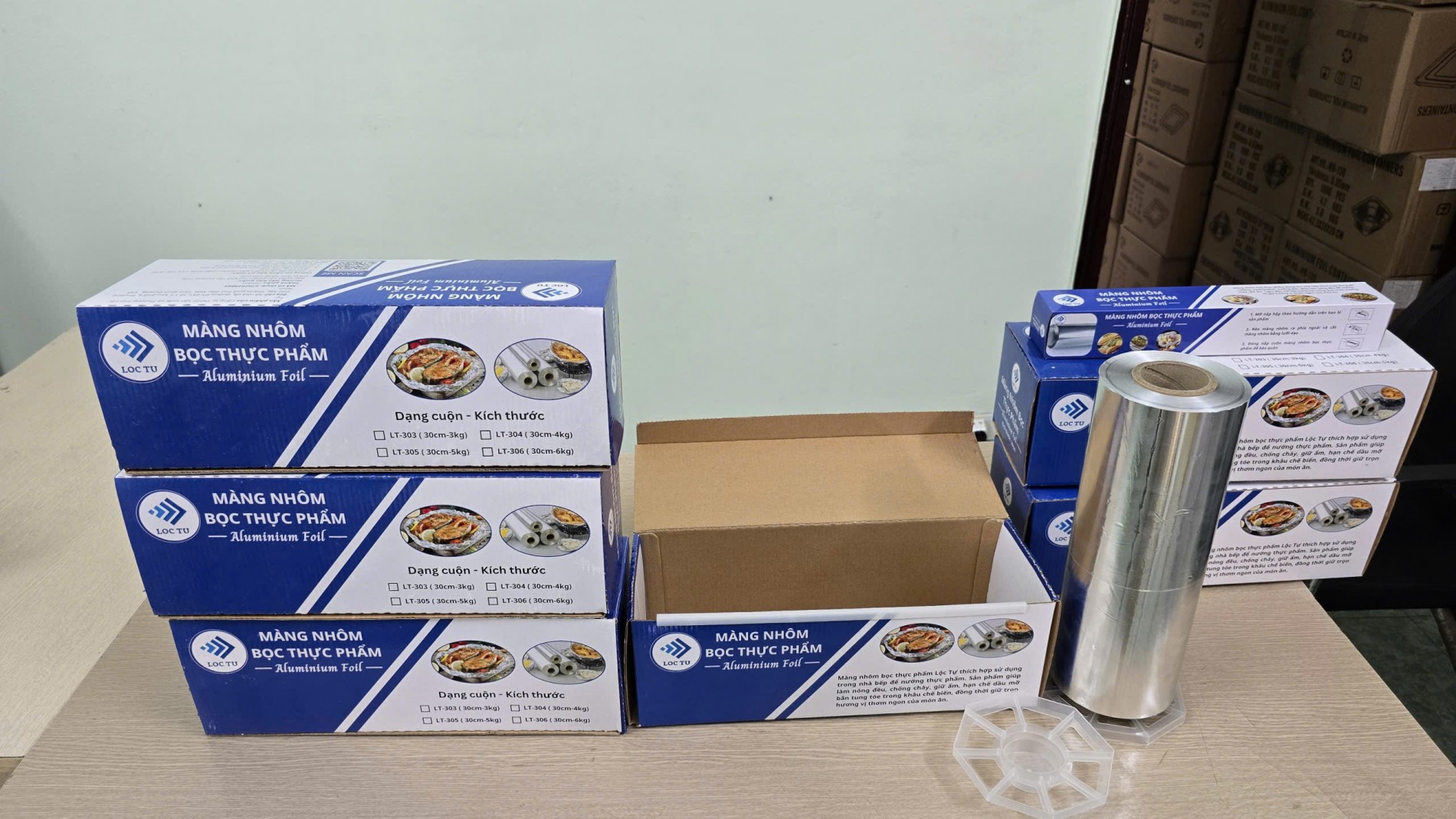
The Hidden Cost of "Cheap": Why material thickness dictates bottom-line efficiency.
3. THERMAL DYNAMICS: PRESERVING FOOD INTEGRITY
Aluminum foil is uniquely valued in professional culinary arts for its thermal conductivity and reflectivity (0.95+ reflectivity of radiant heat). Understanding these properties allows chefs to control the cooking and resting environment with precision.
Radiant Heat Reflection and Moisture Retention
Historically, the primary use of foil was simple protection. Modern gastronomy understands the physics.
The Resting Phase: After roasting meat, the internal juices are in flux. Covering the protein loosely with heavy-duty foil creates a localized humidity dome. It reflects radiant heat back onto the surface (slowing cooling) while trapping steam. This reduces evaporation loss—meaning a juicier steak and higher yield (less weight loss).
The Insulation Paradox: While aluminum is a conductor, trapped air is an insulator. Crumpling foil loosely creates air pockets, while tight wrapping conducts heat out.
Application: Chefs use heavy-duty foil to shield delicate parts of poultry (wing tips, drumsticks) from burning during long roasts—a technique impossible with lower-grade foils that disintegrate under convection fans.
The Cold Chain: Freezer Burn Prevention
Freezer burn is essentially dehydration caused by sublimation. Heavy-duty aluminum foil provides a near-perfect barrier to moisture and oxygen transmission (Water Vapor Transmission Rate ≈ 0). Plastic wraps often remain permeable to oxygen over time. For long-term preservation of high-value stock, aluminum provides a superior hermetic seal when properly crimped, safeguarding the asset value of expensive ingredients.
Reactive Safety: Acidity and Electrolytic Action
The Incident: A hotel banquet hall prepared 500 portions of Lasagna. They covered stainless steel trays with foil, creating direct contact between the aluminum, the tomato sauce (acid), and the steel pan.
The Reaction: The "Lasagna Cell" battery effect. Electrolytic corrosion occurred due to two dissimilar metals (aluminum and steel) and an electrolyte (salty, acidic sauce). Small black holes dissolved into the foil, depositing aluminum salts on the food.
The Professional Solution: This section emphasizes that high-grade foil is robust, but education is key. Sourcing consultants must educate kitchen staff to place a sheet of parchment paper between high-acid foods and the aluminum lid. A premium supplier provides not just the product, but this operational knowledge to prevent spoilage.
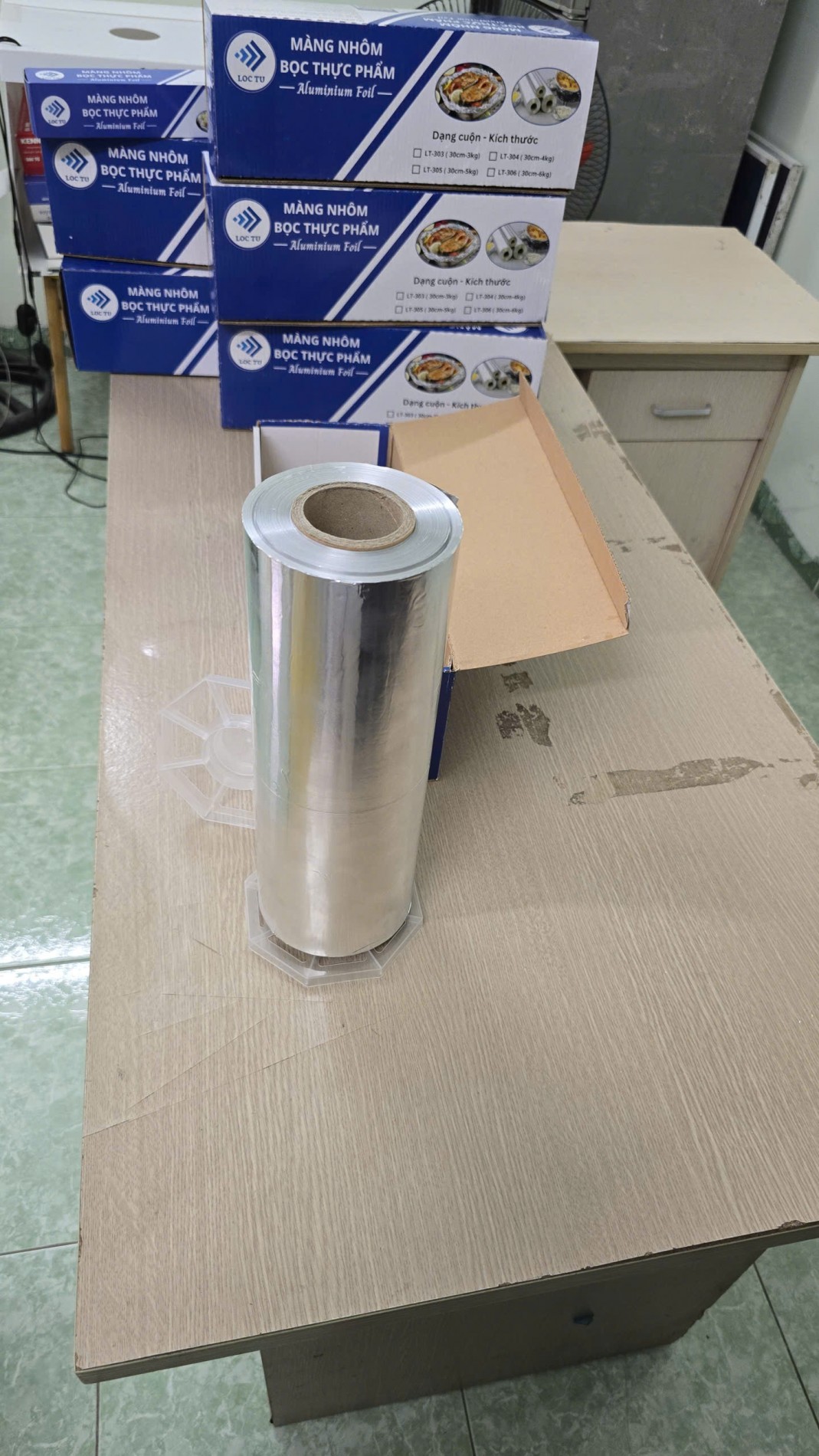
Thermal Management: Using foil properties to ensure even cooking and moisture retention.
4. ADVANCED CULINARY APPLICATIONS: BEYOND BASIC WRAPPING
When procurement aligns with culinary creativity, "aluminum wrap" becomes a versatile cooking apparatus. This section highlights how premium foil enables specific high-margin cooking techniques.
The "Texas Crutch" and Smoker Integrity
In the world of professional BBQ and smoking, "The Stall" is the enemy. This is when evaporation cools the meat as fast as the fire cooks it.
The Technique: Pitmasters employ the "Texas Crutch"—wrapping the brisket tightly in foil at approx 160°F.
The Requirement: This demands Extra Heavy Duty (18-20+ microns) foil.
Why? A tear leads to the loss of precious rendered tallow (liquid gold). The foil must withstand 12+ hours of indirect heat and handling with heavy silicone gloves.
Outcome: Standard retail foil is useless here. Procurement must source specific 18-inch heavy-duty wide rolls to accommodate full brisket packers without splicing sheets, ensuring a perfect seal and predictable cook times.
Delicate Precision: "En Papillote" at Scale
The Concept: Cooking "En Papillote" (steaming inside a pouch) creates intensely flavored, healthy dishes. It is usually done with parchment, but aluminum foil offers a tighter seal for faster cooking.
The Commercial Module:
Component: Individual portions of fish (seabass/salmon) + aromatics + wine.
Assembly: Wrapped in a visually appealing silver pouch using high-grade foil.
Efficiency: Can be prepped hours in advance (mise-en-place), stored in the walk-in, and fired to order in the oven.
Presentation: The "puffing" of the foil pouch adds theatricality to the table service.
Insight: This requires a foil with excellent ductility (stretch) to form the crimps without cracking, ensuring the steam pressure builds up to cook the fish perfectly.
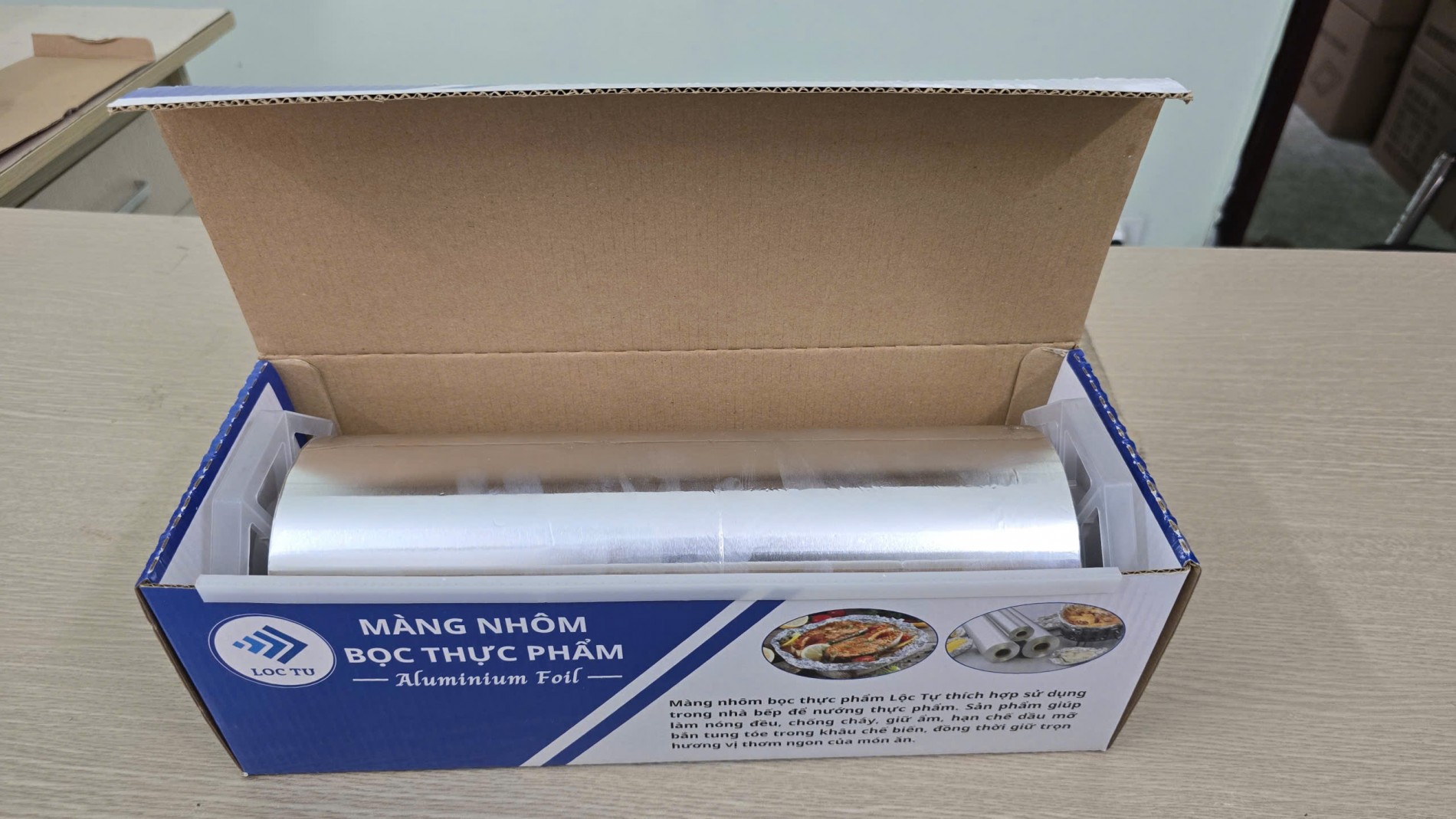
High-Performance durability: Withstanding the rigors of professional BBQ and long-format smoking.
5. THE SUPPLY CHAIN ALLIANCE: VETTING YOUR SOURCE
Transitioning from transactional purchasing to a strategic partnership mitigates risk. The final component of this "Masterpiece" analysis is establishing a protocol for selecting a vendor who understands the gravity of foodservice demands.
Auditing Vendor Reliability and Certification
Buyer: "We need the lowest price per carton."
Strategic Supplier: "We can discuss price, but first: Do you need 1.5kg or 2.0kg net weight rolls? Are your cutters plastic or metal? Can you afford a supply chain break in December?"
The Key Metrics for Vetting:
Transparency: Does the supplier sell by Net Weight (foil only) or Gross Weight (foil + heavy cardboard core + box)? Buying "Gross Weight" is the oldest trick in the industry to inflate pricing.
Continuity: Does the supplier hold local stock or rely on volatile JIT (Just-in-Time) shipping? For a chain restaurant, running out of foil stops the takeout line.
Certification: Demand HACCP and ISO 9001 compliance for the manufacturing plant. This ensures hygiene standards are met from the factory floor to your kitchen door.
The Loc Tu Commitment: Quality Beyond The Roll
At Loc Tu, we have evolved from a distributor to a solution provider for the HoReCa (Hotel, Restaurant, Catering) sector.
Customization: We don't just sell standard sizes. We configure roll lengths (100m, 300m, 500m) based on your kitchen's space constraints and turnover rate.
The "Guaranteed Microns" Pledge: We specify the exact thickness on our invoices. If we sell 18 microns, you receive 18 microns. No tolerances used to shave margins.
Consultative Approach: We analyze your menu. If you primarily do cold wraps, we recommend a cost-saving standard gauge. If you run a steakhouse, we deploy heavy-duty solutions.
This partnership model transforms an expense line item into a secured asset.

Reliability is the ultimate luxury. Verified stock, consistent weight, and certified safety.
PRECISION PACKAGING AS A COMPETITIVE ADVANTAGE
This analysis concludes with a definitive stance: Heavy-duty aluminum foil is a cornerstone of commercial kitchen efficiency. By respecting the physics of thermal retention, understanding the economics of waste reduction, and demanding metallurgical purity, F&B operators elevate their standards.
It is no longer acceptable to treat this essential supply as an afterthought. It is a tool for the serious culinarian. Sourcing commercial aluminum foil requires a shift in perspective—from seeking the cheapest roll to securing the most reliable partner. In the relentless pursuit of culinary perfection, the quality of your foil reflects the quality of your kitchen. 🔪🔥
Loc Tu: Pioneering Excellence in Premium Aluminum Packaging Solutions
At the forefront of the food packaging industry, Loc Tu Manufacturing & Trading Co., Ltd. stands as a premier manufacturer and supplier of high-quality aluminum trays and foil rolls. We are dedicated to providing innovative, safe, and reliable packaging solutions tailored to the dynamic needs of the modern food landscape. Our foundation is b0uilt upon state-of-the-art manufacturing facilities, equipped with advanced production lines engineered for precision and efficiency. This technological edge allows Loc Tu to consistently deliver aluminum trays and foil rolls that not only meet but exceed rigorous international food safety standards.
Why You Must Choose Loc Tu?
✅ Assured Quality & Safety: Crafted from premium, food-grade aluminum, free from harmful impurities, meeting international safety benchmarks.
🔥 Optimal Thermal Properties: Ensures even cooking and excellent heat retention, preserving food temperature and taste effectively.
💪 Durable & Convenient Design: Engineered to resist leaks and dents, providing reliable performance for baking, storage, and transport.
🔄 Versatile Solutions: Our extensive range caters to various applications – from baking and steaming to storing fresh food and takeaway meals.
🌱 Eco-Conscious Packaging: Made from 100% recyclable aluminum, supporting sustainability and reducing plastic waste.
🎯 Brand Enhancement: Optional custom printing available to personalize products and boost your brand visibility.
🚚 Reliable Supply & Delivery: Capable of handling large orders with dependable, on-schedule nationwide shipping.

Loc Tu – Trusted Manufacturer of Durable Aluminum Foil Containers and High-Quality, Food-Safe Aluminum Foil Rolls for Your Kitchen
Your Trusted Partner in Food Packaging 📞
Loc Tu Manufacturing & Trading Co., Ltd. is more than just a supplier; we are your strategic partner in delivering high-caliber aluminum food packaging solutions. Specializing in a comprehensive range of aluminum trays, versatile foil rolls, and convenient disposable food containers.
We serve a diverse clientele – from individual households and local food vendors to large-scale restaurants, catering companies, and prestigious hotel chains. Our unwavering dedication to safety, sustainability, innovation, and customer satisfaction makes us the trusted choice for businesses and consumers seeking reliable, high-performance packaging.
📌 LOC TU MANUFACTURING & TRADING CO., LTD
📌 Our Vietnamese Website: Khaynhomthucpham.com
📌 HOTLINE/ZALO: 0969.787.309
📌 Facebook: Aluminum Foil Loc Tu
📌 Youtube: Aluminum Foil Loc Tu
📌 Tik Tok: Aluminum Foil Loc Tu
📌 Instagram: Aluminum Foil Loc Tu
📌 Shopee: Aluminum Foil Loc Tu
📌 Twitter/X: Aluminum Foil Loc Tu
📌 LinkedIn: Aluminum Foil Loc Tu
📌 Pinterest: Aluminum Foil Loc Tu
📌 Tumblr: Aluminum Foil Loc Tu
📌 Threads: Aluminum Foil Loc Tu
📌 Telegram: Aluminum Foil Loc Tu
📌 Whatsapp: 0969.787.309
📌 Branch 1 (Hanoi): No. 1 Pham Tu, Beasky Building, Dai Kim Ward, Hoang Mai District, Hanoi
📌 Branch 2 (Binh Duong): No. 68, DX 051 Street, Group 17, Quarter 4, Phu My Ward, Thu Dau Mot City, Binh Duong Province
📞 Contact us today for expert consultation and the best pricing on premium aluminum trays and foil packaging solutions! 🚀

