ENGINEERING FLAVOR INTEGRITY: MULTI-COMPARTMENT FOIL TRAYS IN BULK
ENGINEERING FLAVOR INTEGRITY: MULTI-COMPARTMENT FOIL TRAYS IN BULK
The Segmentation of Culinary Delivery: Packaging as an Asset
TABLE OF CONTENTS
Introduction: The Segmentation of Culinary Delivery The Physics of Meal Separation: Elevating Customer Experience Operational Logistics: Streamlining High-Volume Catering Financial Audit: Total Cost of Ownership for Compartmentalized Solutions Material Science & Compliance: The Non-Negotiable Standards Partnership Protocols: Establishing a Reliable Bulk Supply Chain
1. The Physics of Meal Separation: Elevating Customer Experience
Analyzing the cross-contamination challenge in delivery
The Scenario: A high-volume corporate catering company ("Apex Lunch") was delivering 500 meals daily using single-compartment plastic boxes. The menu featured grilled chicken with savory glaze and roasted root vegetables.The Physics Failure: During the 30-minute transit, the viscosity of the glaze decreased due to heat. It migrated across the flat surface, saturating the roasted vegetables.The "Texture Clash": Customers received a homogenous, flavor-mudded product where the crisp texture of the vegetables was destroyed by the protein’s sauce.The Aluminum Solution: By transitioning to a3-compartment aluminum foil tray , Apex introduced rigid physical barriers. The glaze remained isolated with the chicken. The vegetables maintained their distinct roasted profile.Outcome: "Received quality" matched "kitchen pass quality." Complaint rates dropped by 85%, directly attributed to the mechanical separation of liquid and solid components. This illustrates that compartmentalization is fundamentally aboutflavor integrity .
Thermal zones: Managing hot and cold components
Concept: Differential Thermal Retention. The Challenge: Often, a meal consists of components that hold heat differently (e.g., dense mashed potatoes vs. flash-steamed broccoli).The Mechanism: A high-quality multi-compartment foil tray acts as a modular thermal system. The aluminum walls (usually >16 microns thick) conduct heat efficiently within their specific zones but provide a defined barrier.Lid Integration: When paired with a foil-laminated board lid, the system allows for the creation of "micro-climates."Operational Advantage: Kitchens can plate hot components in the larger compartment and warm sides in smaller ones, knowing the aluminum facilitates rapid cooling if blast-chilling is required for "cook-chill" operations, or sustained heat retention during hot-holding. The separation prevents the steam from one item from accelerating the degradation of another.
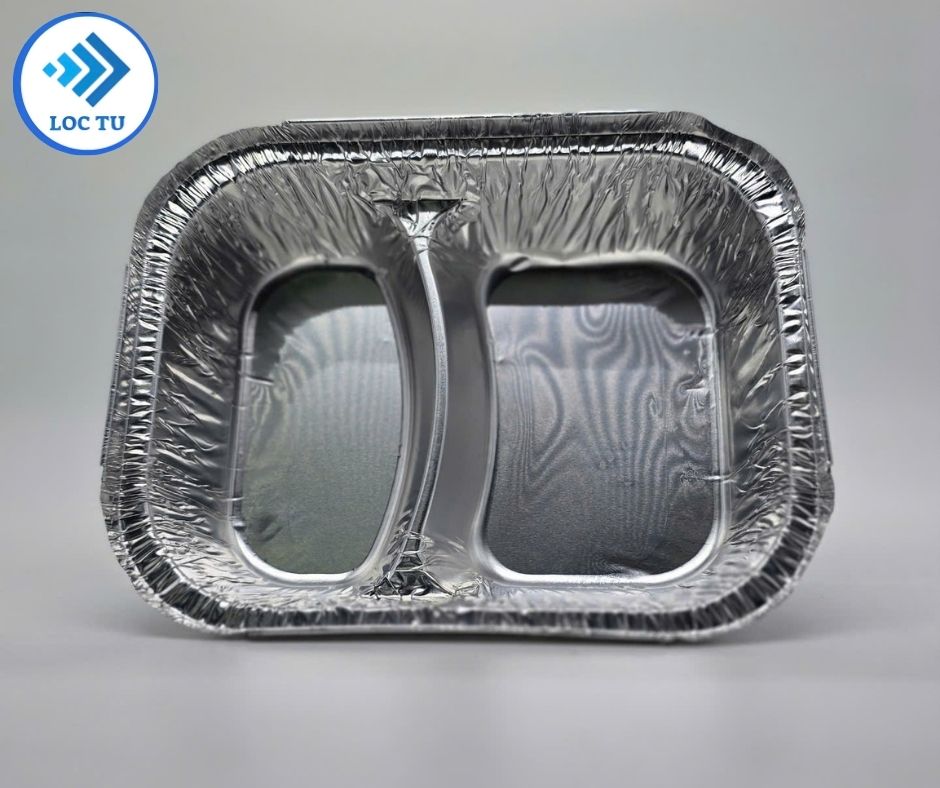
Precision Engineering: Compartmentalization prevents flavor migration and preserves distinct textures during transit.
2. Operational Logistics: Streamlining High-Volume Catering
Standardization impact on portion control and profit margins
Era 1: Visual Estimation. Staff used ladles and visual guesswork to fill generic containers. "Just fill it up" led to massive variance. Over-portioning by just 10% on the main protein could obliterate the net profit of a dish.Era 2: Weight-Based Plating. Scales were introduced. Accurate, but slow. It created bottlenecks during peak rush hours.Era 3: Volumetric Standardization (The Aluminum Era). This is the current professional standard. Adivided foil container has fixed cavity volumes (e.g., 500ml for rice, 200ml for meat, 100ml for vegetables).The Operational Shift: The containerbecomes the measuring tool. Staff are trained to "fill to the rim."ROI Implication: If a compartment limits the protein portion to exactly 200g, the kitchen cannot accidentally serve 220g. Over 5,000 monthly orders, this saving on raw food costs (COGS) is substantial enough to cover the packaging investment entirely.
Stacking dynamics and transport efficiency protocols
Inbound Logistics: Aluminum trays arrive tightly compressed. One carton can hold 500–1000 units. A similarly sized EPS (foam) container order might require three times the warehouse space. For kitchens with high rent per square foot, this space-saving efficiency is a hidden revenue generator.Assembly Line Stacking: Once filled and lidded (using foil-board lids), the rigidity of the aluminum allows for high-vertical stacking in thermal bags.The Structural Integrity Test: Plastic containers can crack under vertical pressure; foam can collapse. A heavy-duty aluminum compartment tray (standardized gauge) resists crushing. This allows delivery drivers to carry more units per trip without risking the integrity of the bottom-layer meals.Actionable Advice: When sourcing, demand "full curl" rim specifications to ensure maximum vertical load-bearing strength.
3. Financial Audit: Total Cost of Ownership for Compartmentalized Solutions
Moving beyond per-unit metrics: The hidden cost of secondary packaging
The Old Method (Fragmented Costs): Main Container Cost: $0.15 Separate Sauce Cup Cost: $0.05 Separate Sauce Lid Cost: $0.03 Side Dish Cup Cost: $0.06 Total Material Cost: $0.29 + Triple Inventory Management.
The Integrated Solution (Compartment Tray): 3-Compartment Aluminum Tray + Lid Cost: $0.25 Total Material Cost: $0.25 + Single SKU Inventory.
The Labor Multiplier: In the fragmented model, staff must perform three distinct filling and closing actions. In the integrated model, there is one filling motion and one closing motion.Conclusion: By consolidating the meal components into a single chassis—themulti-chamber aluminum pan —you effectively delete the purchasing and labor costs associated with ramekins, sauce cups, and side bowls. The initial higher price of a complex tray is offset by the elimination of ancillary SKUs.
The ROI of "All-in-One" presentation vs. separate side containers
Strength (Aluminum Trays): Presentation Hygiene. Customers perceive a bento-style aluminum meal as a complete, professional "set." It mimics the cafeteria tray or thali experience, which implies value.Weakness (Separate Containers): The "Bag Jumble." When sides are packed loosely in a bag, they tumble. Spilled sauce cups are the #1 cause of delivery refunds.Opportunity (Brand Retention): Data suggests that packaging integrity (no leaks, organized food) is a top 3 factor in customer re-order rates.Threat (Mitigated): By using a high-grade wholesale foil container, you mitigate the threat of "negative unboxing." The ROI is calculated not just in cents saved, but in Customer Lifetime Value (CLV) protected.
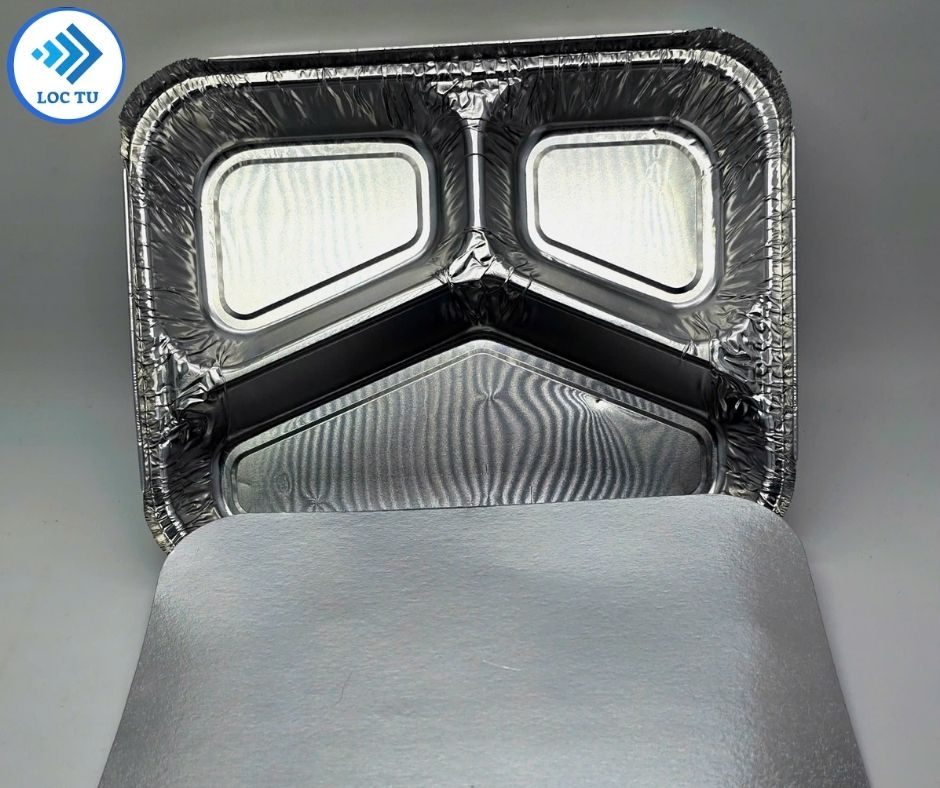
Financial Impact: Integrated packaging reduces SKU complexity and eliminates refund requests caused by messy deliveries.
4. Material Science & Compliance: The Non-Negotiable Standards
Alloy purity and rigid flange requirements for automation
Alloy Series: Insist on 3003 or 8011 Aluminum series. These provide the optimal balance of formability (creating deep compartments without tearing) and strength.Lubrication: Use of food-grade lubrication oils (FDA/EU compliant) during the pressing process is mandatory. Inferior suppliers use industrial oils that leave a residue/odor.Flange Design (Rim): LVI (Vertical Flange): For crimp-on foil lids.Full Curl: For structural rigidity and safe handling (no sharp edges).Smooth Wall: If using heat-sealing film technology. This requires high precision to ensure the compartment dividers do not interfere with the film seal.
Divider Height: The internal dividers must reach near-flush with the rim level to effectively prevent liquid transfer.
Sustainability credentials in modern procurement audits
The Environmental Objection: "Isn't single-use packaging bad for our ESG (Environmental, Social, and Governance) score?"The Aluminum Defense: Unlike black plastic (which often cannot be sorted by optical scanners) or Styrofoam (which takes centuries to degrade), aluminum is a permanent material.Infinitely Recyclable: It can be melted down and reformed without losing properties.Economic Viability: Waste management facilities actuallywant aluminum because it has high scrap value.
The Strategic Angle: Market your usage ofrecyclable aluminum foil trays as a green initiative. Tell your corporate clients:"We use packaging that pays for its own recycling." This transforms a disposable cost into a sustainability marketing asset.
5. Partnership Protocols: Establishing a Reliable Bulk Supply Chain
Auditing supplier capability: Inventory buffers and lead times
The Transactional Seller: Offers a spot price. If the shipping container is delayed at customs, they shrug. You have no stock. Your kitchen halts.The Strategic Partner (e.g., Loc Tu): Operates with a "Safety Stock" agreement.Protocol: They analyze your burn rate (e.g., 10,000 trays/month).Buffer: They physically warehouse 20% over your needs locally.Advantage: When the inevitable global shipping disruption happens, your operation feels no impact.
Vetting Question: Ask your potential supplier:"Show me your Business Continuity Plan (BCP) for raw material shortages." Only professional wholesale entities will have a satisfactory answer.
Customization pathways: Embossing and brand visibility via Loc Tu
The "Generic" Trap: Using the same smooth-wall tray as your competitor makes you a commodity.The Customization Module: Embossing: Your logo can be stamped directly into the bottom of the aluminum compartment.Lid Printing: Move away from generic silver lids. Print cooking instructions, QR codes for re-ordering, and nutritional info directly on the foil-board lid.Compartment Geometry: Need a specific shape for a signature taco or a long baguette? Loc Tu can engineer a mold specific to your menu geometry.
The Value: This prevents "copycat" competitors from easily replicating your presentation and solidifies your brand identity in the consumer's home.
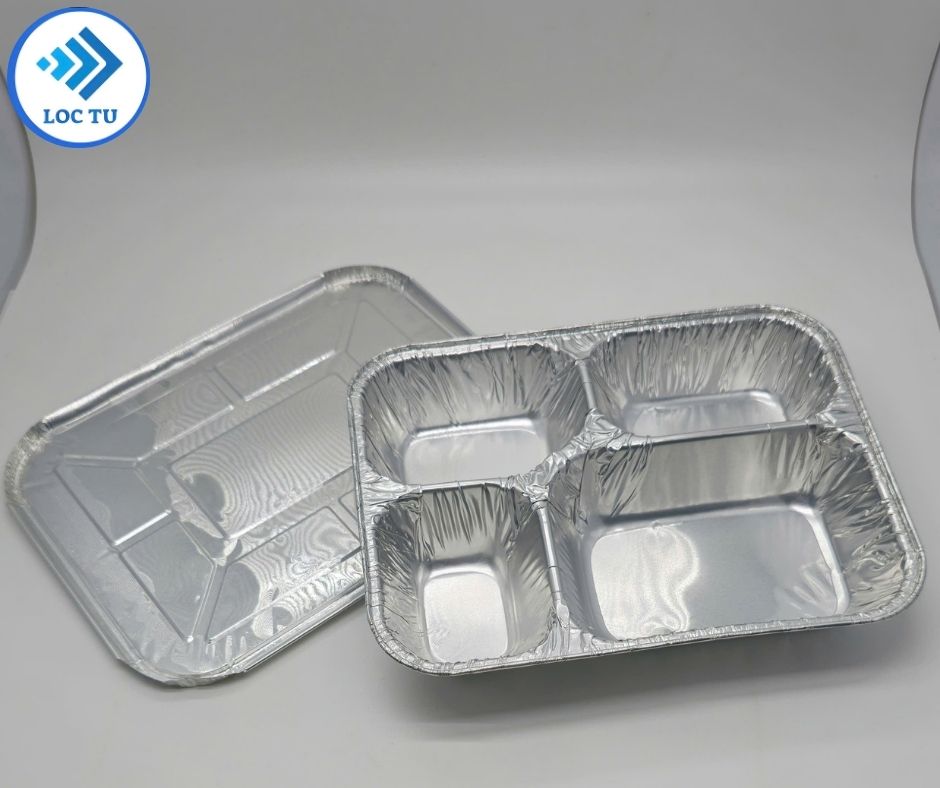
Strategic Partnership: Collaborating with Loc Tu provides access to custom tooling and supply chain immunity.
The Operational Verdict: Precision as a Competitive Advantage
Loc Tu: Pioneering Excellence in Premium Aluminum Packaging Solutions
Why You Must Choose Loc Tu?
✅ Assured Quality & Safety: Crafted from premium, food-grade aluminum, free from harmful impurities, meeting international safety benchmarks.
🔥 Optimal Thermal Properties: Ensures even cooking and excellent heat retention, preserving food temperature and taste effectively.
💪 Durable & Convenient Design: Engineered to resist leaks and dents, providing reliable performance for baking, storage, and transport.
🔄 Versatile Solutions: Our extensive range caters to various applications – from baking and steaming to storing fresh food and takeaway meals.
🌱 Eco-Conscious Packaging: Made from 100% recyclable aluminum, supporting sustainability and reducing plastic waste.
🎯 Brand Enhancement: Optional custom printing available to personalize products and boost your brand visibility.
🚚 Reliable Supply & Delivery: Capable of handling large orders with dependable, on-schedule nationwide shipping.

Loc Tu – Trusted Manufacturer of Durable Aluminum Foil Containers and High-Quality, Food-Safe Aluminum Foil Rolls for Your Kitchen
Your Trusted Partner in Food Packaging 📞
📌 LOC TU MANUFACTURING & TRADING CO., LTD
📌 Our Vietnamese Website: Khaynhomthucpham.com
📌 HOTLINE/ZALO: 0969.787.309
📌 Facebook: Aluminum Foil Loc Tu
📌 Youtube: Aluminum Foil Loc Tu
📌 Tik Tok: Aluminum Foil Loc Tu
📌 Instagram: Aluminum Foil Loc Tu
📌 Shopee: Aluminum Foil Loc Tu
📌 Twitter/X: Aluminum Foil Loc Tu
📌 LinkedIn: Aluminum Foil Loc Tu
📌 Pinterest: Aluminum Foil Loc Tu
📌 Tumblr: Aluminum Foil Loc Tu
📌 Threads: Aluminum Foil Loc Tu
📌 Telegram: Aluminum Foil Loc Tu
📌 Whatsapp: 0969.787.309
📌 Branch 1 (Hanoi): No. 1 Pham Tu, Beasky Building, Dai Kim Ward, Hoang Mai District, Hanoi
📌 Branch 2 (Binh Duong): No. 68, DX 051 Street, Group 17, Quarter 4, Phu My Ward, Thu Dau Mot City, Binh Duong Province
📞 Contact us today for expert consultation and the best pricing on premium aluminum trays and foil packaging solutions! 🚀
LOC TU PRODUCTION AND TRADING COMPANY LIMITED
Branch 1 (Binh Duong): No. 68, DX 051 Street, Group 17, Quarter 4, Phu My Ward, Thu Dau Mot City.
Branch 2 (Hanoi): No. 1 Pham Tu, Beasky Building, Dai Kim Ward, Hoang Mai District.
Hotline/Zalo: +84.969787309
Website: Khaynhomthucpham.com
Email: [email protected]

