FOIL-WRAPPED GRILLING: A CULINARY FRAMEWORK FOR PEAK PERFORMANCE
FOIL-WRAPPED GRILLING: A CULINARY FRAMEWORK FOR PEAK PERFORMANCE
(Introduction Title) Beyond a Wrapper: Foil as a Culinary Performance Tool
TABLE OF CONTENTS
The Foundational Principles of Foil-Wrapped Grilling Material Science: The Critical Specifications for Culinary Foil The Flavor Equation: Analyzing the True Culinary Return on Investment Technique Synergy: The Foil Packet as a Complete Cooking System Achieving Mastery: Advanced Protocols for Foil-Wrapped Grilling
1. The Foundational Principles of Foil-Wrapped Grilling
Defining the strategic role of foil-wrapped grilling in culinary execution
The key advantages of a foil-wrapped grilling methodology
Image Content: A professional flowchart diagram. It contrasts a "Chaotic Direct-Grill Model" (ingredients scattered, some falling, uneven charring) with a "Systematic Foil Packet Model" (ingredients neatly arranged in a packet, moving as one unit to the grill, resulting in a perfect final dish).Caption: A systematic approach transforms grilling from a game of chance into an exercise in precision.ALT Text: A diagram illustrating the foundational principles of controlled foil-wrapped grilling versus direct grilling.
2. Material Science: The Critical Specifications for Culinary Foil
Essential material and structural specifications for kitchen foil
Material Certification: Always use foil explicitly labeled as "Food Grade" or "Food Safe." This ensures the aluminum alloy is free from contaminants and is stable for contact with food, especially acidic ingredients like tomatoes or lemon juice.Thickness (Gauge): This is the single most critical factor. Standard foil (approx. 12-16 microns) is often too thin and prone to tearing. For grilling, "Heavy-Duty" foil (≥18 microns) is the mandatory minimum standard. "Extra Heavy-Duty" or "Grill" specific foils offer the best performance and puncture resistance.Structural Integrity (The Fold-and-Crimp Method): The seal is paramount. The packet must be constructed using a double-fold, tightly crimped seam. This creates a mechanically robust, leak-proof seal that can withstand the pressure of internal steam generation.
Performance testing protocols for your chosen foil
The Puncture Test: Take a single sheet of the foil. Using the tip of a vegetable like a hard asparagus spear, apply firm pressure. Does it resist a small amount of force, or does it puncture immediately? Heavy-duty foil will exhibit significant resistance.The Double-Fold Seal Test: Create a small, empty packet and seal it with double folds. Submerge it in a bowl of water and lightly press on it. Do you see a stream of air bubbles escaping? If so, your crimping technique or the foil's ability to hold a crease needs improvement. The goal is zero bubbles.The Heat Stress Test: Place a piece of the foil on a hot grill for 2 minutes. Does it become overly brittle or show signs of discoloration? High-quality foil will maintain its integrity and pliability even under intense heat.
3. The Flavor Equation: Analyzing the True Culinary Return on Investment
Deconstructing the Total Culinary Value (TCV)
Branch 1: Flavor & Aroma Dynamics (The "Gains") Flavor Infusion: Concentrated steam forces aromatics (garlic, herbs) deep into the food.Moisture Retention: Trapped steam equals juiciness and a succulent texture.Ingredient Meld: The flavors of all components (e.g., vegetables, protein, sauce) marry in a way not possible on an open grill.
Branch 2: Effort & Efficiency Dynamics (The "Savings") Time (Cleanup): Drastically reduces grill cleaning time.Mental Energy: Eliminates the stress of food sticking or falling through grates.Ingredient Cost: Prevents loss of expensive ingredients like scallops or shrimp.
Branch 3: Hidden Costs of Poor Technique (The "Losses") Flavor Loss: Leaky packets result in flavor and aroma escaping.Dry Food: A poor seal leads to moisture loss and a disappointing final product.Wasted Time: A failed packet requires intervention, re-wrapping, or starting over.
How precision foil-wrapping delivers a high culinary ROI
Image Content: A professional, sleek bar chart. It shows two bars for "Culinary Value." The "Haphazard Wrap" bar has small green sections for "Flavor" and "Moisture" but large, red sections for "Flavor Loss," "Moisture Loss," and "Effort Waste." The "Precision Packet" bar has massive green sections for "Flavor" and "Moisture" and negligible red sections.Caption: An analysis of Total Culinary Value reveals that investing in technique delivers exponential returns in flavor and quality.ALT Text: A chart analyzing the culinary ROI of a precision-sealed foil packet versus a poorly wrapped one.
4. Technique Synergy: The Foil Packet as a Complete Cooking System
Integrating foil packets in the preparation and cooking workflow
Prep & Marination: Raw protein and vegetables are placed directly onto the foil sheet. Marinade and aromatics are added.Assembly: The packet is sealed, becoming a self-contained environment.Storage: The prepared packets can be stored in the refrigerator for hours, allowing the marinade to penetrate deeply.Cooking: The packet goes directly from the refrigerator to the grill.Serving: The packet can be brought to the table and opened just before eating, releasing a dramatic cloud of aromatic steam.This creates a seamless, highly efficient "prep-to-plate" workflow.
Using foil packets to engineer modular and customizable meals
Components: (1) A station with sheets of foil + (2) Bowls of pre-portioned components: various proteins (shrimp, chicken), cut vegetables (peppers, onions, zucchini), starches (precooked potatoes, corn), and sauces/fats (herb butter, pesto, teriyaki).Application: At a barbecue, each guest can assemble their own custom foil packet meal. This elevates the experience from a simple cookout to an interactive culinary event. It also caters perfectly to various dietary preferences and restrictions.
Components: (1) Quick-cooking seafood like shrimp + (2) Longer-cooking items like sausage or chicken + (3) Aromatic vegetables and a liquid.Application: By staggering the addition of ingredients or using precise cuts, a complex, multi-protein meal can be perfectly cooked in a single packet. For example, add the chicken and sausage first for 10 minutes, then carefully open and add the shrimp for the final 5 minutes of cooking.
5. Achieving Mastery: Advanced Protocols for Foil-Wrapped Grilling
Vetting your culinary approach: the cook's internal dialogue
The Culinary Mastery Protocol for flawless foil packet execution
Material Selection: Begin by selecting heavy-duty or grill-specific aluminum foil. Double up sheets if unsure. The foundation must be strong.The Architecture: Place ingredients in the center of the sheet. Ensure an even layer for consistent cooking. Don't overfill the packet; leave ample headspace for steam to circulate.Fluid & Fat Dynamics: Add a small amount of liquid (wine, broth, citrus juice) for steaming and a source of fat (butter, oil) to prevent sticking and add richness. This is non-negotiable for a premium result.The Double-Fold Seal: Bring the two long sides of the foil together. Fold them over twice, creating a sharp, tight crease. Then, take each of the two ends and fold them over twice, crimping tightly to create a fully encapsulated, leak-proof vessel.Thermal Management: Place the packet on the grill according to the chosen protocol (indirect heat for gentle cooking, direct heat for quicker, more rustic results).The Rest & Unveiling: Remove the packet from the grill and let it rest for 2-5 minutes. This allows the juices to redistribute. Carefully cut open the top of the packet with scissors or a knife (beware of hot steam) to unveil the final dish.
Image Content: The "moment of truth." A pair of hands is using tongs and a fork to pull apart a perfectly cooked foil packet on a wooden serving board. A dramatic plume of fragrant steam is rising from the beautifully cooked fish and vegetables within. The lighting is warm and appetizing.Caption: The culmination of technique and precision: a partnership that delivers flawless results.ALT Text: Depicting the final step of mastering foil-wrapped grilling: the perfect unveiling of a cooked meal.
(Conclusion Title) Foil-Cup Grilled Oysters: A Masterclass in Calculated Indulgence
Loc Tu: Pioneering Excellence in Premium Aluminum Packaging Solutions
Why You Must Choose Loc Tu?
✅ Assured Quality & Safety: Crafted from premium, food-grade aluminum, free from harmful impurities, meeting international safety benchmarks.
🔥 Optimal Thermal Properties: Ensures even cooking and excellent heat retention, preserving food temperature and taste effectively.
💪 Durable & Convenient Design: Engineered to resist leaks and dents, providing reliable performance for baking, storage, and transport.
🔄 Versatile Solutions: Our extensive range caters to various applications – from baking and steaming to storing fresh food and takeaway meals.
🌱 Eco-Conscious Packaging: Made from 100% recyclable aluminum, supporting sustainability and reducing plastic waste.
🎯 Brand Enhancement: Optional custom printing available to personalize products and boost your brand visibility.
🚚 Reliable Supply & Delivery: Capable of handling large orders with dependable, on-schedule nationwide shipping.
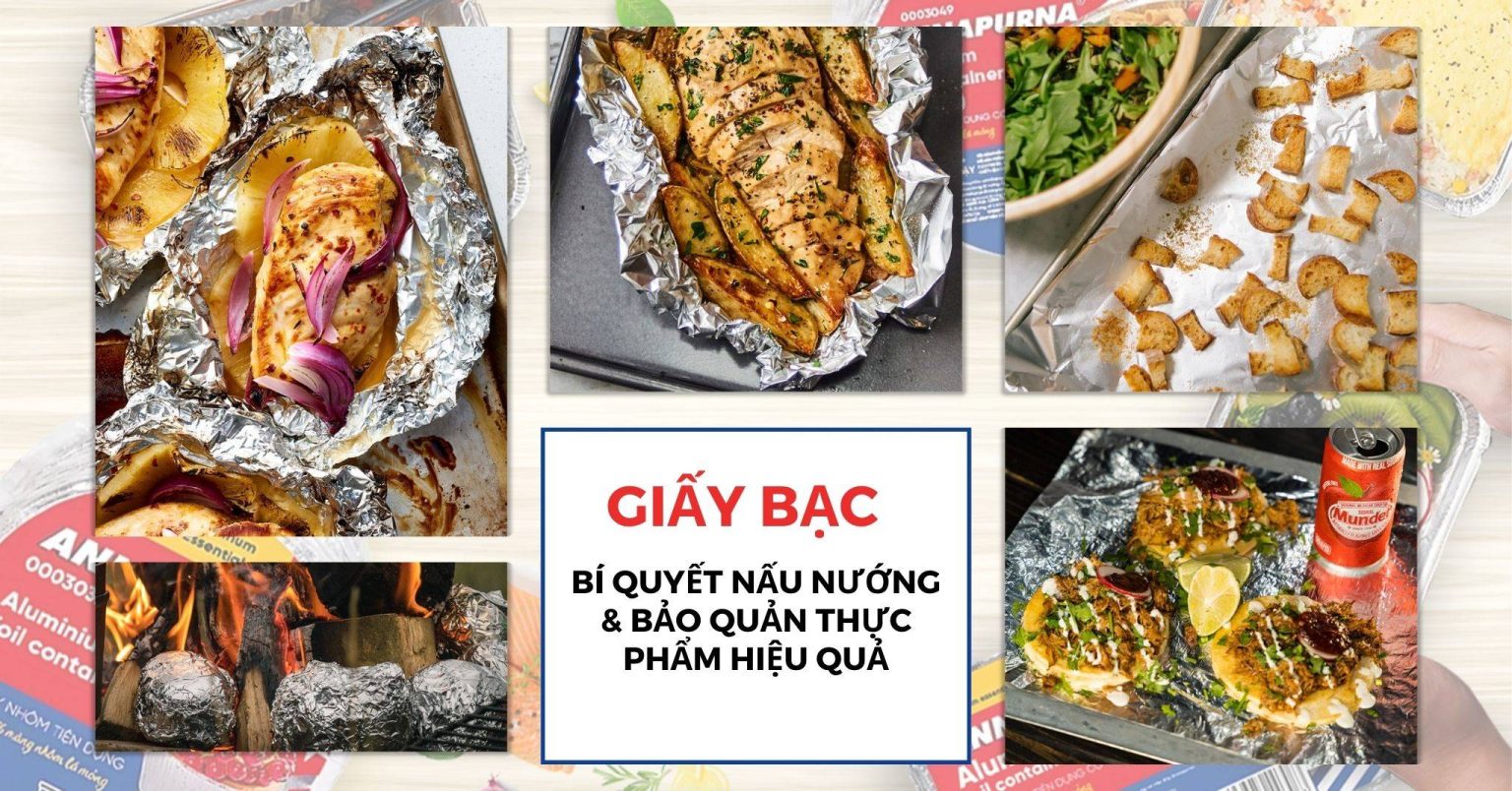
Loc Tu – Trusted Manufacturer of Durable Aluminum Foil Containers and High-Quality, Food-Safe Aluminum Foil Rolls for Your Kitchen
Your Trusted Partner in Food Packaging 📞
📌 LOC TU MANUFACTURING & TRADING CO., LTD
📌 Our Vietnamese Website: Khaynhomthucpham.com
📌 HOTLINE/ZALO: 0969.787.309
📌 Facebook: Aluminum Foil Loc Tu
📌 Youtube: Aluminum Foil Loc Tu
📌 Tik Tok: Aluminum Foil Loc Tu
📌 Instagram: Aluminum Foil Loc Tu
📌 Shopee: Aluminum Foil Loc Tu
📌 Twitter/X: Aluminum Foil Loc Tu
📌 LinkedIn: Aluminum Foil Loc Tu
📌 Pinterest: Aluminum Foil Loc Tu
📌 Tumblr: Aluminum Foil Loc Tu
📌 Threads: Aluminum Foil Loc Tu
📌 Telegram: Aluminum Foil Loc Tu
📌 Whatsapp: 0969.787.309
📌 Branch 1 (Hanoi): No. 1 Pham Tu, Beasky Building, Dai Kim Ward, Hoang Mai District, Hanoi
📌 Branch 2 (Binh Duong): No. 68, DX 051 Street, Group 17, Quarter 4, Phu My Ward, Thu Dau Mot City, Binh Duong Province
📞 Contact us today for expert consultation and the best pricing on premium aluminum trays and foil packaging solutions! 🚀
LOC TU PRODUCTION AND TRADING COMPANY LIMITED
Branch 1 (Binh Duong): No. 68, DX 051 Street, Group 17, Quarter 4, Phu My Ward, Thu Dau Mot City.
Branch 2 (Hanoi): No. 1 Pham Tu, Beasky Building, Dai Kim Ward, Hoang Mai District.
Hotline/Zalo: +84.969787309
Website: Khaynhomthucpham.com
Email: [email protected]

