HEAVY DUTY ALUMINUM FOIL ROLLS FOR MODERN CULINARY PERFORMANCE
HEAVY DUTY ALUMINUM FOIL ROLLS: THE OPERATIONAL BACKBONE OF MODERN CULINARY EXCELLENCE
Elevating the Disposable to the Indispensable
TABLE OF CONTENTS
Thermodynamics & Taste: The Material Science of Professional Foil The Technical Verdict: Identifying High-Performance Alloy Specs Profit Preservation: Analyzing the Hidden Economics of Tear Resistance Culinary Synergy: Enhancing Menu Execution with High-Tensile Foil Supply Chain Resilience: Partnering for Consistent Quality
1. Thermodynamics & Taste: The Material Science of Professional Foil
Controlling Emissivity and Thermal Retention
Concept: Low Emissivity (Low-E). The Science: Highly polished, high-quality aluminum foil has a very low emissivity value (often below 0.05). This means it emits very little thermal radiation.The Practical Application: When wrapping a resting brisket or covering a hot lasagna for delivery, the foil acts as a radiant barrier. It reflects the food's internal thermal energy back into the product rather than allowing it to dissipate into the environment.The Brand Impact: Low-quality foil, often dull or uneven due to poor rolling processes, has higher emissivity. The result? The food arrives lukewarm. The premium foil ensures the dish reaches the customer at the optimal temperature, preserving the intended texture and flavor profile. It turns "delivery food" into "dining experience."
The Impermeability Advantage: Flavor and Moisture Locking
Result: During high-heat cooking or extended storage, these pinholes allow moisture (steam) and volatile aromatic compounds to escape. Oxygen creeps in.Consequence: "Freezer burn" happens faster; meats dry out during the "resting" phase; cross-contamination of odors occurs in the walk-in fridge.
Result: It creates a hermetic environment. A crucial factor in techniques likeEn Papillote or the "Texas Crutch" in BBQ.Consequence: 100% moisture retention. The brisket remains succulent. The vegetable medley steams in its own juices. The brand flavor is chemically locked in.

Thermal visualization proves that heavy-duty foil acts as a superior energy barrier, keeping food hotter for longer.
2. The Technical Verdict: Identifying High-Performance Alloy Specs
Analyzing Micron Gauge and Alloy Composition
The Gauge (Thickness): Standard (11-13 microns): Acceptable for light wrapping of cold sandwiches. Useless for cooking or heavy transport.Heavy Duty (16-18 microns): The industry standard for kitchen prep. Resistant to incidental tearing.Extra Heavy Duty (20-25 microns): Required for lining grills, holding heavy roasts, or aggressive delivery logistics.The Executive Decision: Standardizing on ≥16 microns eliminates the need for "double wrapping," essentially cutting consumption volume by 50%.
The Alloy (The DNA of the Metal): 8011 Alloy: Enriched with Iron and Silicon. Known for high tensile strength and burst resistance. Ideal for deep-draw containers and heavy rolls.The Risk: Unknown suppliers often mix scrap aluminum (recycled without purification) into the batch. This weakens the structure and poses potential health risks (heavy metals). Demanding aCertificate of Analysis (COA) verifies that your kitchen is using 100% Virgin Food-Grade Aluminum.
Stress Testing Protocol: Tensile and Burst Strength
Step 1: The Corner Pull. Grip a sheet by one single corner and lift a heavy object (like a plated dish). Does it tear instantly at the stress point, or does the metal stretch and hold?Step 2: The Bone Test. Wrap a bone-in ribeye or a rack of ribs. Press the foil tightly against the protruding bones. Cheap foil punctures immediately, leaking juices. Premium foil moulds around the sharp edge without rupturing (High Elongation Rate).Step 3: The Unrolling Efficiency. Test the roll mechanism. Does the foil stick to itself? Does it tear continuously when dispensing? A poorly wound roll kills kitchen efficiency during the rush hour.

Rigorous tensile strength testing ensures that commercial foil can withstand the high-impact environment of a professional kitchen.
3. Profit Preservation: Analyzing the Hidden Economics of Tear Resistance
The "Cost of Tearing": Calculating Labor and Material Loss
Branch 1: The Double-Wrap Syndrome. Staff realize the foil is thin. They habitually use two or three layers to feel safe.Result: Material usage spikes by 200-300%. The "savings" are instantly erased. Branch 2: The Frustration Delay. The foil tears while being pulled from the box. The chef has to stop, pick at the edge to find the seam, and restart.Result: Cumulative labor time loss of 15-20 minutes per day per station during peak rush. Speed of service drops. Branch 3: The Rework Cost. A delivery container wrapped in weak foil leaks during transit. The customer complains. The meal must be refunded and replaced.Result: A $0.05 saving on packaging costs the restaurant $50.00 in revenue and $500.00 in potential LTV (Lifetime Value) of the lost customer.
ROI Realization via Waste Reduction
Subject: Large-Scale BBQ Catering Company.The Issue: Using "Generic Retail" foil for wrapping smoked briskets ($150/unit value). 5% of briskets suffered "bark" damage or dried out due to foil ruptures during the 12-hour resting period.The Intervention: Switched to "Extra Heavy Duty" 8011 Alloy Foil. Price increase of 15% per roll.The Financial Outcome: Spoilage Rate: Dropped to 0%.Material Usage: Dropped by 40% (eliminated double-wrapping).Net ROI: The operational savings exceeded the additional packaging cost by a factor of 8:1 within the first quarter.Conclusion: High-quality packaging acts as an insurance policy for your high-cost ingredients.
Investing in premium durability significantly reduces operational waste and protects margin.
4. Culinary Synergy: Enhancing Menu Execution with High-Tensile Foil
Advanced Application Techniques in the Hot Kitchen
The Steam Module (En Papillote): Utilizing high-gauge foil to create hermetically sealed pouches for delicate fish or vegetables. The superior seal creates a high-pressure steam environment, cooking food faster and intensifying aromatics better than parchment paper.The Smoker Module: Professional Pitmasters rely on specific heavy-duty foil characteristics. It must be conductive enough to allow heat penetration but reflective enough to prevent the "stall" period in smoking meat (The Texas Crutch) without creating a braising effect that ruins the bark. Only engineered foil achieves this balance.The Rest & Hold Module: After searing a steak or roasting a chicken, resting is mandatory for juice redistribution. A "tented" sheet of high-quality foil provides exactly the right amount of insulation—keeping the meat warm without creating condensation that softens the crispy skin.
Presentation and The Unboxing Experience
Aesthetics: A crumpled, torn, thin piece of foil looks messy and "cheap." Smooth, thick, rigid foil holds its shape around the container, conveying a sense of care and professionalism.Hygiene Signaling: When a customer receives a container securely crimped with pristine, untorn foil, it signals hygienic handling. It assures the customer that the food has not been tampered with and has remained sealed since leaving the kitchen pass.Brand Perception: Consistent use of high-grade materials subconsciously reinforces the brand’s premium positioning. You cannot sell a $40 entree wrapped in $0.02 worth of failing packaging.
The 'unboxing' moment: Heavy-duty foil facilitates advanced cooking methods and enhances presentation.
5. Supply Chain Resilience: Partnering for Consistent Quality
The Imperative of Traceability and Certifications
The Sceptic: "Why does the supplier's certification matter? It's just metal."The Strategist: "Because 'just metal' touches every ounce of food we serve. If a batch contains recycled lead or fails FDA/ISO standards, the legal liability rests onus , not just the manufacturer."
FDA/LFGB Compliance: Proving the oxide layer is stable and non-reactive with acidic foods (like tomatoes or citrus).Manufacturing Consistency: Ensuring that Roll A bought in January is identical in micron thickness and tensile strength to Roll B bought in December. This consistency allows for accurate food cost calculations.
The Loc Tu Solutions Architecture
Step 1: Consumption Audit. We analyze your kitchen's current usage patterns. Are you using Heavy Duty foil where Standard would suffice? Or using Standard where Heavy Duty would save labor?Step 2: Customization. For large chains, we can optimize roll width (e.g., 30cm vs 45cm) to match your specific Gastronorm container sizes, reducing trimming waste by 10-15%.Step 3: Just-In-Time Supply. Avoiding the bulk storage of massive pallets while ensuring you never face a "stockout" situation.The Commitment: We don't just sell rolls of aluminum; we sellkitchen continuity .

A streamlined supply chain ensures that verified quality moves efficiently from the foundry to your foodservice operation.
The Last Line of Defense for Culinary Quality
Loc Tu: Pioneering Excellence in Premium Aluminum Packaging Solutions
Why You Must Choose Loc Tu?
✅ Assured Quality & Safety: Crafted from premium, food-grade aluminum, free from harmful impurities, meeting international safety benchmarks.
🔥 Optimal Thermal Properties: Ensures even cooking and excellent heat retention, preserving food temperature and taste effectively.
💪 Durable & Convenient Design: Engineered to resist leaks and dents, providing reliable performance for baking, storage, and transport.
🔄 Versatile Solutions: Our extensive range caters to various applications – from baking and steaming to storing fresh food and takeaway meals.
🌱 Eco-Conscious Packaging: Made from 100% recyclable aluminum, supporting sustainability and reducing plastic waste.
🎯 Brand Enhancement: Optional custom printing available to personalize products and boost your brand visibility.
🚚 Reliable Supply & Delivery: Capable of handling large orders with dependable, on-schedule nationwide shipping.
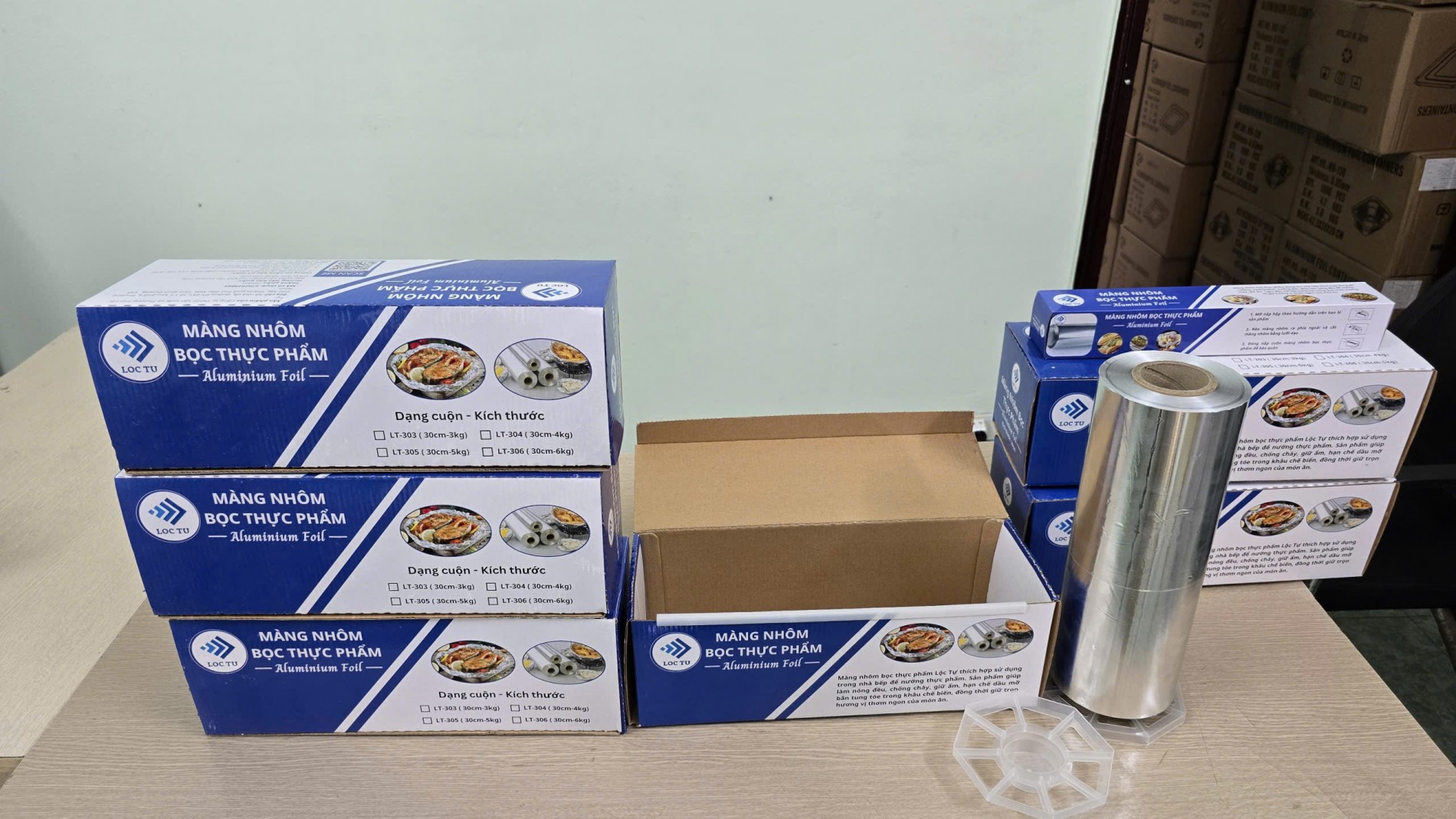
Loc Tu – Trusted Manufacturer of Durable Aluminum Foil Containers and High-Quality, Food-Safe Aluminum Foil Rolls for Your Kitchen
Your Trusted Partner in Food Packaging 📞
📌 LOC TU MANUFACTURING & TRADING CO., LTD
📌 Our Vietnamese Website: Khaynhomthucpham.com
📌 HOTLINE/ZALO: 0969.787.309
📌 Facebook: Aluminum Foil Loc Tu
📌 Youtube: Aluminum Foil Loc Tu
📌 Tik Tok: Aluminum Foil Loc Tu
📌 Instagram: Aluminum Foil Loc Tu
📌 Shopee: Aluminum Foil Loc Tu
📌 Twitter/X: Aluminum Foil Loc Tu
📌 LinkedIn: Aluminum Foil Loc Tu
📌 Pinterest: Aluminum Foil Loc Tu
📌 Tumblr: Aluminum Foil Loc Tu
📌 Threads: Aluminum Foil Loc Tu
📌 Telegram: Aluminum Foil Loc Tu
📌 Whatsapp: 0969.787.309
📌 Branch 1 (Hanoi): No. 1 Pham Tu, Beasky Building, Dai Kim Ward, Hoang Mai District, Hanoi
📌 Branch 2 (Binh Duong): No. 68, DX 051 Street, Group 17, Quarter 4, Phu My Ward, Thu Dau Mot City, Binh Duong Province
📞 Contact us today for expert consultation and the best pricing on premium aluminum trays and foil packaging solutions! 🚀
LOC TU PRODUCTION AND TRADING COMPANY LIMITED
Branch 1 (Binh Duong): No. 68, DX 051 Street, Group 17, Quarter 4, Phu My Ward, Thu Dau Mot City.
Branch 2 (Hanoi): No. 1 Pham Tu, Beasky Building, Dai Kim Ward, Hoang Mai District.
Hotline/Zalo: +84.969787309
Website: Khaynhomthucpham.com
Email: [email protected]

