HIGH QUALITY ALUMINUM FOIL FOR FOOD PRESERVATION AND SAFETY PROVED
HIGH QUALITY ALUMINUM FOIL FOR FOOD PRESERVATION AND SAFETY PROVED
(Introduction Title) The Hidden Variable in Operational Excellence
TABLE OF CONTENTS
Operational Resilience: Aluminum Foil as a Critical Contamination Firewall Metallurgy & Micros: Deciphering the Technical Integrity of Professional Foil Financial Metrics: Analyzing the Yield Optimization and Waste Prevention Vector Culinary Thermodynamics: Enhancing Texture and Flavor Retention Protocols Supply Chain Alliance: Validating Material Purity and Supplier Authenticity
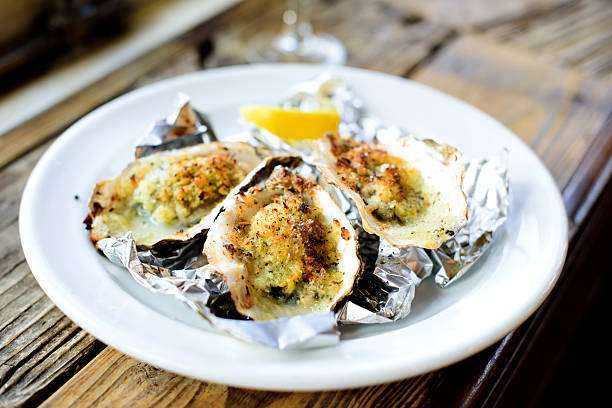
1. Operational Resilience: Aluminum Foil as a Critical Contamination Firewall
The Mechanism of Protection: Deconstructing Barrier Properties
Strengthening the Hygiene Workflow
Strength - Impermeability: Unlike plastic cling films, aluminum is a total barrier to light and oxygen. This prevents photo-oxidation in fats and degradation of vitamins in delicate produce.Weakness (The Risk of Low Quality): Substandard foil may contain residue rolling oils or heavy metals if not properly annealed. This emphasizes the need for sourcing from certified producers.Opportunity - Cross-Contamination Control: Using color-coded or clearly marked heavy-duty foil separates allergen-free ingredients (e.g., gluten-free preparations) during oven workflows.Threat - False Economy: Using thin foil often requires "double wrapping" to achieve strength. This false saving actually doubles operational effort and material usage.
2. Metallurgy & Micros: Deciphering the Technical Integrity of Professional Foil
Critical Material Specifications for Safety
The Pinhold Standard: In professional preservation, "pinholes" (microscopic gaps) are fatal. High-grade foil manufacturing utilizes sophisticated rolling mills that reduce porosity to practically zero per square meter.The Alloy 8011 vs. 3003: Food service typically relies on the 8000 or 3000 series alloys. A high-quality variant adds Manganese (Mn) for increased strength and burst resistance, ensuring the foil doesn't fracture when wrapping sharp bones or irregularly shaped items.Annealing & Sterility: The final manufacturing step involves high-temperature annealing (over 300°C). This sterilizes the foil completely. "sterile-at-source" guarantees that when the chef pulls the roll, the surface is cleaner than the cutting board itself.
In-House Validation Protocols
The Lightbox Test: Hold a sheet against a strong backlight. Any visible light points indicate pinholes—immediate grounds for disqualification.The "Burst" Test: Push a standard thumb pressure into the center of a taut sheet. Institutional grade should resist significantly before yielding, indicating proper tensile strength.The "Dead-Fold" Memory: Crinkle the foil into a ball and then smooth it out. Does it hold the crinkle or spring back? Quality foil holds its shape (Dead-fold), essential for sealing plate edges without clamps.
3. Financial Metrics: Analyzing the Yield Optimization and Waste Prevention Vector
The Cost of Poor Quality (COPQ) in Consumables
Staff perception of weakness leads to using 2-3 layers. Result: Actual usage is 200%-300% of theoretical inventory usage. Branch 2: Food Yield Loss Inefficient seals allow evaporation during cooking. Result: Moisture loss reduces the final weight of sold-by-weight proteins (e.g., roast beef), directly cutting revenue. Branch 3: Labor Friction Foil tearing mid-service requires re-wrapping. Result: Operational slowdown during peak service hours creates a bottleneck.
Comparative Efficiency Analysis
Behavior: Staff consistently uses 2 layers to prevent tearing. Actual Cost per use: Effective price becomes $20 relative to utility. Outcome: Frequent punctures lead to 5% spoilage of stored leftovers.
Behavior: Single layer provides sufficient structural integrity. Actual Cost per use: Remains $14. Outcome: Spoilage reduced to <1%. Financial Verdict: The "more expensive" roll generates a 30% saving in total material cost and measurable savings in food waste reduction.
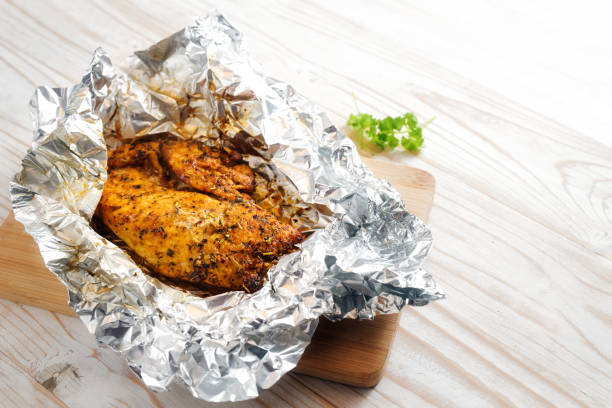
4. Culinary Thermodynamics: Enhancing Texture and Flavor Retention Protocols
The Evolution of Foil-Based Cooking Techniques
The Utility Era (The Past): Foil was seen strictly as a cover to prevent burning on the top of casseroles. It was passive.The Instrumental Era (The Present): Chefs now leverage specific gauges for active cooking.Controlled Resting: High-density foil reflects radiant heat inward. Resting large meat cuts in heavy foil equilibrates internal temperatures perfectly, maximizing juice retention.En Papillote 2.0: Utilizing extra-wide, heavy-duty foil to create high-pressure steam pouches for delicate fish. Cheap foil bursts under steam pressure; premium foil contains the atmosphere, infusing aromatics deeply into the protein.
Application Synergy: Delivery and Thermal Mass
Component 1: The Core Dish (Hot).Component 2: The Reflective Shield (Premium Foil).Mechanism: Instead of placing lids on plastic containers, professional kitchens seal the opening with aluminum foilbefore placing the lid.Physics: The foil reflects infrared radiation back into the food (emissivity < 0.05), whereas plastic absorbs and transmits heat loss.Result: The customer receives a hotter meal. This is a low-cost implementation for a high-value customer experience metric.
5. Supply Chain Alliance: Validating Material Purity and Supplier Authenticity
The Internal Monologue of Professional Procurement
The Loc Tu Assurance Protocol
Material Genealogy: Tracing the raw aluminum ingots to ensure no recycled radioactive scrap is used—only primary aluminum.Safety Documentation: Providing current, valid Certificates of Analysis (COA) confirming adherence to Food Grade Safety standards (free from lead, cadmium).Customization: Moving beyond standard retail sizes. We engineer roll widths (e.g., 30cm, 45cm) and lengths specifically for your kitchen's station setup to minimize cutting waste.Supply Consistency: Guaranteed stock levels for B2B partners, protecting your operation from market volatility.

(Conclusion Title) The Silent Standard of Culinary Excellence
Loc Tu: Pioneering Excellence in Premium Aluminum Packaging Solutions
Why You Must Choose Loc Tu?
✅ Assured Quality & Safety: Crafted from premium, food-grade aluminum, free from harmful impurities, meeting international safety benchmarks.
🔥 Optimal Thermal Properties: Ensures even cooking and excellent heat retention, preserving food temperature and taste effectively.
💪 Durable & Convenient Design: Engineered to resist leaks and dents, providing reliable performance for baking, storage, and transport.
🔄 Versatile Solutions: Our extensive range caters to various applications – from baking and steaming to storing fresh food and takeaway meals.
🌱 Eco-Conscious Packaging: Made from 100% recyclable aluminum, supporting sustainability and reducing plastic waste.
🎯 Brand Enhancement: Optional custom printing available to personalize products and boost your brand visibility.
🚚 Reliable Supply & Delivery: Capable of handling large orders with dependable, on-schedule nationwide shipping.

Loc Tu – Trusted Manufacturer of Durable Aluminum Foil Containers and High-Quality, Food-Safe Aluminum Foil Rolls for Your Kitchen
Your Trusted Partner in Food Packaging 📞
📌 LOC TU MANUFACTURING & TRADING CO., LTD
📌 Our Vietnamese Website: Khaynhomthucpham.com
📌 HOTLINE/ZALO: 0969.787.309
📌 Facebook: Aluminum Foil Loc Tu
📌 Youtube: Aluminum Foil Loc Tu
📌 Tik Tok: Aluminum Foil Loc Tu
📌 Instagram: Aluminum Foil Loc Tu
📌 Shopee: Aluminum Foil Loc Tu
📌 Twitter/X: Aluminum Foil Loc Tu
📌 LinkedIn: Aluminum Foil Loc Tu
📌 Pinterest: Aluminum Foil Loc Tu
📌 Tumblr: Aluminum Foil Loc Tu
📌 Threads: Aluminum Foil Loc Tu
📌 Telegram: Aluminum Foil Loc Tu
📌 Whatsapp: 0969.787.309
📌 Branch 1 (Hanoi): No. 1 Pham Tu, Beasky Building, Dai Kim Ward, Hoang Mai District, Hanoi
📌 Branch 2 (Binh Duong): No. 68, DX 051 Street, Group 17, Quarter 4, Phu My Ward, Thu Dau Mot City, Binh Duong Province
📞 Contact us today for expert consultation and the best pricing on premium aluminum trays and foil packaging solutions! 🚀
LOC TU PRODUCTION AND TRADING COMPANY LIMITED
Branch 1 (Binh Duong): No. 68, DX 051 Street, Group 17, Quarter 4, Phu My Ward, Thu Dau Mot City.
Branch 2 (Hanoi): No. 1 Pham Tu, Beasky Building, Dai Kim Ward, Hoang Mai District.
Hotline/Zalo: +84.969787309
Website: Khaynhomthucpham.com
Email: [email protected]

