HOW TO COOK MEAT IN FOIL: THE DEFINITIVE GUIDE TO ENGINEERING TENDER
HOW TO COOK MEAT IN FOIL: THE DEFINITIVE GUIDE TO ENGINEERING TENDER AND FLAVORFUL RESULTS
(Introduction Title) Mastering a Closed-System Cooking Method
TABLE OF CONTENTS
The Foundational Science: Why You Should Learn How to Cook Meat in Foil The Preparation Protocol: A Guide to Cooking Meat in Foil The Wrapping Technique: Engineering the Perfect Packet Thermal Management: Time and Temperature Control Advanced Applications: Creative Foil Packet Recipes
1. The Foundational Science: Why You Should Learn How to Cook Meat in Foil
The scientific advantages of learning how to cook meat in foil
Analogy: Convection Oven vs. Pressure Cooker. Open Roasting is like a convection oven. Dry, hot air circulates, crisping the exterior but also causing significant moisture evaporation, which can dry out the meat.Cooking in Foil is like a hybrid between an oven and a pressure cooker. It creates a sealed environment. The external heat (conduction) is transferred through the foil. Internally, the moisture released from the meat turns to steam (convection), creating a high-pressure, moist environment. This trapped steam is the key.
The role of trapped steam in how to cook meat in foil
Benefit 1: Collagen Hydrolysis. Tough cuts of meat (like brisket, chuck roast) are rich in connective tissue called collagen. In a dry-heat environment, this collagen tightens and makes the meat tough. In the moist-heat environment created by a pork roast in foil , the trapped steam slowly hydrolyzes the collagen into gelatin. This is the scientific process that transforms a tough cut into a melt-in-your-mouth texture.Benefit 2: Flavor Concentration. In open roasting, volatile aromatic compounds from spices and the meat itself evaporate. The sealed foil packet traps these compounds. They mingle with the meat's natural juices and the marinade, creating an intensely concentrated, self-basting sauce that continuously infuses the meat. This is one of the key benefits of aluminum foil .
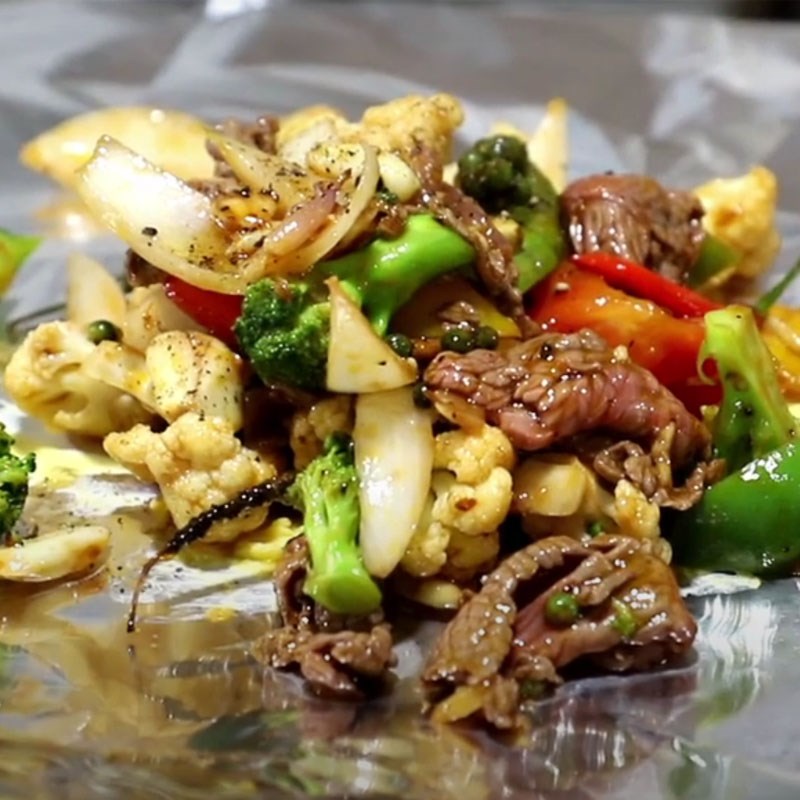
Image Content: A scientific diagram illustrating the inside of a sealed foil packet. It shows arrows for external radiant heat, conductive heat transfer through the foil, and internal steam convection currents circulating around the meat.Caption: A scientific breakdown of the closed-system cooking environment created by foil.
ALT Text: A diagram explaining the scientific principles of how to cook meat in foil.
2. The Preparation Protocol: A Guide to Cooking Meat in Foil
Selecting the best meat for foil packets
Branch 1: Ideal for Slow Roasting (High Collagen Content) Beef: Chuck roast, brisket, short ribs. These cuts are transformed by the slow, moist heat of a foil packet.Pork: Pork shoulder (for pulled pork), pork belly, ribs. The foil helps to render the fat slowly while tenderizing the meat.Lamb: Lamb shank, shoulder.
Branch 2: Suitable for Quicker Roasting (Leaner Cuts) Poultry: Whole chicken, chicken quarters.Pork: Pork loin, pork tenderloin. (Note: These require shorter cooking times).
Core Principle: The technique is most effective for tougher, fattier cuts that benefit from a long cooking time. Leaner cuts can also be used, but timing is more critical.
The science of marination for this method
Module 1 (The Flavor Base): This provides the core taste. Choose from soy sauce, Worcestershire sauce, beef broth, spices (paprika, cumin), and aromatics (garlic, onion).
Module 2 (The Tenderizer): This helps to start breaking down the muscle fibers. Choose an acidic component like wine, vinegar, citrus juice, or an enzymatic one like pineapple juice.
Module 3 (The Fat): This helps to transfer flavors and adds richness. Choose from olive oil, melted butter, or vegetable oil.
The Assembly: Pat the meat completely dry before applying the marinade. Allow it to marinate for at least 4 hours, or preferably overnight. This initial step is critical for flavor development before you even start thecooking with aluminum foil process.
3. The Wrapping Technique: Engineering the Perfect Packet
The "Tight Seal" vs. "Loose Tent" methods
The Situation: Should you wrap the meat tightly or loosely?The "Tight Seal" Argument: "For tough cuts requiring long braising, a very tight wrap using multiple layers of heavy-duty foil is best. It maximizes direct heat conduction and prevents any steam from escaping, which is essential for breaking down collagen."The "Loose Tent" Argument: "For more delicate items like a whole chicken, a looser wrap, or a 'tent,' is better. It allows a pocket of steam to form and circulate, cooking the meat gently without making the skin completely soggy."The Expert Conclusion: Both are correct, for different purposes.Use a tight wrap for braising tough cuts. Use aloose tent for roasting poultry or more delicate meats.
The Double-Layer Lock Seam Technique
Step 1: Lay two large sheets of heavy-duty foil on top of each other. This provides insurance against punctures.Step 2: Place your meat and any vegetables in the center of the foil sheets.Step 3: Bring the two longest sides of the foil together above the food.Step 4: Fold this top edge over itself several times (at least 3-4 folds), crimping it tightly with your fingers after each fold to create an airtight seam.Step 5: Fold and crimp the two open ends in the same manner, creating a completely sealed rectangular packet. The result should be a durable, leak-proof cooking vessel.
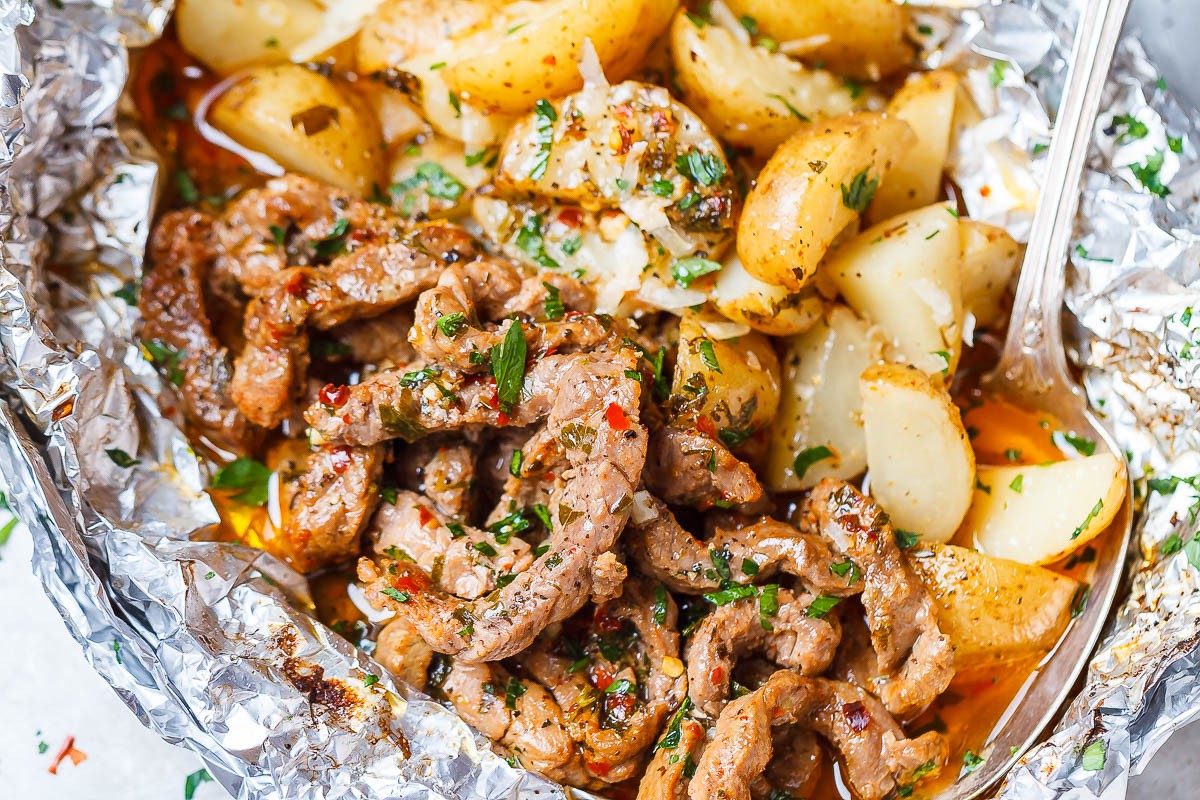
Image Content: A pair of hands is demonstrated the "Double-Layer Lock Seam" technique. The top edge of two sheets of foil is being folded over and crimped tightly.Caption: The lock seam technique is the professional's choice for creating a 100% leak-proof seal.ALT Text: The wrapping technique and engineering of a perfect packet, a key part of how to cook meat in foil.
4. Thermal Management: Time and Temperature Control
The Two-Stage Heating Protocol
Stage 1: Low & Slow for Tenderness. Objective: To gently break down connective tissue.Process: The sealed foil packet is placed in an oven at a low temperature, typically between 150-170°C (300-335°F). This phase can last for several hours depending on the cut of meat. This is the "braising" phase.
Stage 2: High & Fast for Color and Crust. Objective: To develop a flavorful, browned crust (the Maillard reaction).Process: The foil is carefully opened. The oven temperature is increased significantly to 220-230°C (425-450°F) for the final 15-20 minutes of cooking. This is the "roasting" phase.
A reference guide to time and temperature
5. Advanced Applications: Creative Foil Packet Recipes
Foil packet cooking on a charcoal grill
Fire Setup: Prepare your charcoal grill for indirect grilling by banking the hot coals to one side.Packet Prep: Prepare yourgrilling meat in foil packet as you would for an oven, using the double-layer lock seam technique.Indirect Cooking: Place the foil packet on the cooler, indirect heat side of the grill. Close the lid.Time and Temp: Cook for the time required, monitoring the grill's internal temperature.Finishing: For a final smoky flavor, you can open the packet and move the meat directly over the coals for a few minutes at the very end.
Gourmet recipes for meat in foil packets
"Lamb Shank & Root Vegetable" Combo: Protein: Lamb shanks.Vegetables: Carrots, parsnips, onions.Liquid: Red wine, beef broth, a sprig of rosemary.Method: A very long, slow roast using the two-stage heating protocol.
"Spicy Italian Sausage & Peppers" Combo: Protein: Italian sausages.Vegetables: Sliced bell peppers and onions.Sauce: A simple tomato marinara sauce.Method: A quicker, high-heat roast.
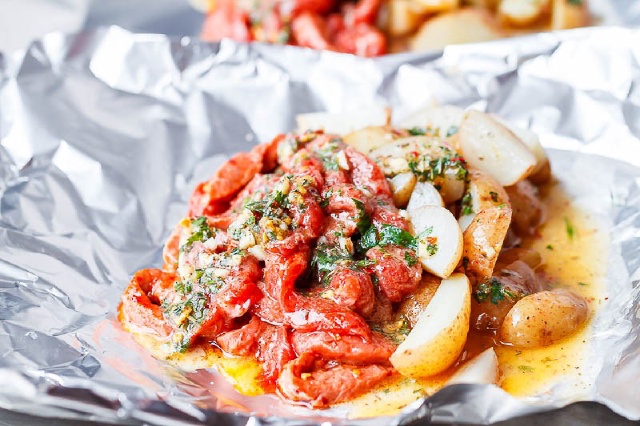
Image Content: A large, tightly sealed aluminum foil packet is sitting on the indirect heat side of a charcoal grill with the lid closed.Caption: Combining the gentle cooking of foil with the smoky flavor of a charcoal grill.ALT Text: An advanced application demonstrating how to cook meat in foil on a grill.
(Conclusion Title) How to Cook Meat in Foil: From a Simple Method to a Culinary Science
Loc Tu: Pioneering Excellence in Premium Aluminum Packaging Solutions
Why You Must Choose Loc Tu?
✅ Assured Quality & Safety: Crafted from premium, food-grade aluminum, free from harmful impurities, meeting international safety benchmarks.
🔥 Optimal Thermal Properties: Ensures even cooking and excellent heat retention, preserving food temperature and taste effectively.
💪 Durable & Convenient Design: Engineered to resist leaks and dents, providing reliable performance for baking, storage, and transport.
🔄 Versatile Solutions: Our extensive range caters to various applications – from baking and steaming to storing fresh food and takeaway meals.
🌱 Eco-Conscious Packaging: Made from 100% recyclable aluminum, supporting sustainability and reducing plastic waste.
🎯 Brand Enhancement: Optional custom printing available to personalize products and boost your brand visibility.
🚚 Reliable Supply & Delivery: Capable of handling large orders with dependable, on-schedule nationwide shipping.
Loc Tu – Trusted Manufacturer of Durable Aluminum Foil Containers and High-Quality, Food-Safe Aluminum Foil Rolls for Your Kitchen
Your Trusted Partner in Food Packaging 📞
📌 LOC TU MANUFACTURING & TRADING CO., LTD
📌 Our Vietnamese Website: Khaynhomthucpham.com
📌 HOTLINE/ZALO: 0969.787.309
📌 Facebook: Aluminum Foil Loc Tu
📌 Youtube: Aluminum Foil Loc Tu
📌 Tik Tok: Aluminum Foil Loc Tu
📌 Instagram: Aluminum Foil Loc Tu
📌 Shopee: Aluminum Foil Loc Tu
📌 Twitter/X: Aluminum Foil Loc Tu
📌 LinkedIn: Aluminum Foil Loc Tu
📌 Pinterest: Aluminum Foil Loc Tu
📌 Tumblr: Aluminum Foil Loc Tu
📌 Threads: Aluminum Foil Loc Tu
📌 Telegram: Aluminum Foil Loc Tu
📌 Whatsapp: 0969.787.309
📌 Branch 1 (Hanoi): No. 1 Pham Tu, Beasky Building, Dai Kim Ward, Hoang Mai District, Hanoi
📌 Branch 2 (Binh Duong): No. 68, DX 051 Street, Group 17, Quarter 4, Phu My Ward, Thu Dau Mot City, Binh Duong Province
📞 Contact us today for expert consultation and the best pricing on premium aluminum trays and foil packaging solutions! 🚀
LOC TU PRODUCTION AND TRADING COMPANY LIMITED
Branch 1 (Binh Duong): No. 68, DX 051 Street, Group 17, Quarter 4, Phu My Ward, Thu Dau Mot City.
Branch 2 (Hanoi): No. 1 Pham Tu, Beasky Building, Dai Kim Ward, Hoang Mai District.
Hotline/Zalo: +84.969787309
Website: Khaynhomthucpham.com
Email: [email protected]

