[email protected]    |       Hotline: +84.969787309

THE ART OF SEAFOOD EN PAPILLOTE: A COMPREHENSIVE CULINARY GUIDE

THE ART AND SCIENCE OF SEAFOOD EN PAPILLOTE: A COMPREHENSIVE CULINARY GUIDE

(Introduction Title) Beyond a Recipe: A Technique as a Culinary Asset

In the world of culinary arts, certain techniques transcend mere instruction to become fundamental pillars of excellence. Seafood en Papillote, the French term for cooking "in paper," or its more robust modern counterpart using aluminum foil, is one such technique. Often relegated to the realm of simple weeknight dinners, its true potential is frequently underestimated. This method is not just about convenience; it's a sophisticated culinary strategy that leverages the principles of physics and chemistry to achieve results that are difficult to replicate with other cooking methods. It is the epitome of gentle, controlled cooking, a self-contained ecosystem that steams, poaches, and roasts simultaneously.

This guide is not a list of recipes. It is a strategic culinary document. ✍️ Crafted from the perspective of a seasoned culinary strategist, this analysis will deconstruct the intricacies of the foil-grilling technique. We will establish a framework for understanding the thermal dynamics at play. We will perform a deep analysis of flavor architecture that goes far beyond a simple list of ingredients. And we will outline protocols for advanced application and flawless presentation. This document is engineered for the ambitious home cook, the culinary student, and the professional chef who understand that the right technique is not just a method of cooking; it's a competitive advantage on the plate.

TABLE OF CONTENTS

  • The Culinary Philosophy: Why Seafood en Papillote is a Superior Technique

  • The Foundation: Mastering the Core Components of a Perfect Foil Packet

  • The Science of Flavor: A Deep Dive into Aromatic Synergy

  • Advanced Applications: Elevating Your Seafood en Papillote from Simple to Sublime

  • Execution & Presentation: The Final Steps to Culinary Excellence

1. The Culinary Philosophy: Why Seafood en Papillote is a Superior Technique

The decision to employ the "en papillote" method is a deliberate choice for culinary precision. It shifts the cooking paradigm from aggressive, direct-heat application (like searing or grilling) to a gentle, enclosed-environment technique, yielding significant benefits in texture, flavor, and nutritional integrity.

Defining the Strategic Role of Cooking in Foil Packets

The Case: The Delicate Scallop – A Textural Challenge.
The Problem (The "Before"): Scallops are notoriously easy to overcook. When subjected to the high, dry heat of a pan or grill, the window for achieving a perfect texture is incredibly narrow. Mere seconds separate a tender, succulent scallop from a rubbery, chewy disappointment. This makes consistency a major challenge, even for experienced cooks.
The Solution (The "After"): A chef places the scallops in a foil packet with white wine, lemon slices, garlic, and fresh herbs. The packet is sealed and placed on the grill. Inside, the wine and lemon juice create an aromatic steam bath. The heat is transferred gently and evenly, cooking the scallops through without aggressive searing.
The Result: The enclosed steam environment creates a temperature buffer, dramatically widening the window for perfect cooking. The scallops cook to a perfect, tender consistency every time. Furthermore, they are not just cooked; they are infused with the aromatic steam, resulting in a deeper, more integrated flavor profile. This case demonstrates the technique's strategic value in mastering delicate proteins and ensuring culinary consistency.

The Key Advantages of the Seafood en Papillote Method
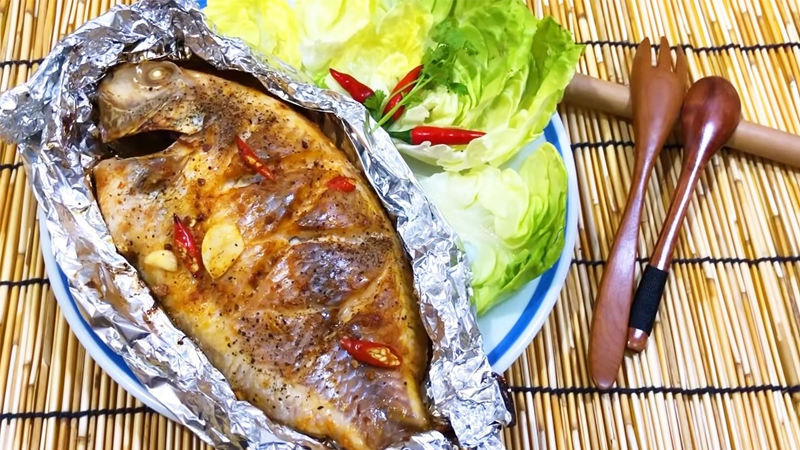
Strength - Flavor Concentration: The primary advantage is the sealed environment. No flavor escapes. The seafood, aromatics, vegetables, and liquids all mingle, creating a concentrated, self-saucing dish where every component tastes intensely of the whole. This is the ultimate expression of flavor synergy.

Strength - Textural Perfection & Moisture Retention: The gentle steaming action is a foolproof way to preserve moisture. This prevents the primary failure point of cooking seafood—drying out. The result is an exceptionally tender, flaky, and succulent texture that direct-heat methods struggle to achieve.

Opportunity - Nutritional Integrity: Unlike boiling, which leaches water-soluble nutrients, or high-heat grilling, which can create harmful compounds, the en papillote method gently steams the food, preserving a higher percentage of its vitamins and minerals. This positions it as a premier technique for health-conscious cooking.

Opportunity - Workflow Efficiency & Scalability: The technique is remarkably efficient. The packets can be pre-assembled hours in advance (mise en place), making it ideal for entertaining or professional service. It is also infinitely scalable, from a single-serving packet to dozens for a large gathering, with no loss in quality.

Hải Sản Nướng Giấy Bạc FTC

[IMAGE 1 DESCRIPTION]

  • Image Content: A dramatic split-image. The left side shows a piece of salmon on a fiery, open grill, looking slightly charred and dry. The right side shows a glistening, moist piece of salmon being gently lifted from an opened foil packet, with steam rising and herbs clinging to it.

  • Caption: A study in contrast: The gentle, flavor-infusing environment of a foil packet versus the harshness of direct heat.

  • ALT Text: A comparison showing the textural benefits of cooking seafood en papillote.

2. The Foundation: Mastering the Core Components of a Perfect Foil Packet

The success of a Seafood en Papillote dish is not accidental; it is engineered. The construction of the foil packet and the selection of its core components are governed by scientific principles. A professional approach requires a rigorous understanding of these foundational elements.

Mandatory Material and Structural Specifications

Name: Packet Construction Protocol (PCP-01)
Icon: 🛠️
Content:

  1. Material Selection: Always use Heavy-Duty Aluminum Foil. Standard-duty foil is prone to tearing during folding or handling, compromising the sealed environment which is critical for steam generation. The thickness provides structural integrity and superior heat distribution.

  2. The Base Layer (The "Raft"): Never place the seafood directly on the foil. Create a "raft" of thinly sliced vegetables (onions, fennel, bell peppers, zucchini) or citrus slices (lemon, orange). This raft serves three purposes: it prevents the delicate fish from sticking and scorching, it elevates the protein for even steam circulation, and it infuses the dish with flavor from the bottom up.

  3. The Sealing Technique: The integrity of the seal is paramount. The most effective method is to bring the long edges of the foil together, fold them over twice tightly, and then tightly crimp or fold the side edges to create a fully sealed, airtight packet. A poorly sealed packet will leak steam, defeating the entire purpose of the technique.

Performance Testing and Component Selection

Before assembling your packet, mentally "test" your components based on cooking time compatibility.
The Protein Test: Select seafood based on thickness and texture. A thin fillet of sole will cook much faster than a thick cod loin. Delicate items like shrimp or scallops require the shortest cooking time. The goal is to have the protein perfectly cooked at the same moment the vegetables are tender-crisp.
The Vegetable Density Test: Cut vegetables according to their density. Hard vegetables like carrots or new potatoes must be sliced very thinly (mandoline-thin) or pre-blanched to ensure they cook through. Softer vegetables like bell peppers or mushrooms can be cut more thickly.
The Aromatic Liquid Test: Every packet needs a small amount of liquid (approx. 1-2 tablespoons per serving) to initiate the steaming process. This is a key flavor carrier. Choose a liquid that complements the other ingredients: dry white wine, citrus juice, fish or vegetable broth, or a touch of coconut milk. The liquid must be high in flavor as it will become the base of the sauce.

Only a combination of components that pass these mental "tests" for compatibility should be sealed in the packet.

3. The Science of Flavor: A Deep Dive into Aromatic Synergy

A common mistake is to treat en papillote as merely a cooking vessel. A strategic analysis reveals its true function as a "flavor accelerator." The sealed environment creates a unique opportunity to engineer the final taste profile through a deep understanding of aromatic synergy.

Deconstructing Flavor Architecture in an Enclosed System

Central Theme: The Flavor Ecosystem of the Foil Packet

  • Branch 1: The Aromatic Foundation (The Base Notes)

    • Source: Alliums (garlic, shallots, onions), fennel, leeks.

    • Function: When gently steamed, their harsh flavors mellow into a sweet, deep foundation that provides complexity and depth to the entire dish.

  • Branch 2: The Brightening Agents (The Top Notes)

    • Source: Acidity (lemon/lime juice, white wine, vinegar), fresh herbs (parsley, cilantro, dill).

    • Function: These elements are volatile and are added to cut through richness and lift the overall flavor profile, preventing it from tasting heavy. They provide a crucial element of freshness.

  • Branch 3: The Umami & Fat Complex (The Mid Notes)

    • Source: Fat (butter, olive oil), Umami (tomatoes, mushrooms, soy sauce, capers, olives).

    • Function: Fat is the primary vehicle for carrying and distributing flavor throughout the packet. Umami-rich ingredients provide a savory depth and "mouthfeel" that creates a satisfying, complete taste experience.

  • Branch 4: The Finishing Aromas (The Final Touch)

    • Source: Delicate herbs (basil, tarragon), finishing oils (extra virgin olive oil, toasted sesame oil).

    • Function: These are often added after opening the packet, as their delicate aromatic compounds can be destroyed by heat. Their purpose is to provide an immediate, powerful aromatic burst just before serving.

How Component Synergy Creates Culinary ROI

Scenario A - Low Synergy Assembly ("The Basic"):
A cook places a fish fillet in foil with only salt, pepper, and a slice of lemon.

  • Result: The fish is cooked and has a hint of lemon. It's functional but one-dimensional. The final dish is technically cooked but lacks depth and excitement. The "Return on Ingredients" is low; the potential of the fish is not fully realized.

Scenario B - High Synergy Assembly ("The Strategic"):
A cook first creates a raft of sliced fennel and shallots (Aromatic Foundation). The fish is placed on top. It's seasoned and dotted with compound butter made with garlic and parsley (Fat & Aromatic Carrier). Sliced cherry tomatoes and olives are added (Umami Complex). A splash of dry vermouth is added (Liquid & Brightening Agent).

  • Result: The heat releases moisture from the tomatoes and vermouth, creating steam. The steam is infused by the fennel and shallots below. The melting butter bastes the fish, and the olives add a salty, savory counterpoint. The result is a complex, multi-layered dish with a built-in sauce. The Culinary Return on Investment (CROI) is exponentially higher. This is the most efficient flavor-building strategy.
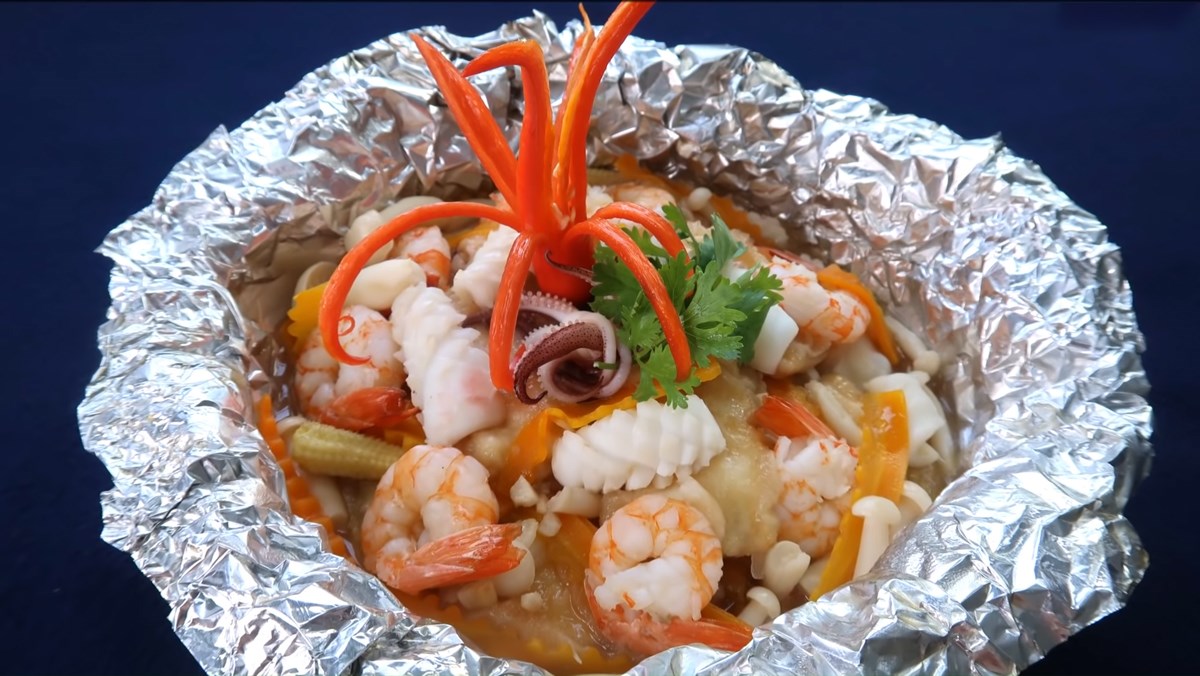
Hải Sản Nướng Giấy Bạc FTC

[IMAGE 3 DESCRIPTION]

  • Image Content: A sophisticated and artistic "Flavor Wheel" diagram. The center says "Seafood en Papillote." The rings around it are labeled "Proteins," "Aromatics," "Fats," "Acids," and "Herbs," with illustrated examples of ingredients connecting them with lines indicating classic pairings (e.g., Salmon -> Dill -> Lemon -> Butter).

  • Caption: Engineering flavor: Successful dishes are built on a strategic understanding of aromatic synergy.

  • ALT Text: A flavor wheel explaining how to build a flavor profile for foil-grilled seafood.

4. Advanced Applications: Elevating Your Seafood en Papillote from Simple to Sublime

The strategic advantage of mastering seafood en papillote is fully realized when it's leveraged to create dishes that would be impossible with other methods, moving beyond basic fillets into composed, gourmet meals.

Integrating Grains and Pastas for a Complete One-Packet Meal

Traditional Model: Utilized a multi-step, multi-pot process: Boil pasta in one pot, sauté aromatics in another pan, cook seafood separately, and then combine. This creates significant cleanup and timing challenges.

Integrated "En Papillote" Model: This model uses the foil packet as an all-in-one cooking vessel.

  1. Par-Cooking: Quick-cooking grains or pasta (like couscous, orzo, or fresh pasta) are placed in the packet raw or very briefly blanched.

  2. Hydration & Infusion: A measured amount of flavorful liquid (broth, coconut milk, tomato passata) is added. This is the liquid that will both cook the grain/pasta and steam the seafood.

  3. Layering: The seafood and vegetables are layered on top of the grain base.

  4. Sealing & Cooking: As the packet heats, the liquid cooks the grain from below while the steam simultaneously cooks the seafood and vegetables above.
    The result is a perfectly cooked, complete meal where the grain or pasta is infused with the flavors of the entire dish. This creates a highly efficient, no-mess workflow for a complex meal. A classic example is shrimp with orzo, feta, and tomato, all cooked together in a single, flawless execution.

Using Regional Flavor Profiles to Build Gourmet Modules

The foil packet is a blank canvas. Master it by creating reusable "Flavor Modules" based on regional cuisines.

The "Thai-Inspired" Module:

  • Components: (1) A firm white fish (like cod or halibut) + (2) A base of thinly sliced lemongrass and ginger + (3) A cooking liquid of coconut milk, lime juice, and a dash of fish sauce + (4) Toppings of red chili slices and fresh cilantro.

  • Application: Assemble the packet for a dish that is creamy, spicy, sour, and aromatic all at once. The coconut milk and fish juices create an irresistible sauce.

The "Mediterranean" Module:

  • Components: (1) Shrimp or sea bass + (2) A base of sliced zucchini and onions + (3) A cooking liquid of white wine and olive oil + (4) Flavor bombs of cherry tomatoes, Kalamata olives, capers, and oregano.

  • Application: This module delivers a bright, briny, and herbaceous flavor profile reminiscent of the Greek islands. The tomatoes burst to create a rustic, delicious sauce.

    5. Execution & Presentation: The Final Steps to Culinary Excellence

    Sourcing the best ingredients and mastering flavor theory are only part of the equation. The final execution—the actual cooking process and the subsequent presentation—is where culinary strategy becomes a tangible success.

    Vetting Cooking Methods and Verifying Doneness

    Argument A: "I'll just put it on the grill for 15 minutes, that should be enough."
    Argument B (The Strategic View): "But is that grill preheated to a consistent 400°F (200°C)? Is it gas or charcoal, which will create different hot spots? The '15-minute' rule is a guess, not a protocol. True precision requires a data-driven approach. The most reliable method is using a preheated oven, which provides consistent, enveloping heat. And how do I verify doneness without opening the packet and losing the steam? The best indicator is sensory: the packet should be fully puffed up like a pillow, indicating that steam pressure is high and the contents are actively cooking. I can also gently press the top—it should feel hot and firm. For absolute certainty on a thick piece of fish, a probe thermometer is the only way."

    A professional culinary mindset always chooses repeatable, verifiable methods over guesswork. An oven offers more control than a grill, and sensory cues backed by a thermometer offer more certainty than a timer.

    The "Grand Opening": A Masterclass in Presentation

    The presentation of a foil-packet dish is a moment of theater. The goal is to maximize the sensory impact for the guest or diner.

    1. The Transfer: Use a spatula to carefully transfer the hot, puffed-up packet directly from the oven or grill onto the serving plate. The packet itself is the initial presentation vessel.

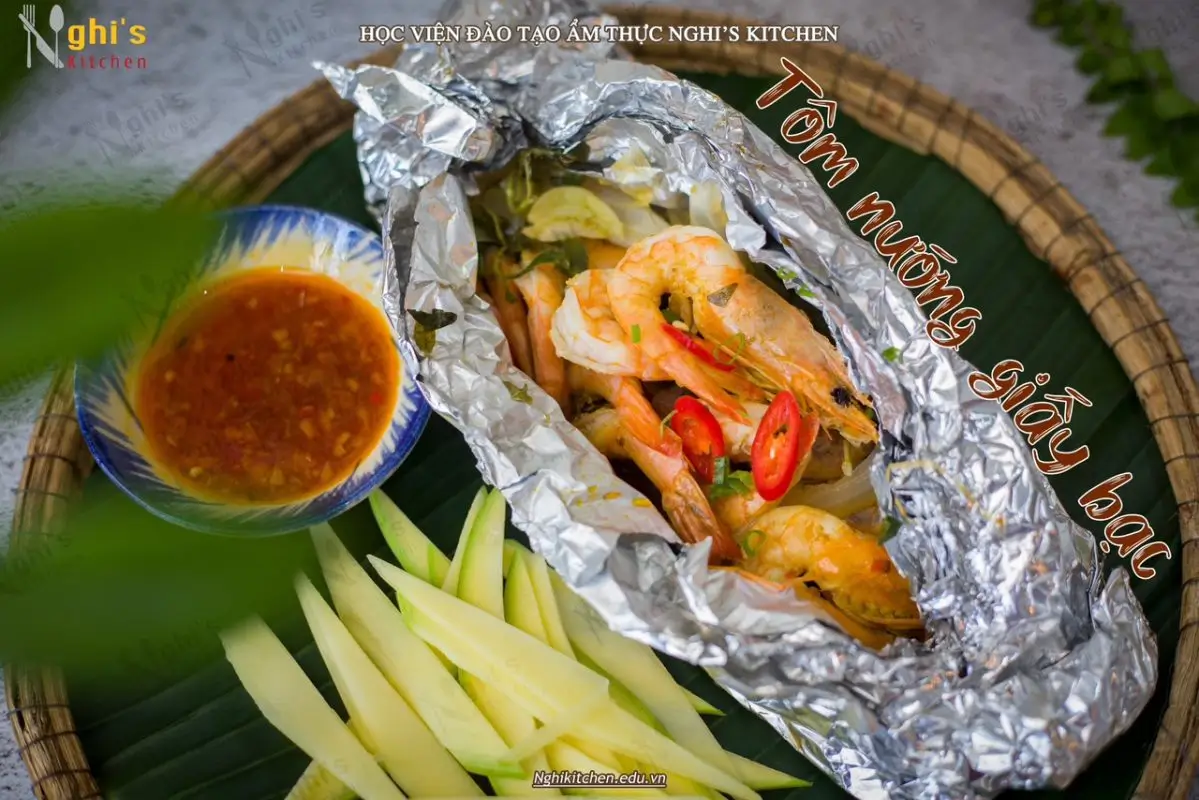
    2. The Aromatic Release (The "Grand Opening"): This step should be performed tableside for maximum effect. Use scissors or a sharp paring knife to slice an "X" or a long slit across the top of the foil. Peel back the foil carefully. A dramatic, fragrant cloud of steam will billow out—this is the first sensory reward and a key part of the experience.

    3. The Final Garnish: Once opened, the dish is nearly complete. Apply the "Finishing Aromas" discussed earlier. This is the moment for a sprinkle of delicate fresh herbs (like chives or basil), a drizzle of high-quality extra virgin olive oil, a pinch of flaky sea salt, or some fresh cracked black pepper.

    4. Service: Instruct the diner to eat directly from the foil, using the edges to contain the delicious sauce that has formed at the bottom. This rustic-yet-elegant presentation connects the diner directly to the cooking process.
    Hải Sản Nướng Giấy Bạc FTC

    [IMAGE 5 DESCRIPTION]

    • Image Content: An elegant dining table setting. A pair of hands is using scissors to cut open a puffed-up, golden-brown foil packet. A fragrant cloud of steam is visibly rising from the opening, revealing perfectly cooked seafood and colorful vegetables inside. The diner looks on with anticipation.

    • Caption: The final act: The dramatic, aromatic reveal is an integral part of the dining experience.

    • ALT Text: The presentation and tableside opening of a finished seafood en papillote dish.

    (Conclusion Title) Seafood en Papillote: A Strategic Investment in Culinary Excellence

    This report has systematically demonstrated that the Seafood en Papillote technique, particularly when executed with aluminum foil, is far more than a simple cooking method. It is a strategic platform for achieving superior results in flavor, texture, and efficiency. The evidence is clear: mastering this technique is not a shortcut, but a critical investment in one's culinary capabilities.

    The scientific superiority of this enclosed steam-roasting environment in flavor concentration, moisture retention, and nutritional preservation provides a demonstrable return on effort. By moving from a recipe-following tactic to a deep understanding of the technique's underlying principles—from packet engineering to flavor architecture—any cook can build a more resilient, creative, and impressive culinary repertoire. Making the data-driven choice to master this technique is a fundamental step toward achieving consistent culinary excellence. 🏆📈

    Loc Tu: Pioneering Excellence in Premium Aluminum Packaging Solutions

    At the forefront of the food packaging industry, Loc Tu Manufacturing & Trading Co., Ltd. stands as a premier manufacturer and supplier of high-quality aluminum trays and foil rolls. We are dedicated to providing innovative, safe, and reliable packaging solutions tailored to the dynamic needs of the modern food landscape. Our foundation is b0uilt upon state-of-the-art manufacturing facilities, equipped with advanced production lines engineered for precision and efficiency. This technological edge allows Loc Tu to consistently deliver aluminum trays and foil rolls that not only meet but exceed rigorous international food safety standards.

    Why You Must Choose Loc Tu?

    Assured Quality & Safety: Crafted from premium, food-grade aluminum, free from harmful impurities, meeting international safety benchmarks.

    🔥 Optimal Thermal Properties: Ensures even cooking and excellent heat retention, preserving food temperature and taste effectively.

    💪 Durable & Convenient Design: Engineered to resist leaks and dents, providing reliable performance for baking, storage, and transport.

    🔄 Versatile Solutions: Our extensive range caters to various applications – from baking and steaming to storing fresh food and takeaway meals.

    🌱 Eco-Conscious Packaging: Made from 100% recyclable aluminum, supporting sustainability and reducing plastic waste.

    🎯 Brand Enhancement: Optional custom printing available to personalize products and boost your brand visibility.

    🚚 Reliable Supply & Delivery: Capable of handling large orders with dependable, on-schedule nationwide shipping.
    FTC– Địa chỉ hàng đầu cho Khay nhôm, Giấy bạc chất lượng cao

    Loc Tu – Trusted Manufacturer of Durable Aluminum Foil Containers and High-Quality, Food-Safe Aluminum Foil Rolls for Your Kitchen

    Your Trusted Partner in Food Packaging 📞

    Loc Tu Manufacturing & Trading Co., Ltd. is more than just a supplier; we are your strategic partner in delivering high-caliber aluminum food packaging solutions. Specializing in a comprehensive range of aluminum trays, versatile foil rolls, and convenient disposable food containers.

    We serve a diverse clientele – from individual households and local food vendors to large-scale restaurants, catering companies, and prestigious hotel chains. Our unwavering dedication to safety, sustainability, innovation, and customer satisfaction makes us the trusted choice for businesses and consumers seeking reliable, high-performance packaging.

    📌 LOC TU MANUFACTURING & TRADING CO., LTD

    📌 Our Vietnamese Website: Khaynhomthucpham.com
    📌 HOTLINE/ZALO: 0969.787.309

    📌 Facebook: Aluminum Foil Loc Tu
    📌 Youtube: Aluminum Foil Loc Tu
    📌 Tik Tok: Aluminum Foil Loc Tu
    📌 Instagram: Aluminum Foil Loc Tu
    📌 Shopee: Aluminum Foil Loc Tu
    📌 Twitter/X: Aluminum Foil Loc Tu

    📌 LinkedIn: Aluminum Foil Loc Tu
    📌 Pinterest: Aluminum Foil Loc Tu
    📌 Tumblr: Aluminum Foil Loc Tu

    📌 Threads: Aluminum Foil Loc Tu
    📌 Telegram: Aluminum Foil Loc Tu
    📌 Whatsapp: 0969.787.309


    📌 Branch 1 (Hanoi): No. 1 Pham Tu, Beasky Building, Dai Kim Ward, Hoang Mai District, Hanoi
    📌 Branch 2 (Binh Duong): No. 68, DX 051 Street, Group 17, Quarter 4, Phu My Ward, Thu Dau Mot City, Binh Duong Province

    📞 Contact us today for expert consultation and the best pricing on premium aluminum trays and foil packaging solutions! 🚀

    In bài viết
    CONTACT US

    LOC TU PRODUCTION AND TRADING COMPANY LIMITED

    Branch 1 (Binh Duong): No. 68, DX 051 Street, Group 17, Quarter 4, Phu My Ward, Thu Dau Mot City.
    Branch 2 (Hanoi): No. 1 Pham Tu, Beasky Building, Dai Kim Ward, Hoang Mai District.

    Hotline/Zalo: +84.969787309

    Website: Khaynhomthucpham.com
    Email: [email protected]

    Online: 86
    Day: 2963
    Week: 20575
    Visitors: 108951
    1
    Bạn cần hỗ trợ?