THE MANUFACTURING OF FOOD-GRADE ALUMINUM FOIL INDUSTRIAL ANALYSIS
THE MANUFACTURING NEXUS OF FOOD-GRADE ALUMINUM FOIL: AN INDUSTRIAL ANALYSIS
(Introduction Title) Beyond the Kitchen Roll: A Feat of Precision Engineering
In the global supply chain, certain materials are so ubiquitous they become invisible, their complexity overlooked. Food-grade aluminum foil is a prime example. Perceived as a simple commodity, it is, in reality, the end-product of a sophisticated, multi-stage industrial process that merges brute force metallurgy with delicate, micron-level precision. This is not a simple sheet of metal; it is an engineered barrier, a critical component in food safety, preservation, and logistics.
TABLE OF CONTENTS
From Ore to Ingot: The Foundational Metallurgy of Aluminum Core Transformation: The Mechanics of Rolling and Annealing Precision Engineering: The Art of Finishing and Separation The Pillar of Trust: Quality Assurance and Compliance Protocols Future Horizons: Innovation and Sustainability in Foil Production
1. From Ore to Ingot: The Foundational Metallurgy of Aluminum
The Bayer and Hall-Héroult Processes: An Elemental Transformation
Alloying and Casting: Engineering the Master Billet for Performance
Primary Alloy (AA-1235/AA-8011): These are the most common alloys for flexible food-grade foil. The composition is strictly controlled. For AA-8011, it's typically >97% Aluminum (Al), with carefully measured additions of Silicon (Si) and Iron (Fe). These elements impart increased tensile strength and puncture resistance without compromising the material's inertness.Melt Purification: Before casting, the molten aluminum alloy undergoes degassing. This involves bubbling an inert gas like argon through the melt to remove dissolved hydrogen, which can cause porosity and structural weaknesses in the final foil.Continuous Casting: The purified, molten alloy is then cast into massive rectangular slabs called rolling ingots or billets. A continuous casting process is preferred as it ensures a homogenous, fine-grained crystal structure, which is essential for uniform thickness and performance during the subsequent rolling stages. These billets can weigh upwards of 20 tons.
2. Core Transformation: The Mechanics of Rolling and Annealing
Hot and Cold Rolling: The Science of Extreme Thickness Reduction
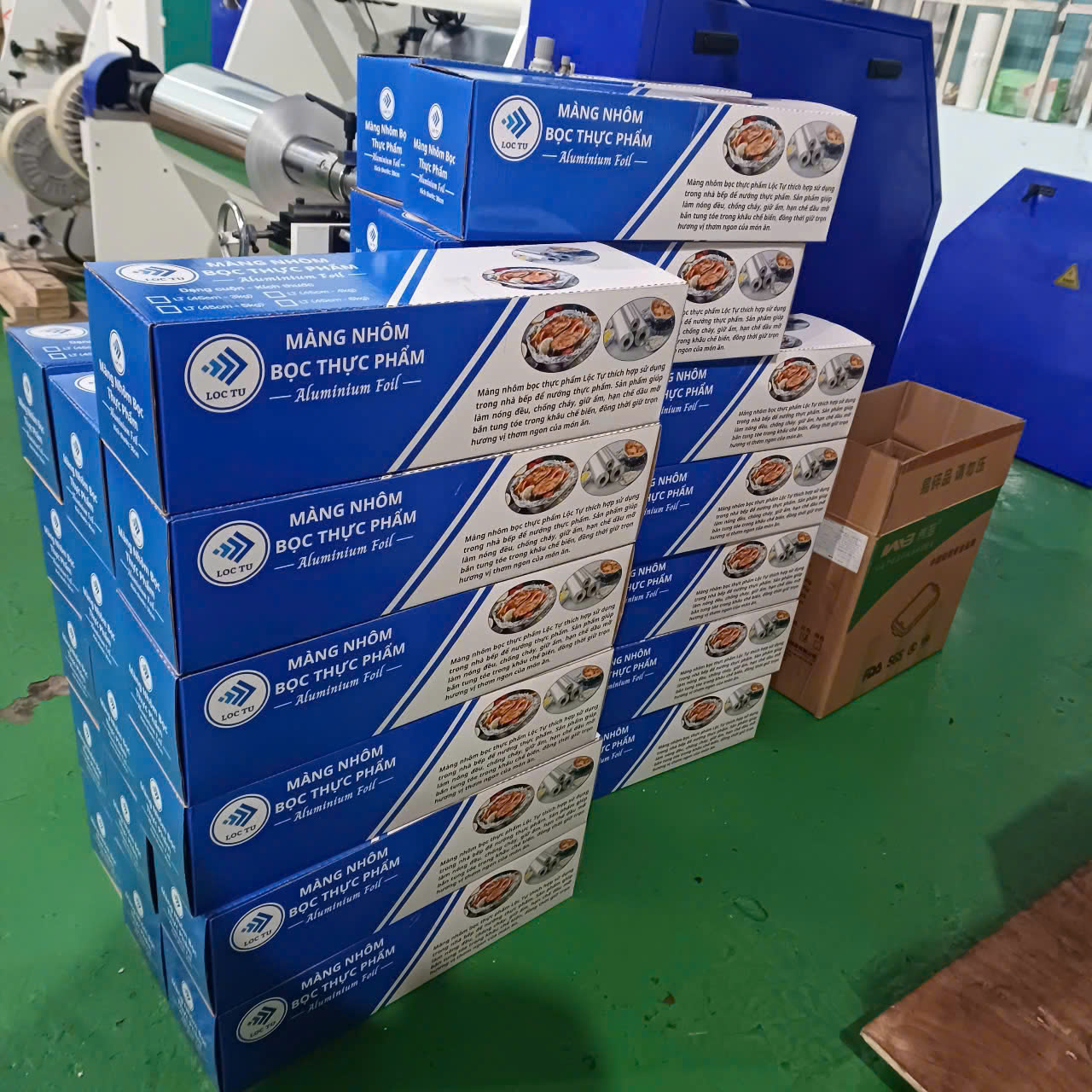
Objective: Bulk reduction and grain structure refinement.Methodology: The billet is pre-heated to between 500-600°C (932-1112°F). This high temperature makes the aluminum highly malleable. It is then passed repeatedly through a "breakdown mill," a series of massive rollers exerting immense pressure. With each pass, the slab becomes progressively longer and thinner, reducing its thickness from over 600mm to as little as 2-4mm. This process also breaks down the cast structure and homogenizes the alloy.Outcome: A long, thick coil of aluminum plate.
Objective: Precision thinning, surface finishing, and imparting strength.Methodology: The coil from the hot rolling stage is processed at or near room temperature. It passes through a series of "cold rolling mills" with progressively smaller gaps between the rollers. This process requires incredible force and precision. Since the metal is not heated, it undergoes "work hardening," which increases its tensile strength and rigidity. Special lubricating oils are used to cool the rollers and foil, prevent sticking, and ensure a smooth surface finish.Outcome: The foil reaches its target gauge (thickness), which can be as thin as 6 microns (0.006 mm).
The Crucial Role of Annealing: Instilling Flexibility and Sterility
Branch 1: Restoring Material Properties Work Hardening Reversal: The cold rolling process makes the foil hard and brittle. Annealing (a controlled heating and cooling process) recrystallizes the metal's grain structure.Result: This removes internal stresses and restores the foil's signature "dead-fold" characteristic—its ability to be wrapped tightly around an object and hold its shape.
Branch 2: Ensuring Product Safety Surface Contaminant Removal: The annealing process takes place in large ovens at high temperatures (typically 300-450°C). This high heat vaporizes any residual rolling oils or lubricants from the foil's surface.Result: A clean, sterile surface that is completely safe for direct contact with food. This step is a non-negotiable prerequisite for a product to be certified as "food-grade."
Branch 3: Achieving Desired Temper Soft vs. Hard Temper: By precisely controlling the temperature and duration of the annealing cycle, manufacturers can produce foil with different tempers. A fully annealed foil is "soft tempered" (O-Temper) and highly flexible. A non-annealed or partially-annealed foil is "hard tempered" (H-Temper), offering greater rigidity.
3. Precision Engineering: The Art of Finishing and Separation
The Twin-Rolling Phenomenon: Explaining the Matte and Shiny Sides
Shiny Surfaces: The outer surfaces of the two-sheet "pack" come into direct contact with the highly polished, hardened steel rollers. This interaction burnishes the aluminum, creating a mirror-like, shiny finish.Matte Surfaces: The two inner surfaces of the foil are pressed against each other. This metal-on-metal contact, without the burnishing effect of the steel rollers, results in a micro-textured, diffused finish, which appears matte. The sheets are then separated in the subsequent stage.
Slitting and Rewinding: Converting Master Coils into Final Products
Laser Guidance: Sensors, often laser-based, constantly monitor the edge of the foil web, ensuring the slitting knives are perfectly positioned for uniform roll widths, down to sub-millimeter accuracy.Tension Control: Sophisticated computerized systems dynamically adjust the tension of the foil as it is unwound and rewound. This is critical to prevent wrinkling, stretching, or tearing, especially with very thin gauges.Blade Technology: The slitting blades are made of ultra-hard tungsten carbide or similar alloys, maintaining a sharp edge for thousands of meters of cutting to ensure a clean, burr-free edge on the final roll. The final product is rewound onto cores ready for packaging.
4. The Pillar of Trust: Quality Assurance and Compliance Protocols
A Multi-Point Inspection Framework for Material Integrity
Strength - Comprehensive Safety: Implementing a rigorous, multi-point inspection protocol ensures the final product is free from defects that could compromise food safety or performance.Pinhole Detection: Samples are passed over a light table. The number of "pinholes" per square meter is counted. For food packaging, the standard must be close to zero, as pinholes breach the barrier properties of the foil.Tensile Strength & Elongation Test: A machine pulls a sample strip of foil until it breaks. This measures the foil's strength and flexibility, ensuring it won't tear during wrapping or cooking.Wettability/Surface Energy Test: This test (often using dyne pens) ensures the surface is clean from oil residue after annealing. A clean surface is critical for proper adhesion if the foil is to be laminated or printed.
Weakness - Cost of Failure: Bypassing any of these checks to save time or money is a critical error. A single batch failure that reaches the market can lead to product recalls, health scares, and irreversible brand damage. The cost of comprehensive QA is a fraction of the cost of failure.
Navigating Global Food-Grade Standards and Certifications
5. Future Horizons: Innovation and Sustainability in Foil Production
Addressing the Environmental Footprint: The Imperative of Recycling
Collection: Post-consumer foil (and other aluminum products like cans) are collected.Shredding and Sorting: The material is shredded into small pieces, and powerful magnets and other sensor-based systems remove impurities.De-Lacquering: A high-temperature process burns off any coatings, paints, or food residues, leaving clean aluminum scrap.Remelting: The clean scrap is melted down in a furnace. This process uses as little as5% of the energy required to produce primary aluminum from bauxite ore.Casting: The recycled molten aluminum is then alloyed to specification and cast into new billets, ready to re-enter the manufacturing process. This creates a "closed loop" system that drastically reduces energy consumption, greenhouse gas emissions, and the need for raw material mining.
Emerging Innovations in Foil Technology and Applications
The "Strengthened Lightweight" Module: Components: (1) Advanced alloying micro-structures + (2) Optimized rolling techniques.Application: Creates "down-gauged" foils that are significantly thinner and lighter (using less material) but retain the strength and barrier properties of their thicker predecessors. This is a direct response to sustainability and cost-reduction demands.
The "Functional Coating" Module: Components: (1) Base aluminum foil + (2) A micro-thin layer of functional lacquer.Application: This produces foils with specific properties. Heat-sealable lacquers are used for container lids. Non-stick coatings are applied for high-performance bakeware. Corrosion-resistant coatings are used for packaging acidic or salty foods.
The "Smart Packaging" Module: Components: (1) Laminated aluminum foil pouch + (2) Printed thermochromic inks.Application: Packaging that changes color to indicate if the product inside is at the correct temperature, enhancing consumer safety and experience.
(Conclusion Title) Aluminum Foil: A Testament to Industrial Symbiosis
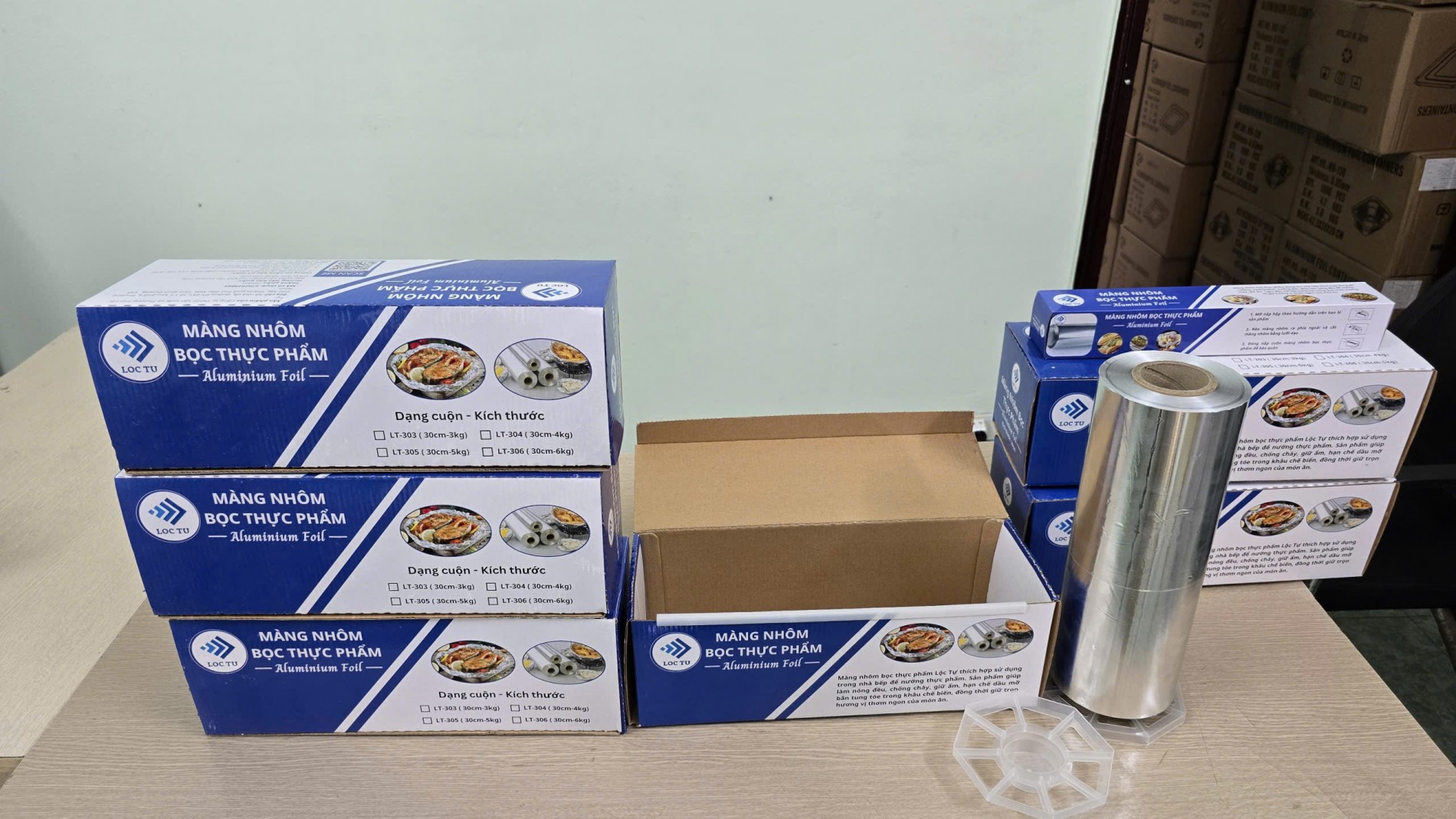
Loc Tu: Pioneering Excellence in Premium Aluminum Packaging Solutions
Why You Must Choose Loc Tu?
✅ Assured Quality & Safety: Crafted from premium, food-grade aluminum, free from harmful impurities, meeting international safety benchmarks.
🔥 Optimal Thermal Properties: Ensures even cooking and excellent heat retention, preserving food temperature and taste effectively.
💪 Durable & Convenient Design: Engineered to resist leaks and dents, providing reliable performance for baking, storage, and transport.
🔄 Versatile Solutions: Our extensive range caters to various applications – from baking and steaming to storing fresh food and takeaway meals.
🌱 Eco-Conscious Packaging: Made from 100% recyclable aluminum, supporting sustainability and reducing plastic waste.
🎯 Brand Enhancement: Optional custom printing available to personalize products and boost your brand visibility.
🚚 Reliable Supply & Delivery: Capable of handling large orders with dependable, on-schedule nationwide shipping.
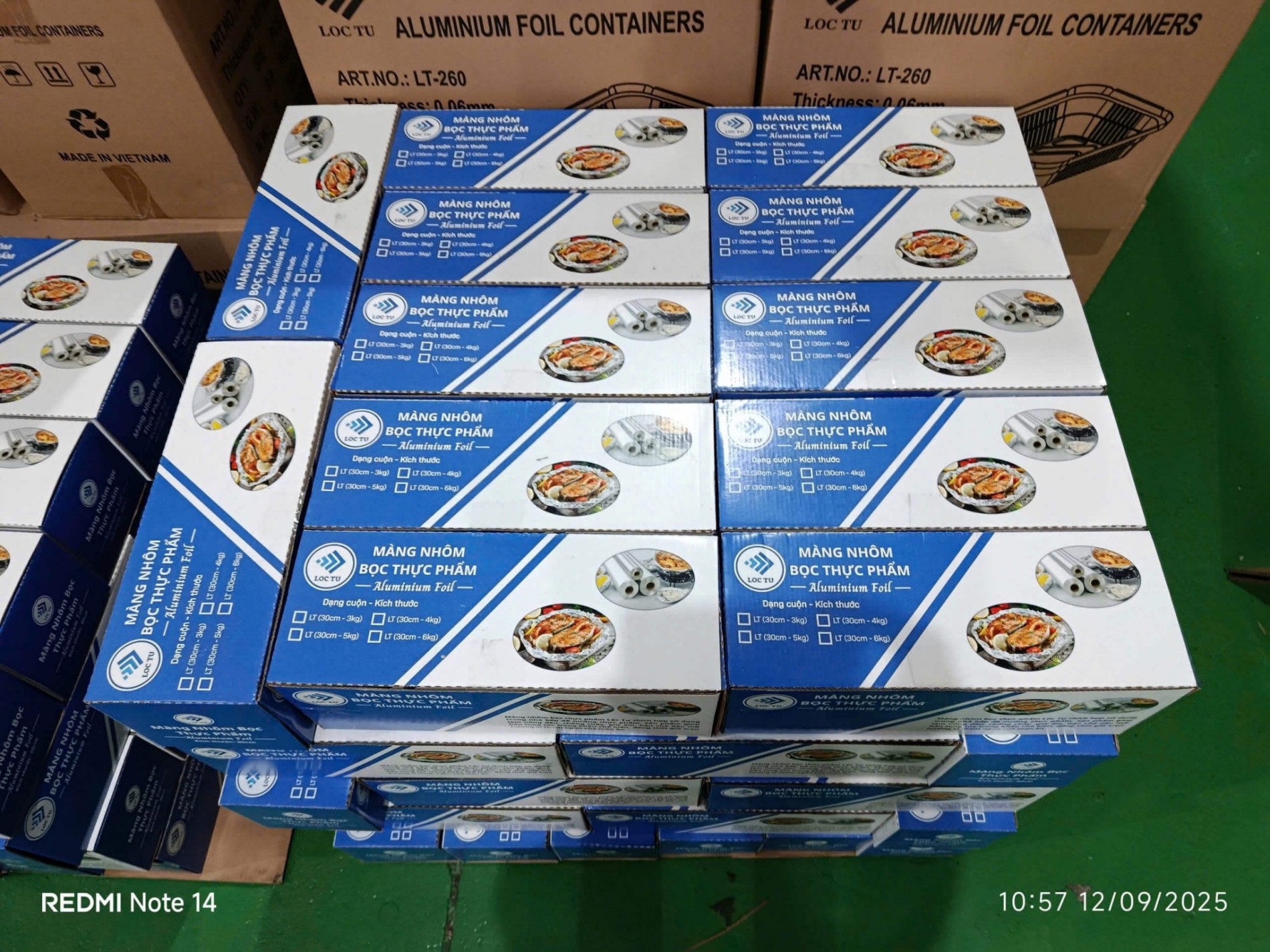
Loc Tu – Trusted Manufacturer of Durable Aluminum Foil Containers and High-Quality, Food-Safe Aluminum Foil Rolls for Your Kitchen
Your Trusted Partner in Food Packaging 📞
📌 LOC TU MANUFACTURING & TRADING CO., LTD
📌 Our Vietnamese Website: Khaynhomthucpham.com
📌 HOTLINE/ZALO: 0969.787.309
📌 Facebook: Aluminum Foil Loc Tu
📌 Youtube: Aluminum Foil Loc Tu
📌 Tik Tok: Aluminum Foil Loc Tu
📌 Instagram: Aluminum Foil Loc Tu
📌 Shopee: Aluminum Foil Loc Tu
📌 Twitter/X: Aluminum Foil Loc Tu
📌 LinkedIn: Aluminum Foil Loc Tu
📌 Pinterest: Aluminum Foil Loc Tu
📌 Tumblr: Aluminum Foil Loc Tu
📌 Threads: Aluminum Foil Loc Tu
📌 Telegram: Aluminum Foil Loc Tu
📌 Whatsapp: 0969.787.309
📌 Branch 1 (Hanoi): No. 1 Pham Tu, Beasky Building, Dai Kim Ward, Hoang Mai District, Hanoi
📌 Branch 2 (Binh Duong): No. 68, DX 051 Street, Group 17, Quarter 4, Phu My Ward, Thu Dau Mot City, Binh Duong Province
📞 Contact us today for expert consultation and the best pricing on premium aluminum trays and foil packaging solutions! 🚀
LOC TU PRODUCTION AND TRADING COMPANY LIMITED
Branch 1 (Binh Duong): No. 68, DX 051 Street, Group 17, Quarter 4, Phu My Ward, Thu Dau Mot City.
Branch 2 (Hanoi): No. 1 Pham Tu, Beasky Building, Dai Kim Ward, Hoang Mai District.
Hotline/Zalo: +84.969787309
Website: Khaynhomthucpham.com
Email: [email protected]

