THE METALLIC GENESIS: A CHRONICLE OF ALUMINUM FOIL IN MODERN FOOD
THE METALLIC GENESIS: A CHRONICLE OF ALUMINUM FOIL IN MODERN FOODSERVICE
(Introduction Title) The Material That Reshaped Global Kitchens
TABLE OF CONTENTS
The Precursor Era: Tin's Limitations and the Quest for Purity The Swiss Breakthrough: Engineering the Continuous Roll Industrial Escalation: World War II and the Birth of Convenience Metallurgical Mastery: The Science Behind Modern Rigid Containers The Circular Economy: Aluminum's Eternal Lifecycle & The Loc Tu Standard
1. The Precursor Era: Tin's Limitations and the Quest for Purity
The rise and fall of "Tin Foil" in commercial trade
Organoleptic Contamination: Tin often imparted a metallic taste ("tinny flavor") to delicate foods, altering the intended flavor profile.Structural Rigidity: Pure tin lacked the requisite stiffness. It was pliable but too soft to form rigid vessels, making it useless for the concept of modern commercial aluminum pans.Cost Prohibitiveness: As tin reserves dwindled and mining costs soared, the cost-per-unit became unsustainable for mass manufacturing.The industry needed a material that was chemically inert, abundant, and capable of maintaining thermal integrity. The failure of tin was the catalyst for aluminum's ascent.
The Hall-Héroult process: Unlocking the Earth's crust

Image Content: An artistic, sepia-toned illustration or a restored historical photo of the early Hall-Héroult electrolysis lab setups in the late 19th century. Highlighting large primitive vats and electrodes.Caption: The Hall-Héroult process of 1886: The spark that transformed aluminum from a precious luxury into a utilitarian staple.ALT Text: Historical depiction of aluminum extraction process, origin of modern aluminum foil production.
2. The Swiss Breakthrough: Engineering the Continuous Roll
Dr. Lauber, Neher, and the rolling mill innovation (1910)
The Challenge: Aluminum becomes brittle when worked cold.The Solution: They developed a hot-rolling and cold-rolling sequence using lubricants to prevent tearing.The Outcome: They achieved a uniform thickness previously thought impossible.This was the dawn of precision. For a modern sourcing manager, this is significant because the consistency standards we demand today—uniform micron gauge across thousands of wholesale aluminum foil containers —were born from these early Swiss engineering protocols.
Toblerone and the first commercial application
3. Industrial Escalation: World War II and the Birth of Convenience
Mobilization and supply chain dominance
The Surplus Effect: When the war ended, there was a massive surplus of aluminum manufacturing capacity and raw material.The Pivot: Manufacturers like Reynolds Metals Company had to find a peacetime outlet for this capacity. They turned to the American kitchen.The Lesson: This era taught manufacturers how to scale. The ability to producewholesale aluminum foil containers in the millions today rests on the mass-production infrastructure built during this industrial escalation.
The TV Dinner phenomenon and the container revolution
The Innovation: A compartmentalized aluminum tray that could go from freezer to oven to table.Functionality: It utilized the high thermal conductivity of aluminum to heat food evenly without burning the packaging.The Modern Link: This was the specific ancestor of the disposable commercial aluminum pans used today. It shifted the mindset from "wrapping" (sheets) to "containing" (rigid forms). For the foodservice operator, this established the model of disposable cookware, drastically reducing labor costs associated with washing dishes—a key ROI metric still relevant today.
Image Content: A collage representing the 1950s era. A vintage "TV Dinner" aluminum tray with separate compartments (peas, turkey, potatoes) coming out of a retro chrome oven.Caption: The Post-War Pivot: The 1950s "TV Dinner" introduced the world to the convenience of rigid aluminum cookware.ALT Text: Vintage 1950s aluminum TV dinner tray, the ancestor of wholesale aluminum foil containers.
4. Metallurgical Mastery: The Science Behind Modern Rigid Containers
Alloy 3003/8011: The chemistry of strength
Alloy 8011/3003: These are the industry standards forwholesale aluminum foil containers .Manganese Addition: Elements like manganese are added to increase tensile strength and ductility (elongation).Why it Matters: Unlike the fragile foils of the 1920s, modern containers can be pressed into deep shapes with complex rim curls (Vertical Curl, Full Curl) without micro-cracking. This ensures leak-proof performance for liquids, a non-negotiable quality for modern food delivery businesses.
Automated forming technologies
Lubrication: The aluminum coil is coated with food-grade oil.Feeding: The coil is fed into a press weighing up to 80 tons.The Stroke: In a single stroke, a custom mold cuts the blank and forms the container.Embossing: Ridges are stamped into the walls to increase rigidity by 300%.This automated efficiency allows suppliers like Loc Tu to offer high-quality containers at wholesale prices that maximize the restaurant's profit margin.
5. The Circular Economy: Aluminum's Eternal Lifecycle & The Loc Tu Standard
Infinite recyclability as an economic asset
Energy ROI: Recycling aluminum requires only 5% of the energy needed to produce primary aluminum from bauxite.Scrap Value: The used container retains intrinsic value. This "embedded energy" makes it a high-value commodity in the scrap market.Brand Perception: For an F&B business, usingwholesale aluminum foil containers is a verifiable green credential. It aligns the brand with the circular economy, appealing to the eco-conscious consumer base.
The Loc Tu Standard: Curating the culmination of history
Vetting Protocol: We only source alloys (3003/8011) that meet the strict ductility requirements established by modern engineering.Commitment: By providingwholesale aluminum foil containers that honor this history of quality, we ensure our partners receive products that offer superior thermal performance, safety, and operational efficiency. We are the bridge between the industrial past and your culinary future.
Image Content: A split graphic. Left side: Bauxite rock and an ingot. Right side: A modern stack of Loc Tu aluminum containers. Connecting them is an infinity symbol (Caption: The Material of Eternity: From earth to container, and back again. A perfectly circular economy.ALT Text: Diagram illustrating the infinite recyclability of aluminum containers sourced from Loc Tu.
(Conclusion Title) An Enduring Legacy in Every Package
Loc Tu: Pioneering Excellence in Premium Aluminum Packaging Solutions
Why You Must Choose Loc Tu?
✅ Assured Quality & Safety: Crafted from premium, food-grade aluminum, free from harmful impurities, meeting international safety benchmarks.
🔥 Optimal Thermal Properties: Ensures even cooking and excellent heat retention, preserving food temperature and taste effectively.
💪 Durable & Convenient Design: Engineered to resist leaks and dents, providing reliable performance for baking, storage, and transport.
🔄 Versatile Solutions: Our extensive range caters to various applications – from baking and steaming to storing fresh food and takeaway meals.
🌱 Eco-Conscious Packaging: Made from 100% recyclable aluminum, supporting sustainability and reducing plastic waste.
🎯 Brand Enhancement: Optional custom printing available to personalize products and boost your brand visibility.
🚚 Reliable Supply & Delivery: Capable of handling large orders with dependable, on-schedule nationwide shipping.
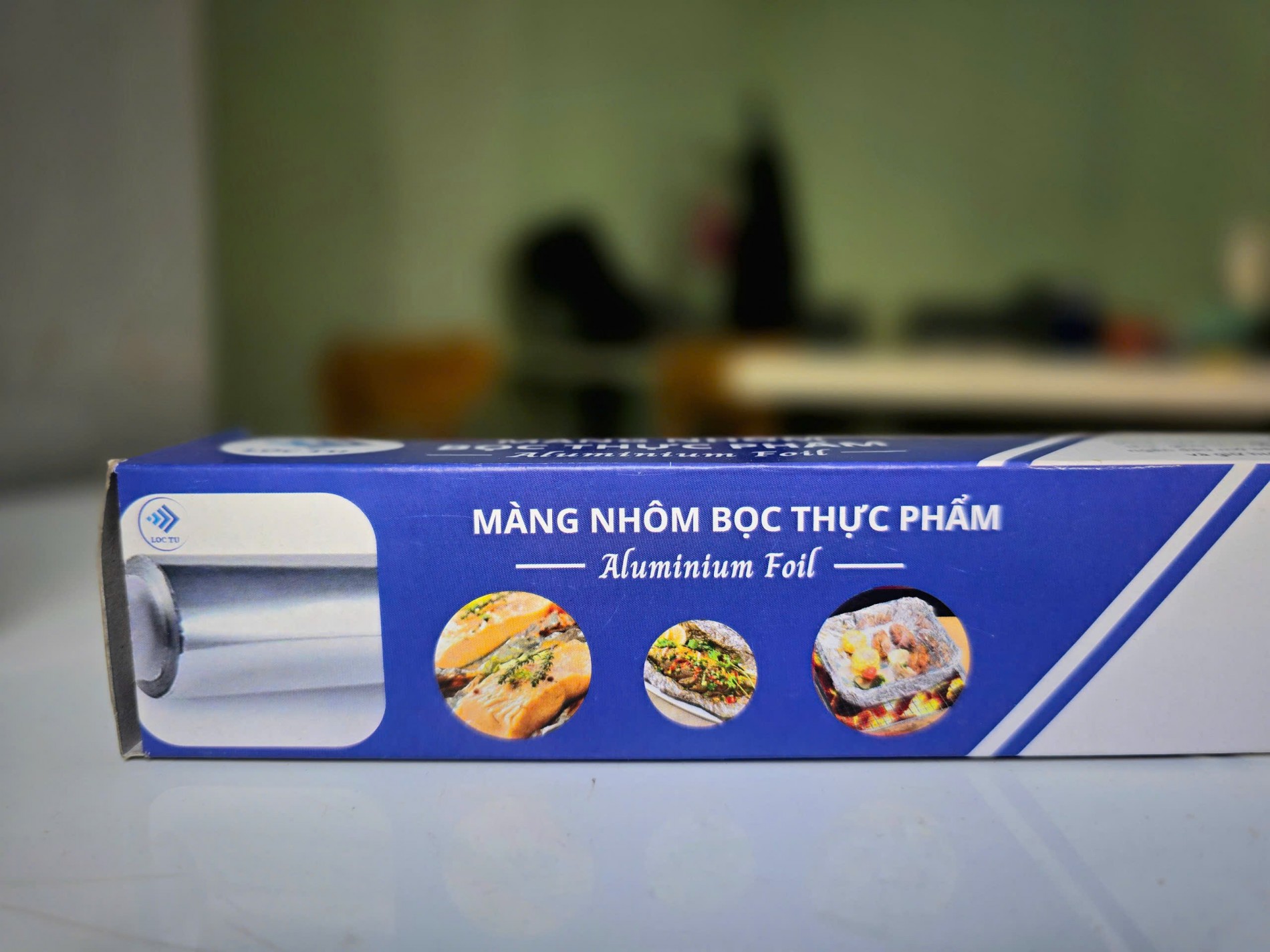
Loc Tu – Trusted Manufacturer of Durable Aluminum Foil Containers and High-Quality, Food-Safe Aluminum Foil Rolls for Your Kitchen
Your Trusted Partner in Food Packaging 📞
📌 LOC TU MANUFACTURING & TRADING CO., LTD
📌 Our Vietnamese Website: Khaynhomthucpham.com
📌 HOTLINE/ZALO: 0969.787.309
📌 Facebook: Aluminum Foil Loc Tu
📌 Youtube: Aluminum Foil Loc Tu
📌 Tik Tok: Aluminum Foil Loc Tu
📌 Instagram: Aluminum Foil Loc Tu
📌 Shopee: Aluminum Foil Loc Tu
📌 Twitter/X: Aluminum Foil Loc Tu
📌 LinkedIn: Aluminum Foil Loc Tu
📌 Pinterest: Aluminum Foil Loc Tu
📌 Tumblr: Aluminum Foil Loc Tu
📌 Threads: Aluminum Foil Loc Tu
📌 Telegram: Aluminum Foil Loc Tu
📌 Whatsapp: 0969.787.309
📌 Branch 1 (Hanoi): No. 1 Pham Tu, Beasky Building, Dai Kim Ward, Hoang Mai District, Hanoi
📌 Branch 2 (Binh Duong): No. 68, DX 051 Street, Group 17, Quarter 4, Phu My Ward, Thu Dau Mot City, Binh Duong Province
📞 Contact us today for expert consultation and the best pricing on premium aluminum trays and foil packaging solutions! 🚀
LOC TU PRODUCTION AND TRADING COMPANY LIMITED
Branch 1 (Binh Duong): No. 68, DX 051 Street, Group 17, Quarter 4, Phu My Ward, Thu Dau Mot City.
Branch 2 (Hanoi): No. 1 Pham Tu, Beasky Building, Dai Kim Ward, Hoang Mai District.
Hotline/Zalo: +84.969787309
Website: Khaynhomthucpham.com
Email: [email protected]

